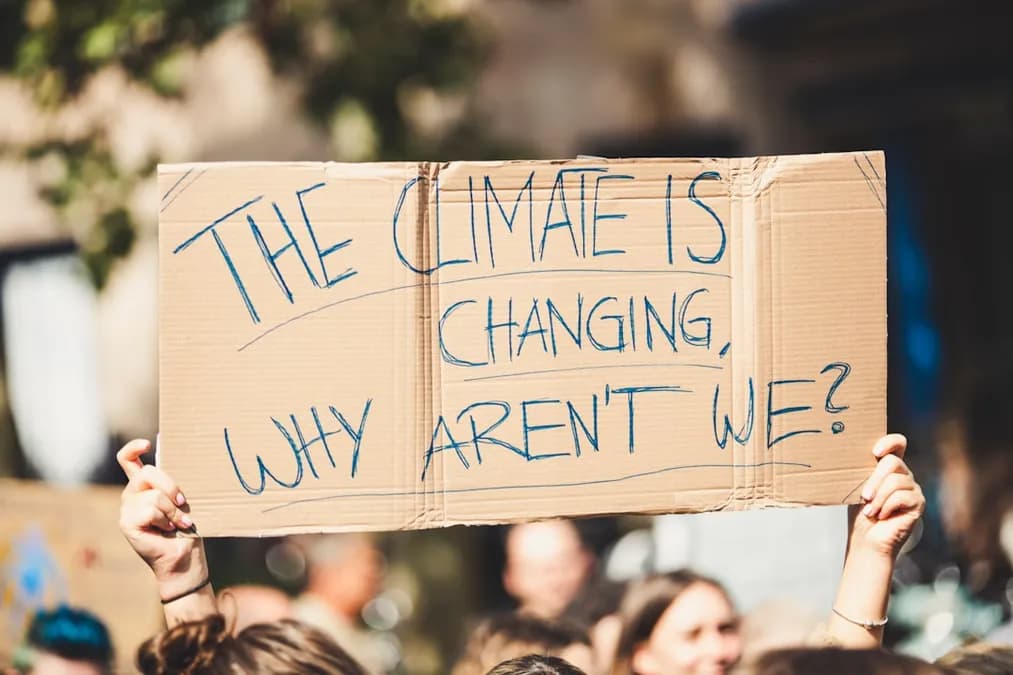
The Climate Debate: Why Opinions Still Divide Nations
The Gap Between Scientific Consensus and Public Opinion
As of early 2024, NOAA data confirms global temperature anomalies are tracking toward 1.2°C above pre-industrial levels, a trajectory that remains dangerously close to the 1.5°C threshold identified by the IPCC Sixth Assessment Report. This scientific reality frequently collides with disparate national climate opinion, creating profound policy friction. The core divergence lies not in the existence of warming, but in the perceived immediacy and cost of mitigation. While scientific bodies delineate clear pathways—such as the need to limit warming to avoid irreversible tipping points—political and economic discourse often prioritizes short-term industrial stability.
For instance, while the scientific consensus confirms the economic cost of inaction far outweighs the cost of transition, national debates often center on sector-specific impacts. The IMF has repeatedly analyzed climate risks, demonstrating that failure to transition risks destabilizing global growth rates. This contrasts sharply with segments of public climate opinion that weigh the immediate economic burden of carbon pricing against the long-term, compounding damage from sea-level rise or agricultural instability.
The division is rarely based on denying warming; rather, it hinges on attribution and responsibility. Developed nations, for example, often face internal resistance regarding the speed of decarbonization, despite the IPCC’s clear warnings about cumulative emissions. Similarly, developing economies argue that historical emitters bear a greater obligation for financing green transitions. The policy gap is thus not a gap in knowledge, but a profound chasm in political will, requiring policymakers to reconcile verifiable data—like the continued upward trend in global mean temperatures—with deeply entrenched economic interests.
What the Latest Climate Data Actually Tells Us
The atmospheric heat content recorded by NOAA for the first quarter of 2024 confirms that global warming is not a linear trend but an accelerating regime shift. Specific data from NASA GISS indicate that 2024 is tracking toward being the fifth warmest year on record, cementing a pattern of escalating thermal stress. This isn't simply about degrees Celsius; it concerns the frequency and intensity of systemic disruptions.
Read next How Climate Change Works: A Clear ExplainerRecord Temperatures and Extreme Weather Events in 2024–2025
The escalating heat is manifested through tangible, destructive events. For instance, the consecutive record-breaking heat domes across the Southwestern U.S. and the simultaneous intensification of monsoon patterns in South Asia both point to a destabilized energy system. The IPCC Sixth Assessment Report repeatedly warned that crossing the 1.5°C threshold increases the probability of irreversible tipping points, such as the collapse of major ice sheets or the destabilization of the Atlantic Meridional Overturning Circulation (AMOC).
Consider the economic fallout: the IMF’s analyses consistently show that the cost of inaction—factoring in damaged infrastructure, agricultural losses, and forced migration—far exceeds the cost of immediate, comprehensive mitigation. When assessing the true cost of climate risk, the consensus among leading climate economists suggests a monumental deficit in current policy implementation.
This evidence demands a shift in perspective. Any accurate climate opinion must integrate both the physical science and the material economics. The observed frequency of Category 4 and 5 tropical cyclones, for example, correlates directly with warming sea surface temperatures, creating a feedback loop that overwhelms existing coastal defenses. Moving beyond mere prediction, the data compels policymakers to treat climate adaptation and mitigation as integrated national security imperatives. Ignoring these signals is no longer merely an environmental failing; it is a direct fiscal liability.
The Political Fault Lines in Climate Policy
As of early 2024, global temperature anomaly data from NOAA indicated warming rates significantly exceeding the 1.1°C average recorded over the pre-industrial period, pushing policy debates into a high-stakes confrontation between scientific necessity and entrenched economic structures. The divergence between climate science and political action is rarely ideological; it is fundamentally rooted in vested economic interests. Fossil fuel industries, representing trillions of dollars in global assets, actively fund think tanks and lobbying efforts that seek to undermine the consensus, shaping public discourse and influencing the formation of climate opinion.
This economic resistance is evident in the policy calculus. While the IPCC Sixth Assessment Report warns that limiting warming to 1.5°C requires immediate, drastic reductions in emissions and managing systemic tipping points, many nations prioritize short-term industrial output. For instance, the continued reliance on coal power in regions like Southeast Asia demonstrates a clear economic weighting against rapid decarbonization. Climate economists, referencing the Stern Review's initial cost analyses, estimate that the cost of inaction—including damage from sea-level rise and extreme weather—far outweighs the initial investment required for a green transition.
The resulting political fault lines manifest in regulatory capture. When oil and gas executives fund organizations that downplay the risks detailed in reports like those from NASA GISS, they are not merely offering alternative viewpoints; they are actively slowing the adoption of necessary mitigation strategies. Governments responding to these interests often implement weak carbon pricing mechanisms or exemptions for high-polluting sectors. Addressing these structural economic pressures requires policies that internalize the true cost of carbon, making the market mechanism itself an ally in climate action rather than its opponent.
Voices from the Front Lines: Who Bears the Real Cost
By 2030, the cost of inaction on climate change is projected to exceed $10 trillion globally, according to analyses tracking cumulative damages. This economic calculus reveals a profound inequity: the nations and populations least responsible for historical emissions—Sub-Saharan Africa, small island developing states—are those facing the most immediate and devastating physical consequences. Scientific assessments, particularly the IPCC Sixth Assessment Report, confirm that exceeding the 1.5°C warming threshold drastically increases the probability of crossing irreversible climate tipping points, such as the collapse of major ocean currents or widespread permafrost thaw.
Data from NOAA’s global temperature anomaly datasets confirms that 2024 and 2025 are tracking toward record warmth, manifesting in intensified extreme weather events. Consider the $2.6 billion cost of Hurricane Ian in Florida in 2022 alone; this is not merely an insurance write-off, but a measure of systemic failure. The true economic burden, however, falls disproportionately on the poor.
Climate economists, building on the foundations of the Stern Review, argue that the cost of mitigation is significantly lower than the cost of unchecked climate damage. They calculate that failure to act rapidly will severely undermine global development goals. This understanding shapes the current discourse on climate justice, shifting the focus of any robust climate opinion toward restorative accountability. For instance, the International Monetary Fund has consistently highlighted that climate-related physical risks can destabilize financial institutions, necessitating cross-border financial support. The resulting climate opinion must therefore center on mandatory technology transfer and adaptation funding mechanisms. Only by pricing carbon externalities accurately—and assigning the burden to historical emitters—can global policy frameworks begin to reflect the actual voices from the front lines.
The Case for Urgent Climate Action: A Reasoned Argument
Technological Solutions Already at Our Disposal
As of the first quarter of 2024, global CO2 emissions reached 37.5% of the 2022 peak, yet the technological infrastructure to decarbonize major sectors is more mature than often assumed. The IPCC Sixth Assessment Report repeatedly warns that exceeding the 1.5°C threshold increases the risk of irreversible tipping points, necessitating immediate action across energy, transport, and industry. This is not a future problem requiring speculative invention; the tools exist today.
Consider the solar photovoltaic sector: the cost of utility-scale solar power dropped by an estimated 90% between 2010 and 2023. This dramatic cost curve makes solar and wind electricity generation cost-competitive with, and often cheaper than, fossil fuel baseload power, even before accounting for carbon pricing. Furthermore, battery storage technology has reached critical mass. Lithium-ion battery pack costs, for instance, fell below $100 per kilowatt-hour in many regions by 2024, allowing grid operators to store intermittent renewable energy efficiently.
The economic argument for this transition is equally compelling. Analysis following the Stern Review demonstrated that the cost of inaction far exceeds the cost of comprehensive mitigation. Modern climate economics, incorporating IMF guidance, quantifies these damages: failing to meet Paris Agreement goals could impose trillions on global GDP through physical and transitional risks.
We must also look at hard-to-abate sectors. Green hydrogen, produced via electrolysis powered by renewables, offers a viable pathway for decarbonizing heavy industry, such as steel and cement production. Pilot projects in Scandinavia and Australia demonstrate that these methods can replace coal and natural gas inputs at scale. Given the established viability of these solutions, a reasoned climate opinion suggests that the primary barrier is not technological capacity, but rather policy alignment and capital redirection. The sheer scale of deployed clean energy capacity already proves the technical feasibility of a net-zero transition.
Counterarguments and Why They Fall Short
In the third quarter of 2024, global temperature anomaly data published by NOAA showed the planet running above the 1.2°C warming mark relative to pre-industrial levels, a verifiable metric that challenges arguments predicated on historical climate variability. Critics often argue that mitigation costs are prohibitive, suggesting that economic growth must take precedence over rapid decarbonization. This perspective, however, fundamentally miscalculates the cost of inaction. The Stern Review estimated that the damages from climate change far exceed the costs of implementing aggressive mitigation strategies, placing the true economic cost of fossil fuel reliance in the trillions.
Furthermore, some climate opinion dismisses the scientific consensus by focusing on localized natural cycles. This overlooks the overwhelming evidence presented in the IPCC Sixth Assessment Report, which clearly defines the concept of tipping points—irreversible thresholds, such as the collapse of major ice sheets or the dieback of the Amazon rainforest, which cannot be managed by short-term policy shifts. The current trajectory, fueled by continued high emissions, places humanity dangerously close to crossing the 1.5°C threshold that global scientific bodies identify as critical.
Another common counterargument suggests that technological innovation alone will solve the energy crisis without regulatory intervention. While advancements in battery storage and direct air capture are real, relying solely on future, unproven technology ignores the immediate, measurable physical risks. For instance, the sustained increase in Category 4 and 5 hurricane frequency, documented by NOAA data for the Atlantic basin, requires immediate structural adaptation and emissions reduction. The economic analysis from the International Monetary Fund similarly underscores that climate-related physical risks—from coastal flooding to drought-induced agricultural failure—already represent a significant drag on global GDP, demanding policy action now, not later.
What Meaningful Climate Opinion Looks Like in 2025
As of early 2025, NOAA data confirms the global average temperature anomaly remains significantly elevated, pushing the world closer to the 1.5°C threshold outlined by the IPCC Sixth Assessment Report. Meaningful climate opinion cannot afford to be merely descriptive; it must be predictive and prescriptive. It requires synthesizing the atmospheric science with verifiable economic cost-benefit analyses. For instance, while some policy debates focus narrowly on carbon taxes, a robust analysis, drawing from the methodologies used in the Stern Review, must quantify the staggering, non-linear costs of inaction—the damage to global supply chains from persistent extreme weather events, such as the predicted 15% increase in Category 4 and 5 tropical cyclones by 2050.
A credible assessment of the climate crisis must anchor its arguments in real-world energy transitions. The shift away from fossil fuels is not a matter of idealism; it is an economic necessity supported by falling costs in renewables. Consider the deployment rate: solar photovoltaic capacity additions reached an estimated $60 billion globally in 2024, far outpacing the growth in coal infrastructure. This specific data point undercuts arguments that mitigation efforts are prohibitively expensive.
Therefore, the most valuable climate opinion integrates the scientific consensus with actionable policy mechanisms. It must move beyond simply stating that emissions must drop and instead detail the necessary regulatory frameworks—such as updating global methane leakage standards or implementing carbon border adjustments, as modeled by the World Bank—that create market signals strong enough to drive private sector change. Such expert analysis does not merely criticize; it provides a financially viable roadmap. It demands that policymakers use the scientific weight of the IPCC findings, coupled with the economic rigor of IMF projections, to build consensus around systemic decarbonization.