What Does 'Going Green' Mean for the Climate?
The pathway to a stable climate hinges on deep, systemic decarbonization. The link between sustainable practices and climate change mitigation is direct: every emission reduction contributes to limiting global temperature rise. According to the IPCC Sixth Assessment Report (2023), achieving 1.5°C warming requires immediate, drastic cuts in global emissions, demanding comprehensive shifts across energy, industry, and land use. This transition is not merely aspirational; it is quantifiable.
The Link Between Green Practices and Climate Change
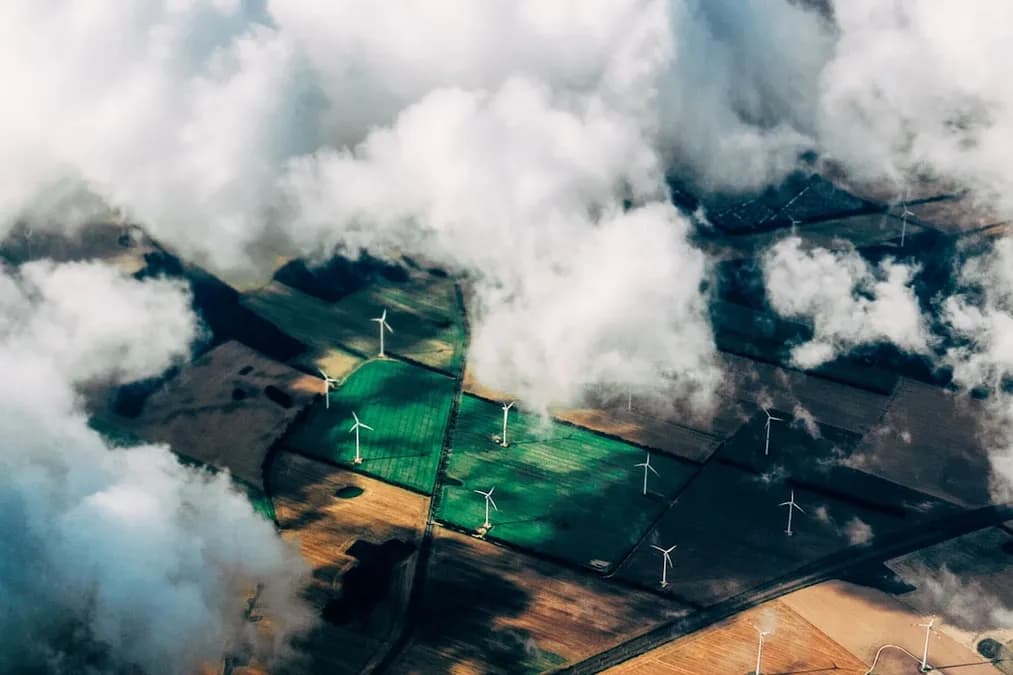
Global economic activity must decouple from fossil fuel consumption. A tangible measure of this shift is the energy sector: the IEA reported that renewables accounted for approximately 90% of new electricity capacity installed globally in 2023. These rapid deployments demonstrate how smart green climate solutions immediately reduce the carbon intensity of power generation. Furthermore, addressing agricultural waste and promoting regenerative farming practices are crucial carbon sinks, demonstrating that solutions must span the entire biosphere.
Key Terms: Green Energy, Sustainability, and Carbon Neutrality
Understanding the terminology is key to navigating climate policy. Green energy refers to power generated from sources like solar, wind, and geothermal power. Sustainability advocates for meeting present needs without compromising future generations. Carbon neutrality, the ultimate policy goal, aims for net-zero greenhouse gas emissions—balancing every emission released with an equivalent removal, often through offsets or direct technological capture. The economic incentives are clear: the World Economic Forum forecasts that the green economy could create tens of millions of new jobs globally, proving that these sustainable transitions are powerful engines for both environmental stability and economic growth.
Green Energy Solutions Driving Climate Progress
The global energy matrix is undergoing a rapid structural transition. Renewables now account for an astonishing 90% of new electricity capacity additions worldwide in 2023, according to International Energy Agency data. This exponential growth underscores the market viability of sustainable power and marks a crucial shift away from carbon-intensive fuels.
Read next How Climate Change Works: A Clear ExplainerSolar, Wind, and Renewable Energy Adoption Rates
Investment in distributed solar and utility-scale wind farms has lowered levelized costs of electricity (LCOE) to unprecedented levels. For example, solar photovoltaic installations are now cost-competitive with coal and gas in numerous regions, accelerating global deployment. This market shift is driving policy changes, such as enhanced interconnection standards and permitting streamlining, which are critical to unlocking the full potential of clean energy. Furthermore, advancements in energy storage—particularly lithium-ion battery systems—are solving the historical intermittency challenge inherent to wind and solar generation, making baseload integration practical.
How Green Energy Reduces Greenhouse Gas Emissions
Decarbonization pathways rely fundamentally on adopting these varied power sources. By displacing fossil fuel combustion, renewable adoption directly reduces Scope 1 emissions. Achieving the 1.5°C target outlined by the IPCC Sixth Assessment Report requires global net-zero emissions well below 2050, a feat predicated entirely on the scalability of these technologies. Beyond emission cuts, green energy stimulates economic growth; analyses from organizations like the World Economic Forum forecast substantial job creation and economic activity within the transition sector. These comprehensive green climate solutions are not merely environmental fixes but powerful engines for resilience, stabilizing energy prices and driving modern industrialization.
Green Technology and Innovation for a Cooler Planet
Addressing the deep decarbonization required by the IPCC Sixth Assessment Report (2023)—which necessitates global emissions cuts well below 2 degrees Celsius—demands technologies that neutralize hard-to-abate sectors. Carbon Capture and Storage (CCS) represents a critical pillar of this effort. This process involves capturing $\text{CO}_2$ emissions at major sources, such as power plants or industrial facilities, and transporting them for permanent geological storage.
While the scale of renewables is accelerating—with the International Energy Agency noting that renewables accounted for 90% of new electricity capacity globally in 2023—not all emissions can be eliminated through electrification alone. Direct Air Capture (DAC), a related breakthrough technology, promises to scrub $\text{CO}_2$ directly from ambient air, representing a crucial element of potential green climate solutions.
The commercial viability of CCS relies on vast infrastructure and policy mechanisms. For instance, pilot projects in Iceland have successfully demonstrated large-scale $\text{CO}_2$ injection and storage. Economists suggest that the global shift toward sustainable technology will create millions of new jobs, underlining the economic scope of these climate interventions. Scaling CCS technologies and integrating them with hydrogen or sustainable bioenergy sources are thus viewed by many climate analysts as indispensable tools for reaching net-zero targets and securing a stable, cooler planet.
The Green Economy: Jobs, Policy, and Climate Investment
The pivot away from fossil fuels is now codified in global policy, driven by necessity and finance. Since the Paris Agreement, national governments have accelerated carbon pricing and mandated emissions cuts. For instance, the rapid adoption of clean power is evidenced by the IEA, which reported that renewables accounted for an estimated 90% of new electricity capacity added globally in 2023. This energy transition necessitates robust public policy and massive private capital.
Internationally, agreements are evolving from aspirational targets to actionable market mechanisms. To limit warming to 1.5 degrees Celsius, the IPCC Sixth Assessment Report emphasized that deep, immediate emissions cuts—covering sectors from heavy industry to agriculture—are critical. To meet these climate mandates, policy must catalyze investment in diverse green climate solutions, such as carbon capture and green hydrogen infrastructure.
Economists predict significant job growth; the World Economic Forum projects that the sustainable transition could create millions of new jobs globally. Policies supporting grid modernization and energy efficiency are paramount to realizing this potential. Specific regional initiatives, like the EU’s Fit for 55 package, demonstrate how regulatory frameworks guide industrial scaling. Ultimately, stable global governance, coupled with targeted investment into green climate solutions, is redefining economic activity toward verifiable sustainability.
Practical Green Living Tips to Fight Climate Change
Reducing personal carbon footprints requires shifting focus from simple consumption cuts to optimizing infrastructure usage. For example, advocating for district heating or improving home insulation offers exponentially greater impact than merely recycling plastic. Addressing food sources is also critical: shifting diets to focus on lower-emissions proteins substantially reduces methane output, a greenhouse gas needing immediate mitigation. Globally, the trend toward cleaner energy is undeniable; according to the International Energy Agency, renewables accounted for 90% of new electricity capacity added in 2023 alone.
This macro shift requires systemic changes, many of which are already informing robust global movements toward viable green climate solutions. On the consumer end, prioritizing locally sourced goods and supporting public transit systems mitigates transport emissions. Furthermore, investing in energy efficiency—such as smart thermostats or optimizing appliance usage—directly lowers residential energy demand. These behavioral changes contribute to the broader economic framework. The World Economic Forum anticipates that the green transition will be a major driver of global job creation, requiring millions of specialized workers. While global efforts must meet the temperature targets outlined by the IPCC’s Sixth Assessment Report, even individual actions contribute to the market demand that catalyzes the necessary policy and infrastructure overhaul, accelerating the transition to net-zero living.
The Future of Green Climate Action: Trends and Outlook
The accelerating deployment of renewables is already reshaping global energy infrastructure. In 2023 alone, renewables accounted for an estimated 90% of all new electricity capacity installed worldwide, marking a dramatic structural shift away from fossil fuels. This trend necessitates an immediate pivot toward energy storage and grid modernization. Future action hinges on scaling carbon capture technologies and developing cost-effective green hydrogen pathways for hard-to-abate sectors like heavy industry and aviation. Economically, the transition promises substantial growth; World Economic Forum estimates suggest that the green economy could create millions of jobs globally, fundamentally redefining labor markets. Scientific imperatives underscore this urgency: the IPCC Sixth Assessment Report (2023) reinforces that limiting warming below 1.5°C requires radical, near-term emission reductions across all sectors. Therefore, the next wave of climate action must move beyond merely adding capacity, focusing instead on systemic resilience and integration. Investment in decentralized networks and sustainable agricultural practices is critical to unlocking true global potential. Successfully navigating this decade depends heavily on policy stability and accelerated financing of diverse green climate solutions, transforming technical ambition into verifiable, large-scale deployment.
Related coverage