What Is Solar Energy and How Does It Work?
Every hour, enough sunlight reaches Earth to exceed humanity’s annual energy use many times over; the practical challenge is converting a diffuse, daily resource into dependable electricity and heat. Solar energy does that through two main technologies: photovoltaic panels, which turn light directly into electricity, and solar thermal systems, which capture heat for water, buildings, industry, or power generation.
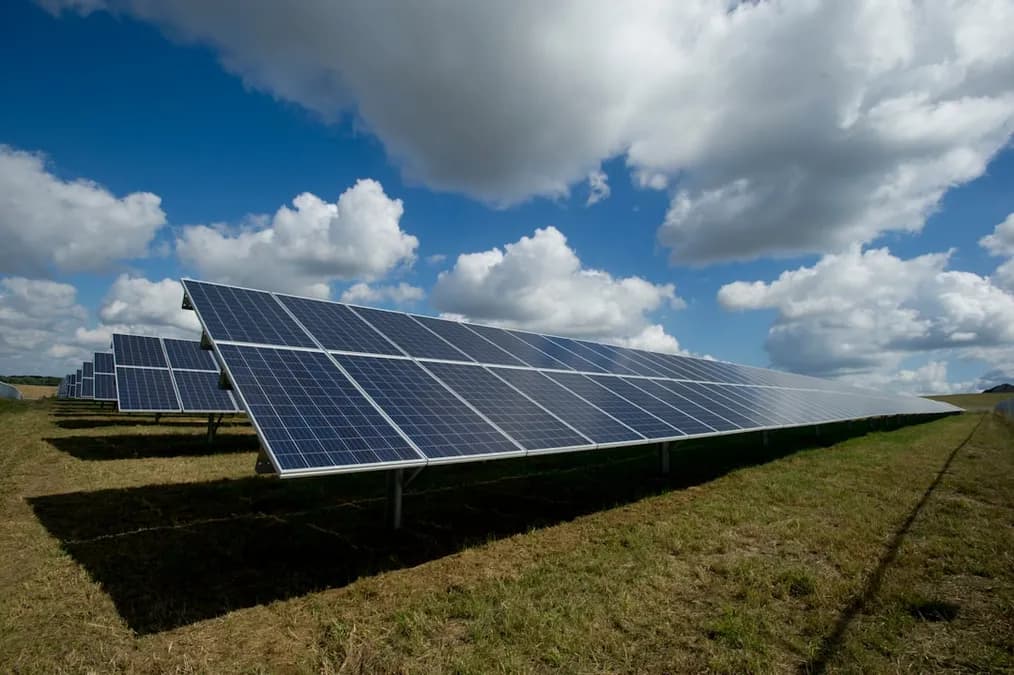
Photovoltaic, or PV, modules are the technology most people recognize on rooftops and in utility-scale solar farms. When photons strike a semiconductor material, usually silicon, they knock electrons loose. Electrical contacts collect that current, an inverter converts direct current into grid-compatible alternating current, and meters, batteries, or grid connections manage where the electricity goes.
The basic system is simple. A residential array may include panels, racking, wiring, an inverter, safety disconnects, monitoring software, and sometimes a battery. A utility-scale solar plant adds transformers, substations, land-management systems, weather forecasting, and grid controls. At both scales, the core physics is the same.
Solar thermal works differently. A rooftop solar water heater, common in countries such as China, Israel, Greece, and Brazil, uses sunlight to heat a fluid. Concentrated solar power plants use mirrors to focus sunlight onto a receiver, producing high-temperature heat that can drive a turbine. Some systems store heat in molten salts, allowing electricity generation after sunset.
The distinction matters for climate policy. Solar PV is now the dominant growth engine because it is modular, quick to build, and increasingly cheap. A panel can power a rural clinic, a warehouse roof, a farm pump, or a gigawatt-scale project. That flexibility is one reason the International Energy Agency has called solar PV the largest source of new electricity capacity additions in recent years.
Modern panels typically convert about 20% to 23% of incoming sunlight into electricity at commercial scale, with high-end laboratory cells reaching much higher efficiencies under controlled conditions. Performance depends on sunlight, temperature, orientation, shading, dust, and system design. Panels usually lose output slowly over time, often around 0.3% to 0.7% per year, which is why many carry 25- to 30-year performance warranties.
Solar energy is not fuel. That is its defining advantage. Once installed, a solar system does not need coal trains, gas pipelines, or uranium supply chains to produce electricity. Its costs are mostly upfront capital, while operating costs are comparatively low. That structure has reshaped electricity markets and climate strategy.
The Role of Solar Energy in Combating Climate Change
In 2023, the power sector remained the world’s largest source of energy-related carbon dioxide emissions, and replacing fossil electricity is one of the fastest routes to lowering climate risk. Solar energy addresses that problem directly: it produces electricity without combustion during operation.
Read next How Climate Change Works: A Clear ExplainerThe Intergovernmental Panel on Climate Change, in its Sixth Assessment Report, found that pathways limiting warming to 1.5°C or well below 2°C require rapid, deep emissions cuts across energy, buildings, transport, industry, and land use. In those pathways, electricity becomes cleaner while more parts of the economy run on electricity. Solar and wind do much of the early heavy lifting because they are mature, scalable, and low cost.
The climate value of solar depends on what it displaces. A solar farm replacing coal-fired generation can avoid far more emissions than one added to a grid already dominated by hydropower or nuclear power. The U.S. National Renewable Energy Laboratory has estimated life-cycle greenhouse gas emissions from solar PV at a small fraction of coal and natural gas generation, even after accounting for mining, manufacturing, transport, installation, and disposal.
Solar’s life-cycle footprint is not zero. Manufacturing panels requires energy and materials such as silicon, glass, aluminum, copper, silver, and polymers. But the emissions payback period is typically measured in months to a few years, depending on location and manufacturing source, while panels can generate power for decades.
This is why climate scientists and energy policy researchers increasingly discuss solar as part of a system transformation, not as a stand-alone fix. A high-solar grid needs transmission, storage, demand flexibility, firm low-carbon resources, and market rules that reward reliability. The IPCC’s mitigation research is clear on that broader point: renewables are central, but they work best when paired with efficiency, electrification, grid expansion, and demand-side measures.
Solar also reduces climate risk by limiting air pollution from fossil power plants. Coal and oil combustion release sulfur dioxide, nitrogen oxides, particulates, and mercury. Gas combustion emits less particulate pollution than coal but still releases nitrogen oxides and carbon dioxide. Replacing those plants improves public health as well as the climate balance sheet.
The timing is crucial. Carbon dioxide accumulates. A megawatt-hour of clean power added this decade has more climate value than the same megawatt-hour delayed into the 2040s because it avoids emissions sooner. Solar’s short construction timelines make it unusually useful in a decade when emissions need to fall quickly.
Current State of Solar Energy Adoption Worldwide
In 2023, solar PV generated roughly 5.4% of global electricity, according to the International Energy Agency’s solar PV tracking, up from a negligible share two decades earlier. Some analyses cite about 4.5% depending on dataset boundaries and timing, but the direction is unmistakable: solar has moved from niche technology to a pillar of new power supply.
The IEA’s World Energy Outlook has described solar PV as a leading technology in the changing energy system. In the agency’s 2023 outlook, solar PV was projected to generate more electricity by 2030 than the entire U.S. power system produces today under stated policy settings. The same outlook said renewables could approach half of global electricity generation by 2030, with solar supplying a major share of that growth.
China is the center of gravity. It leads the world in solar manufacturing, solar deployment, and clean-energy supply chains. In 2023, China installed more solar capacity than many regions had built cumulatively over previous decades. Its giant desert bases, industrial rooftops, and provincial deployment programs have changed the global market by driving scale, lowering costs, and creating intense competition among manufacturers.
The European Union has also accelerated solar adoption, especially after Russia’s invasion of Ukraine exposed the security risks of fossil fuel dependence. Germany, Spain, the Netherlands, Poland, and Italy have expanded rooftop and utility-scale capacity. The Netherlands became a striking case: despite modest land area and northern latitude, it achieved one of the world’s highest levels of solar capacity per person through rooftop adoption, favorable policy, and commercial-scale deployment.
The United States has grown quickly but unevenly. California, Texas, Florida, Arizona, Nevada, and North Carolina have become major solar states. Texas offers a telling example: a state long associated with oil and gas has added large amounts of solar because the economics work in a competitive power market with strong sunlight and rising demand. Solar output has helped meet peak summer air-conditioning loads, though grid reliability still depends on storage, dispatchable capacity, transmission, and market design.
India is another decisive market. Its National Solar Mission helped push utility-scale solar from expensive pilot projects into mainstream procurement. India has built large solar parks, expanded rooftop programs, and used auctions to drive prices down. The country’s challenge is scale: electricity demand is rising fast, coal remains deeply embedded, and grid upgrades must keep pace.
Adoption is slower in many emerging and developing economies, not because sunlight is scarce, but because finance is. High interest rates, currency risk, weak grids, and policy uncertainty raise the cost of capital. That matters because solar is capital-heavy. A project with cheap financing can produce low-cost electricity; the same project with expensive debt can become difficult to build.
This is now a core equity issue in climate strategy. The regions with some of the best solar resources often face the highest financing costs. Development banks, guarantee programs, concessional finance, and stronger local grids can unlock deployment where the climate and development benefits are largest.
Benefits of Solar Energy for the Environment and Economy
In 2023, the International Renewable Energy Agency reported that the global weighted average levelized cost of electricity from utility-scale solar PV had fallen roughly 90% since 2010, reaching about $0.044 per kilowatt-hour. That cost collapse is one of the most important energy stories of the century.
The environmental benefits begin with avoided emissions. A coal plant can emit around 800 to 1,000 grams of carbon dioxide per kilowatt-hour at the stack, while gas plants often emit roughly 350 to 500 grams depending on efficiency and methane leakage upstream. Solar PV’s life-cycle emissions are far lower. Over a 30-year operating life, that difference becomes enormous.
Solar also saves water compared with thermal power plants. Coal, gas, nuclear, and concentrated solar power plants often use water for cooling. Solar PV uses little water during operation, mostly for occasional cleaning. In drought-prone regions, that matters. A PV project in Arizona, Rajasthan, or South Australia can produce electricity without competing heavily with agriculture or cities for cooling water.
The economic benefits are broader than cheap electrons. Solar construction creates jobs in engineering, electrical work, roofing, logistics, land management, manufacturing, sales, software, and maintenance. IRENA has estimated millions of renewable-energy jobs worldwide, with solar PV among the largest employment categories. These jobs are not evenly distributed, and quality varies, but the sector is now a major labor market.
For households, rooftop solar can lower bills, especially where retail electricity prices are high and policy allows fair compensation for exported power. A family with a well-sized rooftop system may reduce grid purchases during daylight hours. Add a battery, and it can shift some solar generation into evening use or provide backup during outages. The financial result depends on local tariffs, incentives, installation costs, roof condition, and sunlight.
For businesses, solar can hedge electricity price volatility. Warehouses, cold-storage facilities, farms, schools, and factories often have large roofs or adjacent land. Power-purchase agreements allow companies to buy solar electricity without owning the system. In markets with high daytime demand, solar can reduce peak charges and improve cost predictability.
Case studies show the range. Apple, Google, Microsoft, and Amazon have signed large renewable power contracts to match electricity use, though hourly matching remains more difficult than annual procurement. Walmart has installed solar across stores and distribution centers. In agriculture, solar-powered irrigation is expanding in India and parts of Africa, reducing diesel use while raising new questions about groundwater management.
At grid scale, solar can reduce wholesale power prices during sunny hours. That is good for consumers but challenging for markets built around fossil generators. In California, midday solar output has at times pushed net demand sharply downward, creating the well-known “duck curve.” The lesson is not that solar has failed. The lesson is that success changes the system around it.
Energy security is another benefit. Sunlight cannot be embargoed. Countries that import coal, oil, or gas can reduce exposure to volatile global fuel markets by building domestic renewable resources. Europe’s post-2022 acceleration of renewables reflects that security logic as much as climate policy.
Solar also scales democratically. A nation can build a 500-megawatt solar park, but a homeowner can install 6 kilowatts on a roof. A village clinic can pair panels with batteries to refrigerate vaccines. A telecom tower can replace diesel generators. Few energy technologies work across so many scales.
Challenges and Limitations of Solar Energy
On a hot summer evening after sunset, a solar-heavy grid still needs electricity, and that single scenario explains the most common limitation: solar output does not always match demand. Solar energy is variable. It rises with daylight, falls with clouds, and disappears at night.
This does not make solar unreliable in the simplistic sense. Grid operators can forecast solar output with increasing accuracy. The challenge is integration. Higher solar shares require storage, transmission, flexible demand, fast-ramping generation, regional balancing, and smarter markets.
Storage is improving quickly, but it is not a magic answer for every timescale. Lithium-ion batteries are excellent for shifting solar from midday to evening, stabilizing frequency, and covering short peaks. They are less suited to weeks-long seasonal gaps. Long-duration storage technologies, including flow batteries, compressed air, thermal storage, hydrogen, and pumped hydro, may play larger roles as renewable shares rise.
Transmission is another bottleneck. The best solar resources are often far from cities. Large projects can wait years for grid connection. In the United States, interconnection queues have reached terawatt scale, with many proposed solar and storage projects delayed or withdrawn. Europe faces grid congestion as distributed solar grows faster than local network upgrades. India must strengthen transmission to move renewable power from resource-rich states to demand centers.
Land use can spark conflict. Utility-scale solar requires space, though less than many critics imply when compared with fossil fuel extraction, transport corridors, and pollution footprints. Poorly sited projects can affect habitat, farmland, viewsheds, or cultural landscapes. Better siting can reduce conflict: rooftops, parking canopies, degraded land, brownfields, canals, reservoirs, and agrivoltaic systems can all host solar with lower land pressure.
Supply chains raise further concerns. China dominates several stages of solar manufacturing, including polysilicon, wafers, cells, and modules. This concentration has lowered costs, but it also creates geopolitical, labor-rights, and resilience risks. Governments in the United States, India, Europe, and Southeast Asia are trying to build more diversified manufacturing capacity.
Materials matter as deployment scales. Silver use in solar cells has prompted efforts to reduce silver intensity or substitute copper. Recycling will grow in importance as early installations reach end of life. Panels contain valuable glass, aluminum, copper, and semiconductor materials, but recycling systems need policy support and better economics.
There is also the question of local grid economics. Net metering policies helped rooftop solar grow, but as adoption rises, regulators must balance fair compensation for solar owners with maintenance costs for the grid everyone uses. Poorly designed rules can either slow adoption unnecessarily or shift costs onto renters and lower-income households who cannot install panels.
Weather extremes add another layer. Hail, wildfire smoke, hurricanes, floods, and heat waves can damage equipment or reduce output. Good engineering can address much of this: stronger glass, better mounting, fire setbacks, flood-aware siting, vegetation management, and insurance standards. Climate adaptation is now part of solar planning.
The strongest critique of solar is not that it cannot help. The evidence says it already is helping. The real warning is that solar alone cannot carry a climate strategy. A clean grid also needs efficiency, electrified transport and heating, industrial decarbonization, methane cuts, firm low-carbon power, and serious planning.
Innovations Driving Solar Energy Forward
In 2023, commercial solar modules were far more powerful and cheaper than those sold a decade earlier, while laboratory researchers continued pushing tandem cells beyond the efficiency limits of conventional single-junction silicon. Innovation is happening in materials, manufacturing, grid integration, and business models.
The first major shift is cell architecture. Passivated emitter and rear contact cells helped improve mainstream panel performance. Tunnel oxide passivated contact, or TOPCon, and heterojunction cells are now expanding in manufacturing because they can deliver higher efficiencies. Back-contact designs reduce shading from front-side metal contacts and can improve output further.
Perovskite-silicon tandem cells are one of the most closely watched technologies. Perovskites can absorb parts of the solar spectrum that silicon does not capture as efficiently. When layered with silicon, they can raise conversion efficiency. Oxford PV and several research groups have reported high-efficiency tandem results, while universities and national laboratories continue testing durability, moisture resistance, heat stability, and scalable production.
Bifacial panels are already mainstream in many utility projects. They capture sunlight from both sides, using reflected light from the ground. In bright locations with reflective surfaces, bifacial modules can increase energy yield meaningfully. Trackers add another boost by rotating panels to follow the sun, often raising output enough to justify the added mechanical complexity.
Software is becoming just as important as hardware. Solar forecasting, inverter controls, virtual power plants, and distributed energy management systems allow thousands of rooftop systems and batteries to behave more like coordinated grid assets. In Australia, where rooftop solar penetration is extremely high, grid operators are learning how to manage two-way power flows at scale.
Battery pairing is changing the economics. In California, new utility-scale solar projects are often built with four-hour battery storage, allowing midday generation to serve evening demand. In Hawaii, where imported oil once supplied much electricity, solar-plus-storage has helped replace fossil generation while maintaining reliability. These examples show the next stage of solar deployment: not just more panels, but more controllable clean capacity.
Agrivoltaics is another promising field. By raising panels above crops or spacing them strategically, farmers can produce electricity while maintaining agricultural output. Shade can reduce heat stress and evaporation for some crops, though results vary by crop, climate, and design. Pilot projects in France, Japan, the United States, and India suggest that agrivoltaics can work when farming needs come first rather than treating agriculture as an afterthought.
Floating solar is expanding on reservoirs, quarry lakes, and hydropower dams. It can reduce land conflicts, limit evaporation, and use existing grid connections. China, India, South Korea, and Southeast Asian countries have built notable floating solar projects. Pairing floating solar with hydropower can be especially valuable because hydropower can help balance solar variability.
Recycling and circular design are moving from niche to necessity. The first large wave of panel retirements will arrive in the 2030s. Designing panels for easier disassembly, recovering high-value materials, and creating producer-responsibility rules can reduce waste and lower future material demand.
Innovation is also financial. Community solar allows renters and households without suitable roofs to subscribe to shared projects. Green banks and public finance can lower borrowing costs. Pay-as-you-go solar has expanded electricity access in parts of East Africa, though consumer protection and service quality remain essential.
The most powerful innovation may be integration. A solar panel is no longer just a panel. It is part of a network of batteries, heat pumps, electric vehicles, smart appliances, weather models, and grid markets. That network determines how much climate value solar can deliver.
How Individuals and Businesses Can Transition to Solar
A typical U.S. household installing a 6- to 8-kilowatt rooftop solar system may offset a large share of annual electricity use, but the right decision starts with the building, not the panel. The cheapest solar kilowatt-hour is often the one made unnecessary through efficiency.
For homeowners, the first step is to review electricity bills. Annual consumption, seasonal peaks, and tariff structure determine system size. A household that plans to buy an electric vehicle or install a heat pump should account for future demand. Roof age matters too. Installing solar on a roof that needs replacement in five years can add avoidable cost.
Site quality comes next. South-facing roofs are often best in the Northern Hemisphere, but east-west layouts can also work well, especially where afternoon or morning power has value. Shading from trees, chimneys, dormers, or nearby buildings can reduce output. A professional installer should model expected generation using local weather data and roof geometry.
Battery storage is a separate decision. Batteries can provide backup, reduce peak charges, and increase self-consumption. They also add cost. In regions with frequent outages, time-of-use rates, or weak net-metering compensation, batteries may be attractive. In areas with reliable grids and generous export credits, panels alone may offer a better payback.
Consumers should compare quotes carefully. Key details include equipment brands, inverter type, workmanship warranty, production estimate, degradation assumption, financing terms, and whether the installer handles permits and interconnection. A lower headline price can hide weaker warranties or unrealistic output projections.
Businesses should begin with load analysis. A grocery store with refrigeration, a factory with daytime operations, or a school with steady daytime demand can be an excellent solar candidate. Warehouses may have huge roof area but relatively low electricity use, making power export rules more important.
Commercial solar often works through direct ownership, leases, or power-purchase agreements. Direct ownership can offer the strongest long-term savings but requires capital. A power-purchase agreement can reduce upfront cost while shifting performance responsibility to a developer. The best structure depends on tax position, credit quality, property ownership, and accounting goals.
Large companies should move beyond annual renewable claims. Matching electricity use with clean power on an hourly basis is harder but more meaningful for emissions reduction. A company operating data centers, for example, may need solar, wind, batteries, geothermal, hydro, nuclear, or other firm clean resources across multiple regions to reduce real-time carbon intensity.
Public institutions have special opportunities. Schools can install rooftop or canopy solar and use savings for operations. Cities can put solar on libraries, fire stations, water-treatment plants, and parking lots. Hospitals can pair solar with storage and microgrids for resilience, though critical facilities require rigorous backup planning.
Community solar deserves more attention. Many households rent, live in apartments, have shaded roofs, or cannot afford upfront installation. Shared solar projects can extend benefits to those customers if subscription terms are transparent and savings are real. Well-designed programs reserve capacity for low- and moderate-income households.
Policy choices shape every transition. Permitting reform can lower residential costs. Interconnection upgrades can speed projects. Building codes can require solar-ready roofs. Incentives can target low-income households instead of only rewarding those with tax liability. Workforce programs can train electricians, roofers, engineers, and maintenance technicians.
The practical path is clear: reduce waste, electrify major energy uses where feasible, add solar where the site and economics work, and pair it with storage or demand flexibility when the grid benefits justify the cost.
The Future of Solar Energy in the Global Climate Strategy
By 2030, the IEA’s net-zero-aligned milestones require solar PV generation to rise from roughly 1,600 terawatt-hours in 2023 to around 9,200 terawatt-hours, implying average annual generation growth near 28% through the decade. That is a steep climb, but not a fantasy. Solar has repeatedly grown faster than mainstream forecasts expected.
The future of solar energy will be shaped by five tests: speed, reliability, fairness, supply chains, and system integration.
Speed comes first. The world needs clean electricity fast enough to displace fossil generation while meeting rising demand from electric vehicles, heat pumps, data centers, air conditioning, and industrial electrification. Solar can be built quickly, often faster than fossil or nuclear plants, but permitting, grid connection, and financing can slow it down.
Reliability is the second test. A grid can run with high solar shares, but only if planners build the supporting system. That means batteries for daily balancing, transmission for geographic diversity, demand response for flexible loads, and firm low-carbon resources for periods when solar and wind output are low. The debate should move past whether solar works and focus on what portfolio delivers clean power every hour.
Fairness is the third test. The benefits of solar should not accrue only to homeowners with good roofs or corporations with procurement teams. Low-income households, renters, rural communities, and fossil-fuel-dependent regions need access to savings, jobs, ownership models, and transition support. Poorly designed policies can widen inequality; well-designed ones can reduce energy burdens.
Supply chains are the fourth test. Solar manufacturing must expand while improving labor standards, environmental performance, transparency, and geographic diversity. Recycling and material efficiency will become more important as terawatts of panels are installed. A resilient solar economy cannot depend on fragile or opaque supply chains.
System integration is the final test. Solar’s value changes as penetration rises. Early solar displaces expensive daytime fossil generation. Later, midday power can become abundant, even oversupplied, unless demand shifts or storage expands. Future grids may use cheap solar to charge vehicles, produce green hydrogen, desalinate water, run heat pumps, cool buildings before evening peaks, and power industry during daylight hours.
The most credible climate strategies treat solar as a cornerstone, not a cure-all. The IPCC’s findings point toward broad electrification, rapid renewable deployment, efficiency gains, methane reductions, land-sector protection, and carbon dioxide removal for residual emissions. Solar fits powerfully within that portfolio because it is scalable, increasingly cheap, and available in nearly every country.
The numbers show how far it has come. Solar supplied only a small fraction of global electricity a generation ago. By 2023, it supplied around 5% globally. IRENA’s cost data show utility-scale solar electricity falling about 90% since 2010. The IEA sees solar becoming one of the dominant sources of electricity growth by 2030.
The next phase will be harder than the first. Adding panels is no longer enough. The world must build the grids, storage, markets, factories, recycling systems, and public trust that allow solar energy to replace fossil fuels at climate-relevant scale. Done well, solar can help turn the power sector from the largest source of emissions into the backbone of a cleaner economy.
Related coverage