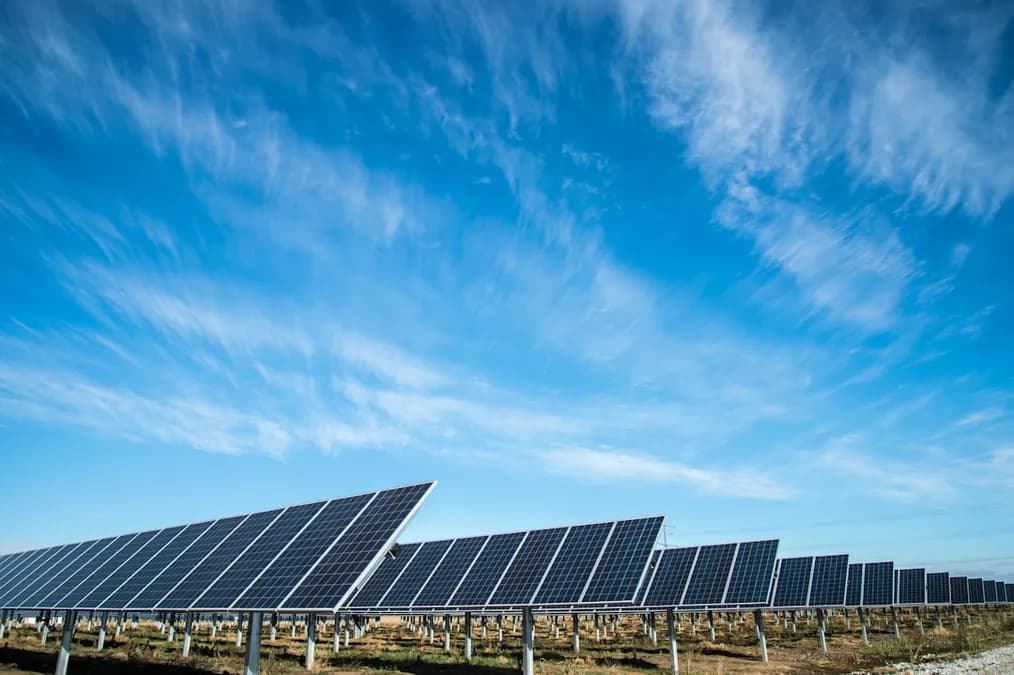
What Is Solar Energy and Why It Matters for Climate Action
In 2023, the world had more than 1.6 terawatts of installed solar photovoltaic capacity, according to the International Energy Agency’s Photovoltaic Power Systems Programme, up from roughly 1.2 TW just one year earlier. That scale changes the climate conversation. Solar energy is no longer a niche technology on rooftops and remote calculators. It is now one of the largest sources of new power capacity on Earth.
Solar energy refers to energy captured from sunlight and converted into electricity or heat. The dominant technology is solar photovoltaics, or PV, which turns sunlight directly into electricity through semiconductor materials. Concentrated solar power, a smaller segment, uses mirrors to focus sunlight and produce heat that can drive turbines. Rooftop systems, utility-scale solar farms, community solar projects, and off-grid mini-grids all sit under the wider solar energy umbrella.
Its climate relevance is straightforward: electricity generation remains one of the largest sources of carbon dioxide emissions, and solar power produces electricity without burning coal, oil, or gas. Once installed, a solar panel generates electricity with no combustion, no fuel transport, and no smokestack emissions. Lifecycle emissions still exist from mining, manufacturing, shipping, installation, and end-of-life processing, but they are far lower than those of fossil fuel plants.
The Intergovernmental Panel on Climate Change’s Sixth Assessment Report found that pathways limiting warming to 1.5°C require rapid, deep emissions reductions across energy, transport, buildings, industry, and land use. In those pathways, low-carbon electricity expands sharply. Solar is one of the technologies doing the heavy lifting because it can be built quickly, scaled from watts to gigawatts, and paired with batteries, grids, and demand management.
The International Energy Agency put the point plainly in its World Energy Outlook 2023: “Solar PV alone cannot get the world on track,” but it can help show the way. That is a useful framing. Solar energy is not a silver bullet. No serious climate pathway depends on one technology. But solar is unusually powerful because it attacks the central climate problem: fossil fuel combustion.
A single kilowatt-hour from a coal plant can emit around 800 to 1,000 grams of CO2, depending on plant efficiency and coal type. Gas-fired power is lower but still often several hundred grams per kilowatt-hour. Solar PV lifecycle emissions are commonly measured in the tens of grams per kilowatt-hour. When solar displaces fossil generation on the grid, the climate benefit is direct.
The timing matters. The carbon budget for 1.5°C is limited, and infrastructure built this decade can operate for decades. Every new fossil plant risks locking in future emissions. Every clean power plant can reduce that lock-in. Solar energy matters because it is available now, it is getting cheaper, and it can be deployed at a pace that matches the urgency of climate action.
Solar Energy and Climate Change: The Environmental Impact
A solar farm in a sunny region can generate electricity for 25 to 35 years with no fuel deliveries and no direct carbon emissions during operation. That operational difference is the core environmental advantage of solar energy.
Read next How Climate Change Works: A Clear ExplainerThe climate impact begins with avoided emissions. When solar replaces coal power, the emissions savings are large. When it replaces gas power, the savings are still significant. According to IPCC assessments of electricity technologies, solar PV has among the lowest lifecycle greenhouse gas emissions of major power sources, far below coal and natural gas even when manufacturing emissions are counted.
Solar also reduces local air pollution. Coal and oil combustion release sulfur dioxide, nitrogen oxides, fine particulate matter, mercury, and other pollutants linked to asthma, heart disease, premature death, and ecosystem damage. Gas plants usually emit less conventional air pollution than coal plants, but they still emit nitrogen oxides and carbon dioxide, and methane leakage from gas production and transport raises climate concerns. Solar panels do not emit these pollutants while generating power.
The environmental case is not impact-free. It is impact-lower. Solar manufacturing requires energy, silicon processing, glass, aluminum, copper, silver, polymers, and, in some panel types, specialty materials. Utility-scale projects need land. Transmission lines must be built. Old modules must be recycled or disposed of responsibly. These issues deserve serious scrutiny because clean energy supply chains must be cleaner, more transparent, and less wasteful than the fossil systems they replace.
Land use often receives public attention. A large solar farm may cover thousands of acres, and poor siting can conflict with habitat, agriculture, or local priorities. But land impacts vary widely. Solar can be placed on rooftops, parking lots, warehouses, degraded land, former mines, reservoirs through floating PV, and agricultural land through agrivoltaics. In Japan, floating solar projects have been used on reservoirs where land is scarce. In parts of Europe and the United States, agrivoltaic projects combine panels with sheep grazing, pollinator habitat, or shade-tolerant crops.
Water use is another advantage. Thermal power plants, including coal, gas, nuclear, and concentrated solar power, often need water for cooling. Solar PV needs little water during operation, mostly for occasional cleaning in dusty regions. In drought-prone areas, that matters. A power system that relies more on PV and wind can reduce pressure on water resources, especially where heat waves and water scarcity are becoming more severe.
End-of-life management is the next frontier. Most solar panels are built to last decades, but the first large waves of installations will eventually retire. Recycling can recover glass, aluminum frames, copper, and some semiconductor materials. The European Union already requires solar panel producers to finance collection and recycling under waste electrical and electronic equipment rules. Other markets are still building those systems.
The climate arithmetic remains strongly in solar’s favor. Energy payback time for modern PV systems is often one to three years, depending on technology, location, and manufacturing energy sources. After that, the system can generate low-carbon electricity for decades. In regions with coal-heavy grids, payback can be even more climate-significant because each kilowatt-hour of solar displaces high-emissions power.
The environmental verdict is clear but conditional: solar energy is one of the best available tools for cutting power-sector emissions, provided governments and companies manage land, materials, labor, recycling, and grid integration with care.
Current State of Solar Energy Worldwide
China added about 277 GW of solar PV in 2023, more than many countries had installed in total over their entire histories. That single statistic explains the current global solar map: growth is fast, uneven, and heavily shaped by policy, manufacturing, and grid capacity.
Global solar deployment has accelerated beyond forecasts that once looked ambitious. The IEA’s PVPS Snapshot 2024 reported roughly 407 GW to 446 GW of new PV capacity commissioned in 2023, bringing cumulative global capacity to about 1.6 TW. Its 2025 snapshot estimated that global PV capacity exceeded 2.2 TW by the end of 2024, with more than 600 GW added that year. Solar has moved from exponential promise to physical infrastructure at planetary scale.
China is the dominant market and manufacturer. It leads in polysilicon, wafers, cells, modules, inverters, and annual installations. Its huge domestic deployment has helped drive down costs globally, but it has also created supply-chain concentration risks. The IEA has warned that solar manufacturing is highly concentrated, with China accounting for the bulk of several key production stages. That concentration lowers costs but raises questions about resilience, trade, industrial policy, and labor standards.
The European Union has also expanded quickly. Germany, Spain, the Netherlands, Poland, and Italy have all added substantial solar capacity. Europe’s growth has been shaped by climate targets, high gas prices after Russia’s invasion of Ukraine, and the energy security push that followed. Rooftop solar became more attractive when households and businesses faced volatile electricity prices.
India is a crucial case study because its electricity demand is rising rapidly. The country has built some of the world’s largest solar parks, including Bhadla Solar Park in Rajasthan, a desert project often cited at more than 2 GW of capacity. India’s policy goals include 500 GW of non-fossil power capacity by 2030. Solar is central to that target because it can be deployed at large scale and increasingly at competitive prices.
The United States has seen strong growth as well, driven by utility-scale solar, state renewable standards, corporate procurement, tax credits, and the Inflation Reduction Act. Solar has become one of the largest sources of new electricity capacity additions in the U.S. market. Texas, California, Florida, Nevada, and Arizona have been major deployment states, each with different mixes of utility-scale and rooftop systems.
Australia shows what household solar can do. Rooftop PV penetration there is among the highest in the world. In some states, rooftop solar now supplies a large share of midday electricity, pushing wholesale prices down and changing how the grid operates. The challenge has shifted from whether solar can scale to how to manage abundant solar during sunny hours.
In Africa, the solar story is more mixed. The resource is enormous, but financing costs, grid constraints, currency risks, and policy uncertainty have slowed deployment in many countries. Off-grid solar and mini-grids have expanded electricity access, especially for lighting, phone charging, irrigation, refrigeration, and small businesses. Yet the continent still receives a small share of global clean energy investment relative to its need and potential.
Solar energy is now global, but not equally available. The next phase will depend less on panel prices alone and more on grids, storage, finance, permitting, and market design.
Advances in Solar Panel Efficiency and Technology
Commercial solar modules that once converted roughly 15% of sunlight into electricity now commonly exceed 20%, and the best mass-market panels are pushing higher. That improvement means more power from the same roof, field, or parking canopy.
The main engine of progress has been better cell architecture. Traditional aluminum back-surface-field cells gave way to PERC technology, which improved light capture and reduced electron losses. Now TOPCon and heterojunction cells are gaining market share. Both can deliver higher efficiencies, especially in large-scale manufacturing. Perovskite-silicon tandem cells, which stack materials that capture different parts of the solar spectrum, have achieved very high laboratory efficiencies and are moving toward commercial demonstration.
Efficiency matters because land, labor, racking, wiring, permitting, and grid connections all cost money. A more efficient panel can reduce balance-of-system costs by producing more electricity per square meter. On rooftops, where space is limited, efficiency can decide whether a building can meet a meaningful share of its demand.
Bifacial modules are another important advance. These panels generate electricity from both sides, capturing sunlight directly on the front and reflected light on the rear. In high-albedo environments such as deserts, snow-covered ground, light gravel, or white commercial roofs, bifacial gains can be significant. Combined with single-axis trackers that follow the sun across the sky, bifacial panels have improved the economics of utility-scale solar.
Inverters have become smarter. Modern inverters do more than convert direct current from panels into alternating current for the grid. They can provide voltage support, frequency response, monitoring, fault detection, and grid-forming capabilities in advanced systems. As solar becomes a larger share of power supply, these functions become essential. A grid with high solar penetration needs electronics that support stability, not just energy production.
Battery storage has changed the value of solar. Solar’s output peaks in daylight hours, often before evening demand peaks. Lithium-ion batteries can shift solar power into the evening, reduce curtailment, and provide fast grid services. In California, batteries now regularly supply large amounts of power after sunset, helping replace gas generation during evening ramps. In Hawaii, solar-plus-storage projects have been used to retire or reduce fossil generation on island grids.
Forecasting has improved too. Better satellite data, weather models, machine learning, and grid software allow operators to predict solar output more accurately. That reduces reserve needs and helps grid operators schedule other resources efficiently.
Recycling and circular design are also advancing. Researchers and companies are working on ways to recover higher-value materials from retired modules and design panels that are easier to disassemble. The industry needs that progress. By the 2030s and 2040s, solar waste volumes will rise as early installations retire. A mature solar sector must be a recycling sector as well.
The most promising technology path is not one breakthrough. It is a stack of gains: higher-efficiency cells, better manufacturing yields, durable modules, smarter inverters, cheaper batteries, improved forecasting, and stronger recycling. Together, they make solar energy more reliable, more valuable, and easier to integrate into climate-aligned power systems.
Economic Benefits of Solar Energy Transition
The International Renewable Energy Agency reported that utility-scale solar PV electricity costs fell by about 89% to 90% between 2010 and 2023, one of the steepest cost declines in modern energy history. That decline has turned climate policy into economic policy.
IRENA’s Renewable Power Generation Costs reports show how dramatic the shift has been. In 2010, solar PV was often far more expensive than fossil alternatives. By 2023, IRENA found that the global weighted average cost of electricity from new utility-scale solar PV was below the cost of many fossil fuel options. The agency estimated the 2023 global average utility-scale solar PV LCOE at about $0.044 per kilowatt-hour.
Lower costs change investment decisions. Utilities choose solar because it is cheap. Companies sign power purchase agreements because solar can hedge against volatile fuel prices. Households install rooftop systems to reduce bills. Governments support solar not only for emissions cuts but also for energy security, industrial development, and job creation.
Solar’s economic value is strongest when paired with system planning. The cheapest kilowatt-hour is not always the most valuable kilowatt-hour. A midday solar surplus may have low market value if the grid lacks storage, transmission, or flexible demand. But with batteries, electric vehicles, heat pumps, industrial load shifting, and regional transmission, solar can reduce fuel costs across the system.
Job creation is another major benefit. Solar employment spans manufacturing, project development, engineering, construction, installation, operations, maintenance, finance, sales, software, and recycling. Rooftop solar is labor-intensive; utility-scale solar creates large construction workforces during buildout and smaller long-term operations teams. The quality of those jobs depends on labor standards, training, wages, and domestic policy choices.
For import-dependent countries, solar can improve energy security. A solar plant has no fuel price. Once built, its operating costs are relatively predictable. That does not eliminate exposure to global supply chains for panels and components, but it reduces exposure to coal, oil, and gas price shocks. Europe’s energy crisis after 2021 made that lesson concrete. Clean electricity became not only a climate goal but a shield against fossil fuel volatility.
For low-income and energy-poor communities, solar can expand access. Off-grid solar home systems have brought basic electricity services to millions of people. Mini-grids can power clinics, schools, irrigation pumps, cold storage, and small enterprises. The economic gains are not automatic; affordability, maintenance, consumer protection, and productive use matter. But solar can reach places where extending the central grid is slow or expensive.
Real-world examples show the range. In India, large solar auctions helped push prices down and create a utility-scale market. In Australia, rooftop solar reduced household electricity bills and reshaped daytime power markets. In the United States, tax credits and state policies helped solar compete against gas and coal, while new manufacturing incentives seek to rebuild domestic supply chains. In Kenya, pay-as-you-go solar helped expand access to electricity services through mobile payments.
The economic case for solar energy is strongest when policymakers look beyond panel prices. The full value comes from lower fuel costs, cleaner air, reduced climate damages, resilient supply, local jobs, and new industrial capacity.
Challenges and Barriers to Solar Energy Adoption
In some power markets, solar output is already being curtailed because panels can produce more electricity at midday than the grid can absorb. That is not a failure of solar. It is a warning that infrastructure and market rules must catch up.
Intermittency is the most familiar challenge. Solar does not generate at night, and clouds can reduce output. This does not make solar unreliable by definition; it means solar must be part of a balanced system. Batteries, transmission, hydropower, geothermal, nuclear, demand response, flexible industry, and well-designed markets can all help. The problem is not variability itself. Grid operators have always managed variable demand and unexpected plant outages. The challenge is managing much higher shares of weather-dependent supply.
Transmission is a major bottleneck. The best solar resources are often far from cities and industrial centers. Building power lines can take longer than building solar farms because of permitting, landowner negotiations, cost allocation disputes, and local opposition. The IEA has repeatedly warned that grid investment must rise sharply to support clean energy deployment. Without wires, solar projects wait in interconnection queues or produce electricity that cannot reach customers.
Permitting can slow projects. Utility-scale solar faces land-use reviews, environmental assessments, local zoning disputes, and community concerns. Rooftop solar faces paperwork, inspection delays, interconnection rules, and inconsistent fees. Good permitting should protect people and ecosystems. Bad permitting simply adds cost and delay without improving outcomes.
Financing remains uneven. Solar may be cheap on paper, but high interest rates can make projects expensive because most costs are upfront. Fossil fuel plants pay for fuel over time; solar pays for equipment and installation first. Countries with high borrowing costs can face expensive clean power even when sunlight is abundant. This is why climate finance, guarantees, concessional loans, and stable policy frameworks matter.
Supply chains bring another barrier. The solar industry relies heavily on China-centered manufacturing. That has lowered global costs, but it has also created geopolitical risk and concerns over forced labor allegations in parts of the supply chain. Governments are trying to diversify production through industrial policy in the United States, India, Europe, and Southeast Asia. Diversification may raise costs in the short term but improve resilience.
Material demand deserves attention. Silver, copper, aluminum, glass, polysilicon, and other inputs must be sourced responsibly. The industry is already reducing silver use per cell and improving material efficiency, but massive scale requires careful mining governance and recycling.
Equity is a persistent issue. Rooftop solar has often benefited homeowners with good credit, suitable roofs, and access to tax incentives. Renters, low-income households, and apartment residents can be left out. Community solar, on-bill financing, targeted incentives, and public housing solar programs can broaden access. A climate solution that lowers emissions but excludes vulnerable communities is politically weaker and morally incomplete.
There is also a misinformation barrier. Solar is sometimes criticized for requiring more energy to manufacture than it produces, a claim contradicted by modern energy payback studies. Others argue that panel waste makes solar worse than fossil fuels, ignoring the enormous ongoing waste streams from coal ash, methane leakage, oil spills, and combustion emissions. Solar has real environmental challenges, but they are manageable and much smaller than the climate costs of continued fossil fuel dependence.
The barriers are serious. They are also solvable. The limiting factors are increasingly institutional: grids, rules, finance, siting, labor, and public trust.
Government Policies Driving Solar Energy Growth
Nearly 140 countries have policies that support renewable power growth, according to the IEA’s Renewables 2024 analysis. Solar energy is expanding because technology improved, but policy created the market conditions for that improvement to matter.
Policy tools vary. Feed-in tariffs helped launch early solar markets in Germany, Japan, and parts of Europe by guaranteeing prices for solar generation. Auctions later drove prices down by making developers compete for long-term contracts. Tax credits have supported solar in the United States. Renewable portfolio standards required utilities to buy clean power. Net metering helped rooftop solar owners receive credit for electricity exported to the grid. Public finance institutions supported projects in emerging markets.
Germany’s Energiewende offers one early lesson. Its feed-in tariffs were expensive by today’s standards, but they helped build global demand at a time when solar was costly. That demand contributed to manufacturing scale, learning curves, and cost declines that benefited the rest of the world. Early adopters paid more. Later adopters gained cheaper technology.
China’s industrial policy offers another lesson. Through manufacturing scale, supply-chain coordination, domestic deployment, and export capacity, China drove global panel prices down. The climate benefit has been enormous, but the concentration risk is now obvious. Other governments are responding with domestic manufacturing incentives, tariffs, procurement rules, and strategic supply-chain policies.
The United States Inflation Reduction Act is one of the most consequential recent examples. It extended and expanded clean energy tax credits, added incentives for domestic manufacturing, and created bonuses for certain communities and labor standards. The law is designed not just to deploy solar but to shape where equipment is made and who benefits from projects.
India has used auctions, solar parks, production-linked incentives, and national targets to expand solar. Its challenge is to grow clean power while meeting rising demand, strengthening distribution companies, and managing grid reliability. India’s experience matters globally because development and decarbonization must happen together.
The European Union has paired climate targets with energy security measures. After the gas crisis, solar became part of the strategy to reduce fossil fuel dependence. Policies under the European Green Deal, REPowerEU, and national programs have supported faster deployment, though permitting and grid constraints remain obstacles.
Policy is also moving toward storage and grids. Solar incentives alone are no longer enough in high-penetration markets. Governments need interconnection reform, transmission planning, storage procurement, dynamic pricing, demand response standards, and support for distributed energy resources. A solar panel on a roof is more valuable when paired with smart meters, flexible loads, and fair compensation rules.
Good policy must also address justice. Low-income solar incentives, community solar, public-sector procurement, workforce training, and protections against predatory sales practices can make the solar transition broader and more durable. Climate policy fails when it is seen as something done to communities rather than with them.
The policy lesson is simple: solar growth follows clear rules, stable incentives, fast permitting, fair grid access, and credible long-term targets. Markets can move quickly when governments reduce uncertainty.
The Future of Solar Energy in Fighting Climate Change
The IEA’s net-zero pathway calls for solar generation to rise steeply this decade, with solar PV reaching several thousand gigawatts of installed capacity by 2030. That future is no longer speculative. The world is already building at a scale that would have seemed extraordinary a decade ago.
The future of solar energy will be defined by integration. Cheap panels are only the beginning. The next stage is a power system built around abundant low-cost electricity at certain hours, backed by storage, flexible demand, regional transmission, and firm low-carbon resources. The goal is not maximum solar at any cost. The goal is a reliable, affordable, low-emissions grid.
Electrification will magnify solar’s value. Electric vehicles can charge during sunny hours. Heat pumps can shift some heating and cooling demand. Water heaters, cold storage, desalination plants, and some industrial processes can run flexibly when solar output is high. Green hydrogen may absorb excess solar in some regions, though it should be reserved for sectors where direct electrification is hard, such as certain industrial processes, shipping fuels, and fertilizer production.
The IPCC AR6 mitigation report shows that 1.5°C pathways require a rapid shift away from unabated fossil fuels and toward low- and zero-carbon energy. Solar is central because it is scalable, modular, and increasingly affordable. But the same pathways also require efficiency, wind, storage, electrification, methane cuts, land protection, industrial transformation, and carbon dioxide removal for residual emissions. Solar expands the climate toolkit; it does not replace the need for a full transition.
Climate resilience will shape solar design. Hotter temperatures can reduce panel efficiency. Stronger storms, hail, wildfire smoke, dust, and flooding can damage assets or reduce output. Developers and regulators will need better siting standards, stronger mounting systems, hail-resistant modules, vegetation management, fire planning, and climate-adjusted insurance. Solar infrastructure must be built for the climate it is helping to stabilize.
The most important near-term task is speed with discipline. Build faster, but site better. Cut costs, but protect workers. Expand supply chains, but clean them up. Add solar, but build grids and storage at the same time. Retire fossil generation, but support communities tied to coal, oil, and gas work.
By 2030, solar could be the largest source of installed power capacity in the world. Installed capacity is not the same as generation, because solar produces only when sunlight is available, but the milestone still matters. It signals a structural shift in the energy economy. For more than a century, power systems were organized around burning fuels. The emerging system is organized around harvesting flows: sunlight, wind, water, and stored electricity.
Solar energy fights warming because it turns the planet’s most abundant energy source into electricity without adding carbon to the atmosphere during operation. It is fast to build, increasingly cheap, and adaptable from a village clinic to a desert-scale power plant. The climate crisis is moving quickly. Solar is one of the few tools moving quickly enough to matter.
Related coverage