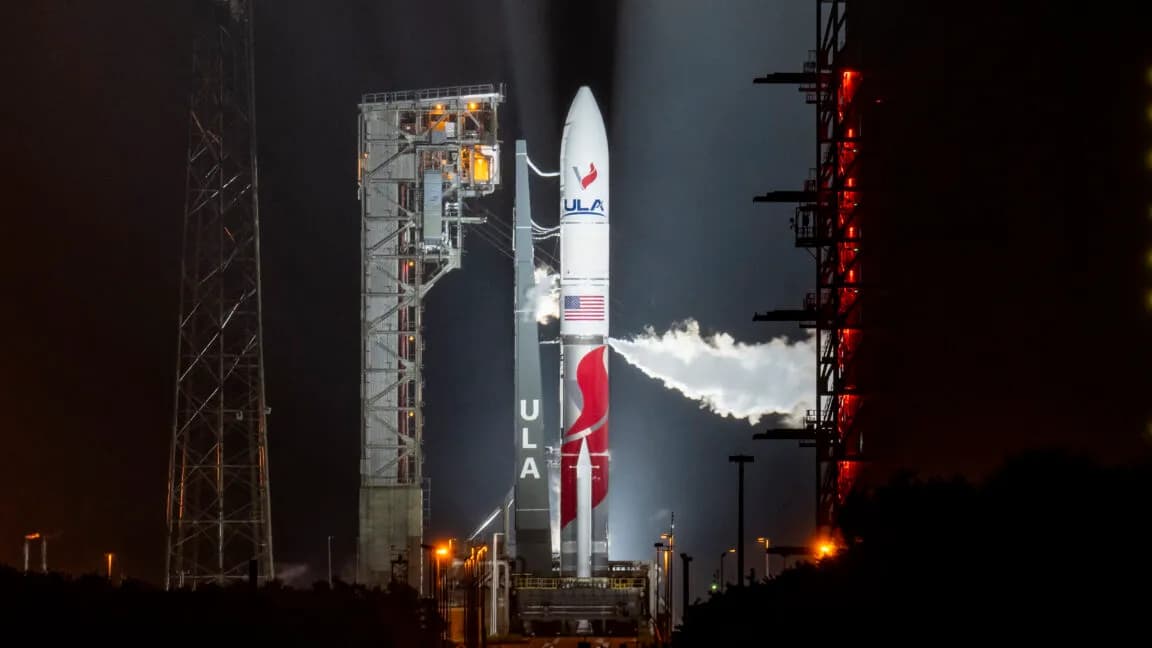
ULA's Financial Struggles in a Changing Space Market
United Launch Alliance's position in the American launch industry has become increasingly precarious. The joint venture between Boeing and Lockheed Martin was once the undisputed backbone of national security launches, commanding the entire manifest of government payloads with little competition. That era is over. The United Launch Alliance financial problems now visible to industry observers reflect a company caught between a model built for a monopoly era and a market that has fundamentally restructured around cost and reusability.
The Space Force's National Security Space Launch program — the primary source of ULA revenue — began formally opening its manifest to competition from SpaceX after years of legal battles and regulatory reform. As SpaceX demonstrated reliable performance and dramatically lower prices through Falcon 9 booster recovery, pressure on ULA's pricing and market position intensified year over year. Analysts at firms including Bryce Space and Technology have tracked how competitive dynamics shifted sharply after 2020, with SpaceX's share of government launch contracts growing while ULA's contracted scope narrowed. The economic logic that once insulated ULA — cost-plus contracting relationships and a government-mandated duopoly — no longer applies the way it did for the company's first decade.
How Rivals Transformed Themselves Through Reusability and Diversification
Every other significant American rocket company has pursued two interlocking strategies: making hardware reusable to reduce marginal costs, and expanding into adjacent markets to reduce dependence on any single revenue stream. ULA has done neither.
Read next Laika's Wildwood: Stop-Motion Fantasy at TIFF 2026SpaceX executed this transformation most aggressively. Starting with Falcon 9 booster recovery, the company built a reuse cadence that now turns around boosters within days of landing. But SpaceX didn't stop at launch cost reduction. It moved into cargo resupply for NASA, crewed spaceflight, satellite manufacturing, and broadband internet through Starlink — creating revenue streams that now dwarf its launch business in scale. The company is reportedly exploring orbital data centers and in-space manufacturing as further extensions of that vertical integration strategy.
Blue Origin has taken a different path toward the same destination. Initially a pure rocket developer, it is now building satellites, advancing robotics, and positioning itself as a potential competitor to SpaceX's Starlink broadband network. Its New Glenn rocket gives it a heavy-lift capability, but Blue Origin's leadership clearly views launch as one piece of a broader space economy platform.
Rocket Lab's trajectory is perhaps the most instructive for understanding what ULA has failed to do. After establishing itself with the small Electron launch vehicle, the company relocated its headquarters from New Zealand to Southern California, then systematically acquired businesses to expand into spacecraft manufacturing, satellite components, and payload production. Rocket Lab is now a merchant supplier to the satellite industry — a model that generates recurring revenue independent of launch cycles. Its next vehicle, Neutron, is designed with partial reusability from the outset, meaning the company will have a competitive cost structure before the rocket reaches its first operational mission.
ULA, by contrast, has no satellite business, no components supply chain, and no broadband ambition. Vulcan Centaur is expendable. The company remains a launch-only provider in a market that increasingly rewards vertical integration and recurring revenue.
The Case for Boeing and Lockheed Martin Selling ULA
Boeing and Lockheed Martin created ULA in 2006 to consolidate launch operations and reduce redundant costs while maintaining guaranteed access to government contracts. The arrangement made strategic sense when the government was the only meaningful customer for large rockets and when both parents had strong reasons to stay involved in launch.
Neither condition holds today. Boeing, managing turbulence across its commercial aviation and defense programs, has limited appetite for pouring capital into a launch venture facing structural margin compression. Lockheed Martin, heavily oriented toward defense systems and satellites, has less operational synergy with ULA than it did two decades ago. The United Launch Alliance financial problems are not simply a matter of quarterly losses — they represent a deep mismatch between what both parent companies can realistically invest and what remaining competitive would actually require.
A sale would allow both parents to exit a business demanding patient, long-horizon capital in a market they no longer control. From a portfolio management standpoint, the strategic case for holding ULA has weakened considerably as SpaceX has captured a dominant share of both government and commercial launch manifests. Holding on out of inertia looks less defensible each year.
Who Would Buy ULA and What Would They Get
Any acquirer would inherit a genuinely complex asset. ULA brings operational depth that cannot be quickly replicated: decades of launch experience, an extensively trained technical workforce, established procurement relationships with the Space Force and intelligence community, and an unblemished mission success record across hundreds of flights. A zero-failure rate is a rare and valuable credential in a business where payload replacement costs run into the hundreds of millions.
Vulcan Centaur, now operational, represents a capable heavy-lift platform built for the demanding upper-stage trajectories that national security missions require. Its liquid hydrogen and liquid oxygen upper stage can reach orbits that many newer rockets cannot. An acquirer with capital and strategic patience could build on this foundation — but would need to commit significant resources to maintain workforce stability and eventually pursue some form of reusability development.
Private equity has shown growing appetite for defense-adjacent aerospace assets, and a strategic buyer — a defense prime seeking launch capability, or a well-capitalized new space company preferring acquisition to organic development — is also plausible. The central question is whether any buyer would commit the capital required after paying an acquisition premium, given the competitive lead SpaceX has already established.
What a ULA Ownership Change Would Mean for National Security Launches
The Space Force and intelligence community have maintained a deliberate policy of sustaining at least two domestic launch providers for national security payloads. This is not sentimentality. It reflects mission assurance doctrine. Single-source dependence on SpaceX would expose government launch planning to supplier risk that no procurement official wants to explain to a congressional oversight committee or an inspector general.
A ULA sale, properly structured, could strengthen this dynamic if it brought in an owner with resources and genuine incentives to invest in Vulcan's long-term competitiveness. Former defense procurement officials have argued that what matters for mission assurance is not corporate ownership structure but production rate, supply chain resilience, and workforce stability. An adequately capitalized new owner committing to those factors would satisfy government requirements without disruption to classified or unclassified manifests.
The risk scenario is a disorderly exit — a protracted bankruptcy proceeding or a sale to a buyer that underinvests post-acquisition. That outcome would put launch capacity at risk in ways that could ripple through national security missions for years.
Can ULA Compete Without a Fundamental Business Overhaul
The honest answer is probably not — at least not on the current trajectory. The United Launch Alliance financial problems are structural, not cyclical. They reflect a business model designed for a different market, owned by parents with competing priorities, and lacking the diversification that has insulated every significant competitor from launch market volatility.
Reusability is not a near-term option for Vulcan without substantial new investment well beyond current ownership's apparent appetite. Diversification into adjacent markets — spacecraft manufacturing, satellite components, commercial launch services — would require strategic clarity and capital that the current structure seems unlikely to provide. Short-term contract wins do not resolve long-term unit economics.
The pressures are real and compounding. Whether they are sufficient to force Boeing and Lockheed Martin to sell ultimately depends on how much financial pain each company is willing to absorb before concluding that a clean exit serves shareholders better than continued support for a structurally challenged joint venture. The space industry is watching closely, and the answer, one way or another, is probably coming soon.
Related coverage
Source: Ars Technica - All content