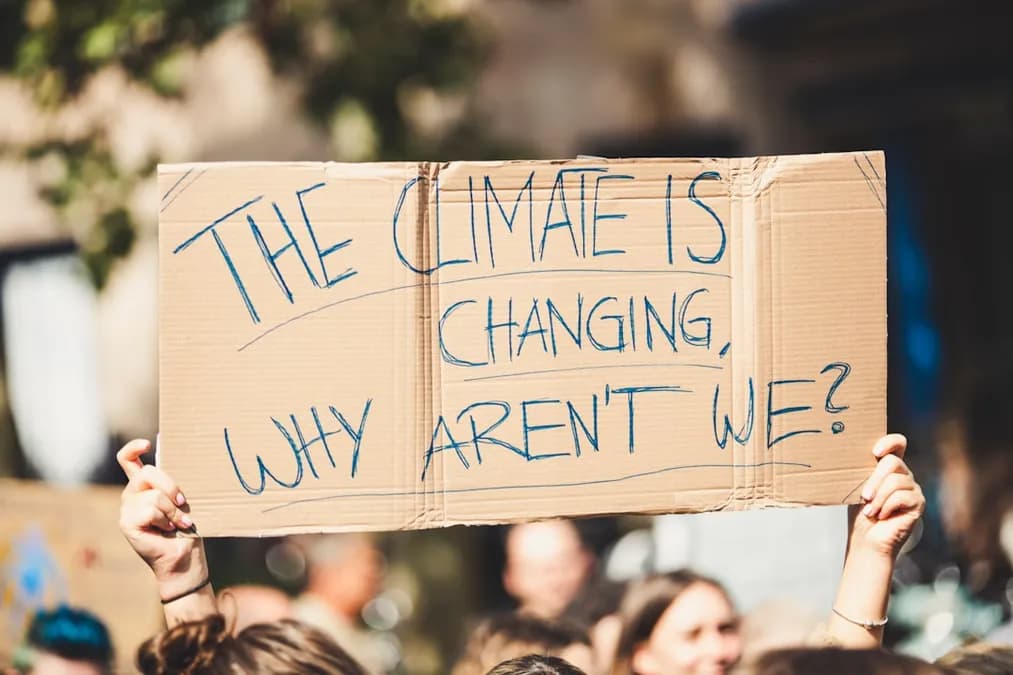
How Vehicles Contribute to Climate Change
A gasoline car that burns one gallon of fuel releases about 8.9 kilograms of carbon dioxide before counting the emissions from drilling, refining, and transporting the fuel. Multiply that by more than 1.4 billion vehicles on the world’s roads, and the connection between vehicle emissions climate change and daily mobility becomes unmistakable.
Transport is one of the largest sources of climate pollution. The International Energy Agency reports that transport accounts for about 23% of global energy-related CO2 emissions, with road vehicles responsible for the largest share. Cars, SUVs, vans, buses, and trucks dominate the sector because they still run mostly on petroleum. Aviation and shipping matter too, but the car in the driveway and the truck on the highway are central to the climate equation.
The problem is not only carbon dioxide. Vehicles also emit nitrogen oxides, particulate matter, carbon monoxide, and volatile organic compounds. These pollutants worsen air quality and harm health, especially near highways, ports, warehouses, and freight corridors. Climate change adds another layer: hotter days increase ozone formation, while extreme weather disrupts transportation systems that were built for a more stable climate.
The phrase vehicle emissions climate change describes a chain of causes. Fuel is extracted. It is refined. It is transported. It is burned in an engine. The exhaust adds greenhouse gases to the atmosphere, where they trap heat and raise global temperatures. That warming then intensifies heat waves, floods, droughts, wildfires, and sea-level rise.
The Intergovernmental Panel on Climate Change’s Sixth Assessment Report identifies transport as a difficult but solvable sector. IPCC AR6 finds that electric vehicles powered by low-emissions electricity offer the largest decarbonization potential for land transport on a lifecycle basis, while public transit, walking, cycling, compact cities, and freight efficiency can reduce demand for high-carbon travel.
That matters because transport demand is still rising. More people are buying cars as incomes grow. E-commerce has increased delivery traffic. SUVs have become more popular, and the IEA has repeatedly warned that larger, heavier vehicles erode efficiency gains. Without strong policy and cleaner technology, transport emissions can keep rising even as engines become more efficient.
The Environmental Cost of Fossil Fuel Vehicles
A typical gasoline vehicle driven 150,000 miles can burn thousands of gallons of fuel over its lifetime, locking in decades of emissions from a single purchase. The climate cost begins long before the first commute.
Read next How Climate Change Works: A Clear ExplainerInternal combustion engine vehicles depend on an oil supply chain that carries emissions at every stage. Exploration and drilling consume energy. Methane can leak during extraction. Refineries use heat, hydrogen, and electricity to turn crude oil into gasoline and diesel. Tanker ships, pipelines, and trucks then move fuels to market. Tailpipe emissions are only the most visible part of the total footprint.
Gasoline and diesel vehicles are inefficient by design. Much of the fuel’s energy is lost as heat rather than motion. The U.S. Department of Energy estimates that conventional gasoline vehicles typically convert only a fraction of fuel energy into power at the wheels. Electric drivetrains are far more efficient, which is why electricity can often move a vehicle with lower total emissions even when the grid still uses fossil fuels.
Heavy-duty vehicles create an outsized impact. Medium- and heavy-duty trucks are a minority of vehicles on the road, but they burn large volumes of diesel and run high annual mileage. Freight trucks are essential to food, medicine, construction, and retail supply chains, yet their emissions are concentrated along major corridors and in communities near warehouses and ports.
Real-world examples show the stakes. California’s South Coast Air Basin, home to Los Angeles and major goods-movement infrastructure, has long struggled with smog and particulate pollution linked to vehicles, trucks, ships, and port equipment. In Europe, diesel passenger cars contributed to urban nitrogen dioxide problems for years, prompting low-emission zones in cities such as London, Paris, and Madrid.
The climate impact also depends on vehicle size. A compact car, a full-size pickup, and a large SUV do not carry the same emissions burden. Bigger vehicles require more materials to manufacture, larger batteries if electrified, and more energy to move. Analysts at BloombergNEF and the IEA have both noted that rising SUV sales have become a meaningful emissions concern because efficiency improvements are partly canceled out by heavier fleets.
This is why vehicle emissions climate change policy cannot focus only on fuel type. It must also address vehicle weight, miles traveled, freight logistics, land use, and the speed of power-sector decarbonization.
Electric Vehicles as a Climate Solution
In the United States, the Environmental Protection Agency’s lifecycle analysis compares electric vehicles and gasoline vehicles over 150,000 miles and finds that EVs typically produce lower total greenhouse gas emissions, even after accounting for battery manufacturing. That finding is central to the climate case for electrification.
EVs have no tailpipe emissions. They do not burn gasoline while idling in traffic. They do not emit carbon dioxide, nitrogen oxides, or soot at the street level. Their climate impact comes mainly from manufacturing and the electricity used for charging.
Battery production is energy-intensive. Mining and processing lithium, nickel, cobalt, graphite, iron, and other materials create environmental and social concerns that need serious oversight. But the lifecycle comparison usually still favors EVs because an internal combustion vehicle keeps burning fuel every mile it drives, while an EV can become cleaner as the grid adds wind, solar, hydro, nuclear, geothermal, and storage.
The EPA’s public EV emissions tools show why geography matters. An EV charged in a region with cleaner electricity has a lower footprint than one charged on a coal-heavy grid. Yet national-average comparisons still generally favor EVs over gasoline vehicles. As grids decarbonize, the advantage grows.
The global market is moving quickly. The IEA’s Global EV Outlook has documented rapid EV adoption, especially in China, Europe, and the United States. China has become the world’s largest EV market, supported by industrial policy, battery manufacturing, charging infrastructure, and intense competition among automakers. Norway offers a different case study: tax incentives, toll benefits, and charging access helped battery-electric vehicles dominate new car sales.
EVs are not a complete answer to vehicle emissions climate change. They still require roads, parking, tires, minerals, and electricity. Tire and brake particles remain a concern, though regenerative braking can reduce brake wear. Congestion does not disappear when cars are electric. A three-ton electric SUV still uses more energy and materials than a smaller EV, bus, train, bicycle, or walkable trip.
Still, for trips that remain car-dependent, electrification is one of the most powerful tools available. Climate scientists often describe the solution as “electrify everything you can, clean the grid, and reduce unnecessary energy demand.” Transport fits that formula.
Hybrid and Alternative Fuel Vehicles
A hybrid taxi in stop-and-go city traffic can save substantial fuel because regenerative braking captures energy that a conventional vehicle wastes as heat. That is why hybrids became common in urban fleets long before EVs reached mass adoption.
Hybrid vehicles sit between conventional gasoline cars and fully electric models. Standard hybrids use a battery and electric motor to improve efficiency, but they still rely on gasoline. Plug-in hybrids can drive some miles on electricity before switching to an engine. Their climate value depends heavily on behavior. A plug-in hybrid charged daily and driven mostly on electricity can reduce emissions. One that is rarely plugged in may perform little better than a conventional hybrid while carrying extra weight.
Alternative fuels have a narrower but relevant role. Biofuels such as ethanol, biodiesel, and renewable diesel can lower lifecycle emissions in some cases, depending on feedstock, land use, farming practices, processing energy, and transport. The IEA notes that biofuel climate benefits vary widely. A fuel made from waste oil is not the same as one linked to deforestation or high fertilizer use.
Hydrogen fuel cell vehicles emit only water vapor at the tailpipe, but the hydrogen source is decisive. Most hydrogen today is produced from natural gas, which creates carbon emissions unless paired with effective carbon capture. Green hydrogen, made from water using low-carbon electricity, has much stronger climate potential but remains expensive and infrastructure-limited.
Hydrogen may be better suited to harder-to-electrify segments: long-haul trucking, some industrial fleets, shipping fuels, and possibly aviation-derived synthetic fuels. For passenger cars, battery-electric technology has a large head start because charging networks can build on the electric grid, while hydrogen stations require a new fuel distribution system.
Natural gas vehicles were once promoted as cleaner than diesel, especially for buses and trucks. They can reduce some air pollutants, but methane leakage weakens their climate case. Methane is a powerful greenhouse gas over the short term. For long-term decarbonization, replacing one fossil fuel with another is at best a bridge, and often a distraction.
The practical hierarchy is clear. Use electricity where it works. Use truly low-carbon fuels where direct electrification is difficult. Avoid treating every alternative fuel as climate-friendly without lifecycle evidence.
Government Policies Driving Clean Transportation
The European Union has set rules requiring new cars and vans sold after 2035 to be zero-emission, a policy designed to reshape automaker investment years before the deadline. Regulation is now one of the strongest forces in the vehicle emissions climate change landscape.
Policy works because vehicle markets are slow to change on their own. Cars can remain on the road for 12 to 20 years. Trucks and buses are capital-intensive. Charging networks need coordinated investment. Consumers respond to price, convenience, and confidence. Governments can influence all of those factors.
Fuel economy and tailpipe CO2 standards push manufacturers to improve efficiency and sell cleaner vehicles. Zero-emission vehicle mandates require automakers to deliver a growing share of EVs or other qualifying vehicles. Purchase incentives reduce upfront costs. Public charging investments address range anxiety. Building codes can require EV-ready wiring in new homes and commercial properties.
The United States has combined several approaches. Federal tax credits under the Inflation Reduction Act support qualifying EV purchases and domestic battery supply chains. The EPA has finalized greenhouse gas standards for light-duty and heavy-duty vehicles. States such as California have adopted Advanced Clean Cars and Advanced Clean Trucks rules, influencing markets far beyond state borders.
China’s policies show how industrial strategy can accelerate deployment. Subsidies, license-plate rules, charging infrastructure, battery supply-chain investment, and strong domestic competition helped Chinese EV makers scale rapidly. The result has changed global auto markets, pressuring legacy manufacturers to lower costs and speed up electrification.
Policy also has to protect workers and communities. Auto manufacturing supports millions of jobs across assembly plants, parts suppliers, dealerships, repair shops, and logistics firms. A clean transportation transition that ignores labor, training, and regional economic impacts will face political resistance. Stronger policy designs include workforce development, domestic manufacturing support, battery recycling standards, and community charging access.
Climate policy is most effective when it pairs vehicle standards with clean electricity. An EV mandate without grid decarbonization leaves emissions reductions incomplete. A clean grid without vehicle electrification leaves oil demand untouched. The two systems have to move together.
Sustainable Transportation Beyond Personal Cars
A rush-hour bus carrying 50 passengers can replace dozens of private cars while using far less street space per person. That simple geometry is why transportation climate policy cannot stop at swapping engines.
Personal cars are convenient, but car-dependent systems are emissions-intensive, land-intensive, and expensive. Roads, parking lots, highways, and low-density development lengthen trips and make alternatives harder. The result is more driving, more fuel use, more traffic, and higher household transportation costs.
Public transit reduces emissions when it attracts riders from private vehicles and operates efficiently. Electric buses strengthen the case further. Shenzhen, China, became an early global example by electrifying its large bus fleet, reducing local air pollution and oil use. Cities from Santiago to London to New York have since expanded electric bus procurement.
Rail is even more efficient in dense corridors. High-speed rail can replace some short-haul flights, while metro and commuter rail systems move large numbers of people with low per-passenger emissions. Freight rail is also far more fuel-efficient than trucking per ton-mile, though trucks remain essential for first- and last-mile delivery.
Walking and cycling are climate solutions with health benefits. Protected bike lanes, safe sidewalks, traffic calming, and connected street networks can shift short trips away from cars. Many urban car trips are only a few miles. Replacing some of them with biking, walking, e-bikes, scooters, or transit can reduce emissions without waiting for every vehicle to turn over.
E-bikes deserve special attention. They use tiny batteries compared with cars, cost less, and can replace commutes, school runs, and errands for many households. In cities with safe infrastructure, e-bikes can reduce car dependence quickly.
Freight logistics also matter. Better route planning, fuller truckloads, urban consolidation centers, off-peak delivery, electric delivery vans, cargo bikes, and rail intermodal shipping can all reduce emissions. Companies such as UPS, Amazon, and DHL have tested electric vans and cargo-bike delivery in dense cities, though the climate results depend on scale and operational discipline.
The IPCC AR6 emphasizes demand-side measures: avoiding unnecessary travel, shifting to lower-carbon modes, and improving vehicle and fuel technology. The cleanest mile is often the one not driven in a private fossil-fuel vehicle.
What Consumers Can Do to Reduce Vehicle Emissions
A driver who replaces a 20-mile solo commute with transit, carpooling, biking, or telework two days a week can reduce annual driving by roughly 2,000 miles. That kind of change is small enough to be realistic and large enough to matter.
Consumers do not control the whole transport system, but they influence vehicle emissions climate change through purchase decisions, driving habits, and political choices. The highest-impact personal decision is often the next vehicle purchase. If a household can choose an EV, especially a right-sized model charged on an increasingly clean grid, lifetime emissions can fall sharply.
For households not ready for an EV, a high-efficiency hybrid can be a practical step. Buying the most efficient vehicle that meets real needs is better than buying extra size for rare situations. A family that needs cargo space may not need the largest SUV. A commuter may not need a pickup. Vehicle size affects fuel use every mile.
Driving behavior matters too. Smooth acceleration, moderate speeds, proper tire inflation, and reduced idling all save fuel. The U.S. Department of Energy has found that aggressive driving and high speeds can significantly lower fuel economy. Maintenance also matters: clean filters, correct oil, aligned wheels, and healthy tires help vehicles perform as designed.
Charging choices can lower EV emissions. Charging during periods of high renewable generation, using utility time-of-use rates, or pairing home charging with rooftop solar can reduce costs and emissions. Smart charging can also help the grid by shifting demand away from peak hours.
Consumers can also reduce miles. Combine errands. Work remotely when possible. Choose housing near jobs, schools, or transit when feasible. Support safe walking and biking infrastructure. Use car-sharing for occasional needs rather than owning a second vehicle. None of these choices fits every household, but the menu is broad.
Policy choices are consumer choices too. Voters can support transit funding, clean vehicle standards, charging infrastructure, safer streets, zoning reform, and cleaner electricity. Individual action works best when systems make low-carbon choices convenient, affordable, and safe.
The Future of Climate-Friendly Transportation
By 2030, the IEA’s net-zero pathways require rapid growth in EV sales, cleaner grids, more efficient freight, and major reductions in oil demand from road transport. The next decade will decide whether the transport sector bends fast enough.
The future will not be one technology. Passenger cars are moving toward batteries. City buses are moving quickly toward electricity. Delivery fleets are electrifying because vehicles return to depots and have predictable routes. Heavy trucks may split across batteries, hydrogen, overhead charging corridors, and low-carbon fuels depending on route length, payload, and infrastructure.
Aviation and shipping are harder. Batteries are too heavy for most long-haul aviation. Sustainable aviation fuels, synthetic fuels, hydrogen, and efficiency improvements will be needed, but supplies are limited and expensive. Shipping may use ammonia, methanol, hydrogen-derived fuels, wind assistance, slower speeds, and port electrification. These sectors need strict standards because voluntary action will not decarbonize them fast enough.
Battery technology will improve, but expectations should stay grounded. Lower-cost lithium iron phosphate batteries are already reducing reliance on nickel and cobalt in many vehicles. Sodium-ion batteries could help with lower-cost applications. Recycling can recover valuable materials and reduce new mining demand, though large recycling volumes will grow only as today’s EVs reach end of life.
Automotive industry analysts increasingly view the transition as irreversible, even if the pace varies by region. BloombergNEF has projected continued EV growth as battery prices fall and policy tightens. Automakers that once treated EVs as niche products are now redesigning factories, supply chains, and software platforms around electrification.
The climate test is speed and scale. Vehicle emissions climate change cannot be solved by luxury EVs alone. The world needs affordable electric cars, clean buses, reliable charging, efficient trucks, safer streets, denser communities, and low-carbon power. It also needs fewer unnecessary vehicle miles in places where alternatives can work.
The IPCC AR6 message is blunt but useful: transport emissions can fall through a combination of electrification, low-carbon fuels, efficiency, mode shifting, and demand reduction. No single measure carries the whole load. Together, they can transform mobility from a major driver of warming into a sector aligned with climate stability.
Related coverage