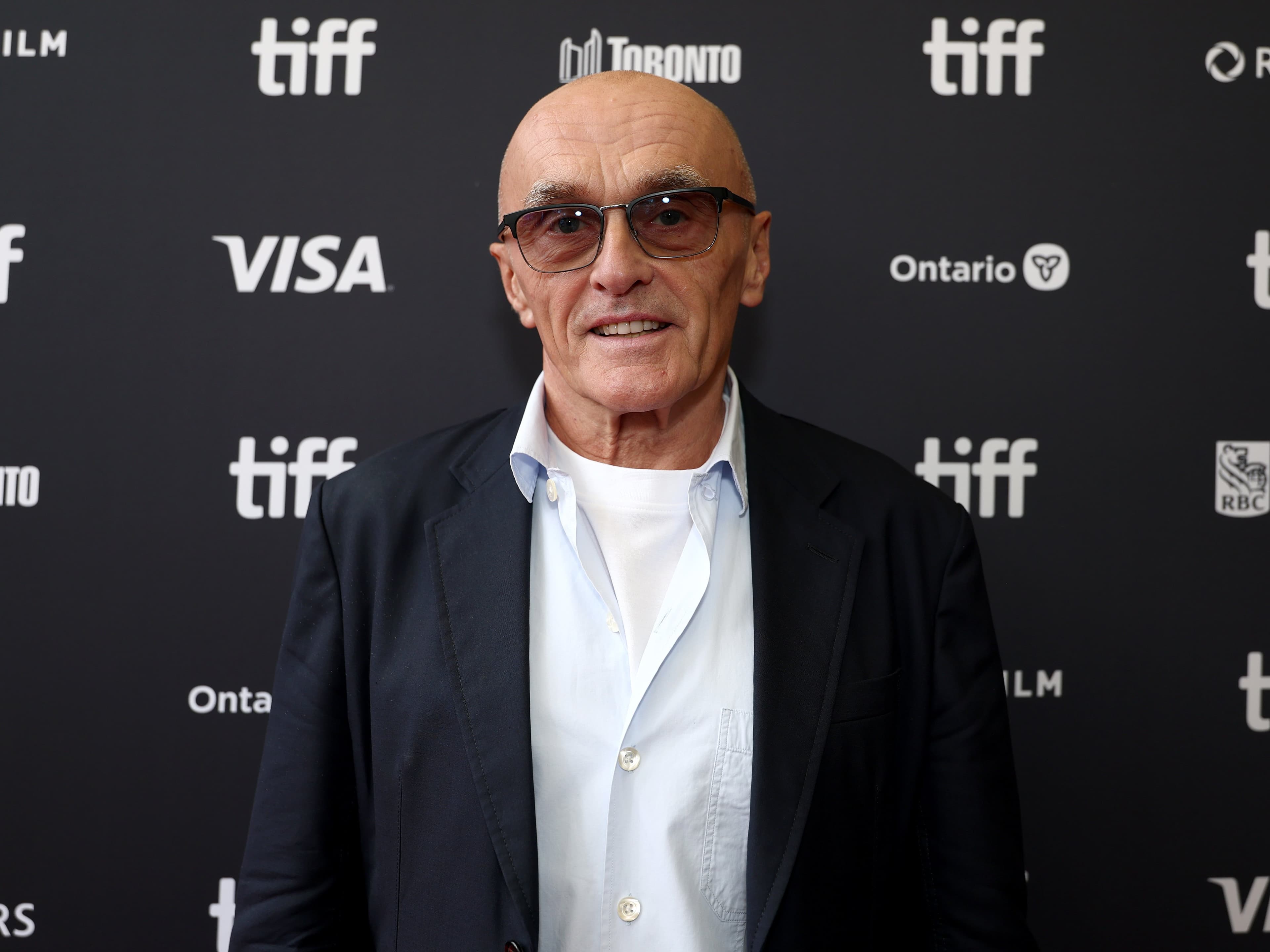
Danny Boyle's 'Ink' Makes Its North American Debut at TIFF 2026
On Tuesday afternoon, the Toronto International Film Festival hosted the Canadian premiere of Danny Boyle's "Ink," a drama chronicling the ascent of The Sun under Rupert Murdoch. The screening arrived with the kind of scheduling placement TIFF reserves for films it believes can survive the fall crush: a weekday afternoon slot that still drew the festival's press corps in force.
TIFF has long functioned as a launchpad for awards-season contenders, and the historical record supports the strategic logic. Baz Luhrmann's "Elvis" premiered at TIFF in September 2022 before earning eight Academy Award nominations, including Best Picture, with Austin Butler winning the Golden Globe for his performance as Presley. Pablo Larraín's "Spencer," which premiered at Venice before arriving at TIFF in 2021, propelled Kristen Stewart to her first Oscar nomination. The pattern repeats across decades: TIFF's September slot gives prestige biopics a first major audience of awards voters, critics, and guild members before the compressed December release calendar begins.
"Festivals like TIFF have become the de facto first round of awards campaigning," noted one veteran publicist who has shepherded three Best Picture nominees through the fall circuit, speaking generally about the marketplace rather than "Ink" specifically. With "Ink," Boyle returns to a festival circuit he knows well — his "Slumdog Millionaire" premiered at Telluride and TIFF in 2008 before winning eight Academy Awards, including Best Director.
The film's Canadian debut marks roughly a year of anticipation following production announcements, and its TIFF slot places it squarely in the conversation for the 2027 awards cycle.
The Story Behind 'Ink': The Sun's Rise Under Rupert Murdoch

The historical raw material for "Ink" is not obscure. In 1969, Rupert Murdoch acquired News Group Newspapers, the publisher of The Sun, taking control of a broadsheet that had been losing ground in the British market. What followed is among the most documented transformations in newspaper history: Murdoch converted The Sun to a tabloid format and repositioned it around sensationalism, sports, and scandal, with the Page 3 topless model feature becoming a defining and controversial fixture.
Read next Drake's 'Fear of Missing Out' Is a 'Not So Short Film'By the late 1970s, The Sun had overtaken its rivals to become Britain's best-selling daily, a position it held for decades. Guy Pearce plays Murdoch in the film, and Jack O'Connell plays Larry Lamb, the editor Murdoch installed to execute the paper's populist turn. The film, per Variety's critic, is "a propulsive, can't-look-away account" of how the tabloid rose to dominate the U.K. market — a story that necessarily intersects with questions about press ethics, the concentration of media ownership, and the relationship between newspapers and political power.
Those questions have only sharpened in the years since. The Leveson Inquiry, launched in 2011 in the wake of the phone-hacking scandal at the now-defunct News of the World, produced thousands of pages examining the culture and practices of the British tabloid press. Any dramatization of The Sun's early years under Murdoch plays, inevitably, against that later history — the audience arrives knowing where the story leads.
Critical Reception: What Reviewers Are Saying About the Film
Variety's review described "Ink" as "a propulsive, can't-look-away account" of the tabloid's rise, singling out O'Connell's "swaggering" turn as Lamb and Pearce's "cheeky" portrayal of Murdoch. The critical consensus emerging from the TIFF screening suggests a film that treats its subject as a propulsive, morally ambiguous machine rather than a straightforward morality tale.
That framing matters. Biopics of media figures tend to fail when they flatten their subjects into heroes or villains, losing the institutional texture that made those figures consequential in the first place. Reviews suggesting "Ink" captures the momentum of the newsroom — the daily scramble, the competitive instincts, the willingness to breach boundaries in pursuit of circulation — indicate Boyle has prioritized kineticism over judgment. Whether that approach satisfies audiences who come to the film with strong prior views about Murdoch is a separate question, and one likely to be tested as the film moves through the fall festival circuit toward wider release.
Danny Boyle Sidesteps Questions on AI in Filmmaking
Following the premiere, Boyle declined to engage with questions about artificial intelligence in filmmaking, according to Variety's account of the post-screening Q&A. The dodge is notable precisely because it is no longer unusual: AI has become a topic that filmmakers, studio executives, and festival programmers handle with visible caution, aware that any statement can be read as either endorsement or opposition in a polarized debate.
The industry context is well documented. The 2023 Writers Guild of America strike lasted 148 days, with AI regulation among the central issues, and the SAG-AFTRA strike that followed ran an additional 118 days before resolving in November 2023 with contract language addressing AI consent and compensation. Since then, studios have continued to experiment with AI-assisted tools in post-production, while guilds and critics have pushed for transparency about where and how those tools are used.
Boyle's reluctance to comment says little about his personal views and much about the current conversational terrain. Directors at festivals are routinely asked to forecast technological change — a question that treats them as pundits rather than craftsmen. Boyle's choice to redirect reflects an industry-wide sensitivity rather than a substantive position. Studios, for their part, have largely encouraged talent to avoid extemporaneous AI commentary while contracts and union agreements continue to evolve.
Danny Boyle's Career and His Approach to Controversial Subjects
Boyle has spent three decades building a filmography defined by formal restlessness and an appetite for difficult material. "Trainspotting" (1996) turned heroin addiction into a kinetic, commercially successful cultural landmark. "28 Days Later" (2002) revitalized the zombie genre and made a virtue of digital-video immediacy. "Slumdog Millionaire" (2008) won eight Academy Awards. "127 Hours" (2010) dramatized a survival story with a single protagonist and earned six Oscar nominations. "Steve Jobs" (2015) took on another complicated, widely mythologized figure — and, notably, was structured as a three-act backstage drama rather than a conventional cradle-to-grave biography.
That track record suggests Boyle is temperamentally suited to "Ink." He has repeatedly demonstrated an ability to find momentum in stories about systems and institutions, and he has shown a willingness to let audiences draw their own conclusions about morally compromised protagonists. The director's interest in speed, sensation, and the machinery of cultural production aligns with the subject matter here: a tabloid that succeeded by understanding what readers actually wanted, regardless of whether the establishment approved.
What 'Ink' Means for Biopics About Media Moguls
"Ink" arrives at a moment when media-mogul narratives have unusual cultural currency. HBO's "Succession," which concluded its four-season run in 2023, spent years dramatizing the internal dynamics of a family-controlled media empire that audiences widely read as a fictional refraction of the Murdoch dynasty. The show won 19 Emmy Awards, including three for Outstanding Drama Series, and its finale drew 2.9 million viewers across HBO and Max — a figure that confirmed the appetite for stories about concentrated media power.
That appetite extends beyond television. Films about press institutions — "Spotlight" (2015), "The Post" (2017), "She Said" (2022) — have found both critical and commercial footing by treating newsrooms as dramatic arenas where institutional power and individual conscience collide. "Ink" positions itself in that lineage while distinguishing itself through its subject: not heroic journalism, but the construction of a commercial machine that reshaped British politics and popular culture.
Analysts following the festival circuit suggest the genre's resonance stems from something deeper than nostalgia. As news consumption fragments across platforms and ownership consolidates further, stories about how a single proprietor built a newspaper that reached millions of readers carry an implicit commentary on the present. "Ink" does not need to say that aloud. The audience will do that work — provided the film's official post-screening posture continues to avoid saying anything at all.
Source: Variety


