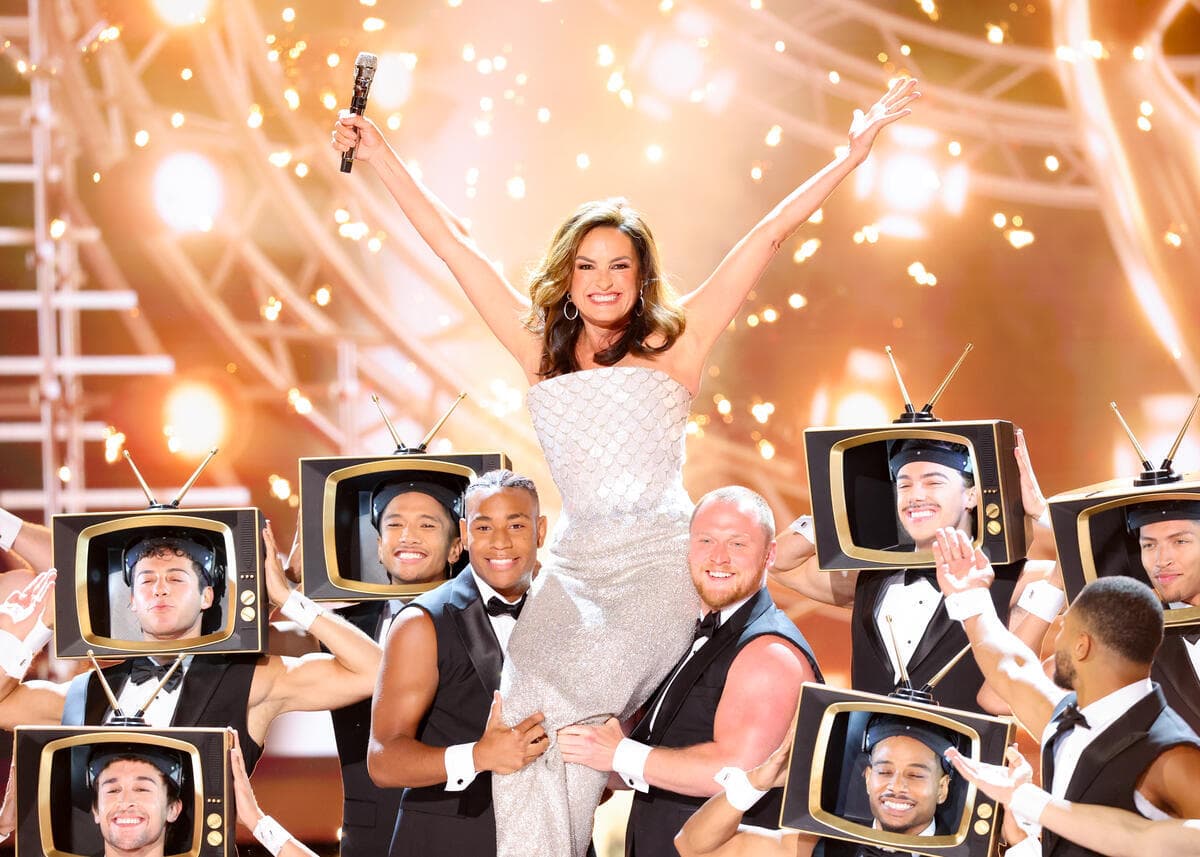
Emmys 2026 Ratings: What the Numbers Actually Say
NBC's broadcast of the 78th Emmy Awards drew 6.7 million viewers on Monday night, according to Nielsen data reported by Variety. That figure represents a 9% decline from the 2025 ceremony on CBS, which averaged 7.4 million viewers — the Emmys' strongest showing since 2021. The comparison comes with a caveat that industry analysts will be quick to flag: the 2025 telecast aired under different circumstances, and year-over-year comparisons between ceremonies on different networks have always carried an asterisk. Yet even accounting for those variables, the direction of travel is unmistakable. A 9% single-year drop, landing below seven million viewers, places the Emmys in territory that would have seemed implausible a decade ago, when the show routinely drew audiences north of 12 million.
For context, the 2026 figure sits roughly 45% below the Emmys' recent peak-era audiences. The math matters because the Emmys are not merely a television broadcast — they are an annual referendum on the health of the medium they celebrate. When the industry's most prestigious self-celebration sheds nearly a tenth of its audience in a single cycle, the question is no longer whether awards show viewership is eroding. It is how fast, and whether anything can slow it.
A Decade of Decline: The Emmys' Long Ratings Slide

Zoom out and the 2026 number looks less like an anomaly than a continuation. The Emmys' viewership trajectory has been downward for most of the past decade, with occasional plateaus that briefly revived optimism. The 2025 ceremony's 7.4 million viewers was celebrated precisely because it arrested that slide — the best performance since 2021, and a rare bright spot in a genre-wide slump. One year later, that recovery has stalled.
Read next Drake's 'Fear of Missing Out' Is a 'Not So Short Film'This pattern — a modest rebound followed by renewed erosion — is characteristic of legacy live events in the streaming era. Nielsen's annual live-plus-same-day ratings reports have documented steady declines across nearly every major awards telecast, from the Oscars to the Grammys to the Golden Globes. The Emmys' 9% dip is not an outlier in that dataset; it is a data point consistent with a category in structural retreat. Media analysts who track the awards circuit have repeatedly noted that no single host, network, or production decision has reversed the trend for more than a single cycle. The 2025 bump now reads less like a turnaround and more like a temporary reprieve.
What makes the slide especially telling is its persistence through periods of genuine television abundance. The so-called Peak TV era produced more critically acclaimed series than at any point in the medium's history — and yet the ceremony honoring that output kept losing viewers. The paradox suggests the problem is not the quality of television but the rituals surrounding how audiences now consume it.
Why Live Awards Show Viewership Keeps Falling

Start with cord-cutting. The single largest driver of awards show decline is the steady defection of households from traditional pay-TV bundles, which remain the primary distribution channel for broadcast ceremonies. Every million households that cancel cable is a million households for which the Emmys are no longer a default Monday-night option. Nielsen has tracked this migration for years, and the correlation between declining multichannel video subscriptions and declining live event ratings is well established among media researchers.
Then there is the fragmentation of attention itself. Prestige television has migrated overwhelmingly to streaming platforms — Netflix, HBO Max, Apple TV+, Hulu, and Amazon Prime Video now dominate the Emmys' major categories. The audiences for those shows are distributed across apps, devices, and time zones. A linear broadcast asking viewers to gather at a fixed hour competes against an on-demand ecosystem built precisely to eliminate fixed hours. Media critics have described this as "awards show fatigue" — not boredom with the awards, but exhaustion with the format's demand for synchronized, appointment viewing.
Social media compounds the problem. Highlights, winners, and viral moments circulate within minutes. For a substantial share of the potential audience, the ceremony's outcome is fully accessible without watching the ceremony. Ratings researchers note that this "highlights economy" disproportionately affects live events whose primary value is information — who won — rather than spectacle.
The Network Factor: Does the Broadcaster Still Matter?
The 2025-to-2026 comparison invites an obvious question: how much of the 9% drop reflects the switch from CBS to NBC? The honest answer, based on the available data, is that the network effect is real but modest. Rotating broadcasts among the big four networks have historically produced small year-to-year fluctuations, but no network has demonstrated the ability to reverse a multi-year decline. CBS's 2025 ceremony benefited from favorable scheduling and a strong promotional platform; NBC's 2026 telecast faced its own competitive landscape.
The deeper issue is that all four legacy broadcasters now face the same structural headwinds. Their linear audiences are aging and shrinking in tandem. A network can influence a ceremony's production values, marketing push, and lead-in programming — all of which move the needle by a few percentage points. None of them can reconstruct the mass simultaneous audience that existed before streaming atomized it. In that sense, the broadcaster question is a distraction from the more consequential one: whether any linear home can still deliver an audience commensurate with the Emmys' cultural stature.
What a Continued Decline Means for the Television Industry
Ratings are not prestige, and the Emmys will remain the industry's most important awards body regardless of the broadcast number. But viewership has downstream consequences that reach well beyond bragging rights. Advertising rates for the telecast are tied to audience delivery; a smaller pool of viewers compresses the revenue the TV Academy can command from sponsors. That revenue funds the Academy's operations, its charitable programs, and the ceremony's production budget. A shrinking audience, sustained over years, constrains all of it.
There is also the legitimacy question. The Emmys derive cultural authority from the premise that they represent a broad consensus of the television-watching public, filtered through the industry's professional judgment. As the viewing audience narrows, that premise weakens. Studios still market "Emmy-winning" as a seal of quality, and streamers still campaign aggressively — Netflix, HBO, and Apple have all invested heavily in awards strategy. But if the ceremony's audience continues to contract, the promotional value of a win erodes alongside it, which in turn reduces the incentive to campaign, which further diminishes the event's centrality. That feedback loop is the industry's real concern.
Can the Emmys Reverse the Trend?
Nothing in the 2026 data suggests a reversal is imminent. The forces driving the decline — cord-cutting, streaming fragmentation, the highlights economy — are structural, not cyclical. They will not be solved by a new host, a shorter runtime, or a hipper production aesthetic, though each may soften a given year's losses. The 2025 ceremony proved a well-executed broadcast on a strong network can produce a temporary gain. It did not prove the decline had ended, and 2026 has now confirmed that it has not.
The more plausible path forward involves redefining success. Awards bodies across the industry are increasingly measuring reach through streaming clips, social engagement, and international distribution rather than a single Nielsen linear figure. The Emmys may follow. A 6.7 million linear audience, paired with tens of millions of digital impressions, is not the same product as a 6.7 million linear audience alone — and the TV Academy will likely argue as much.
But the headline number still matters, because it is the one the industry, the advertisers, and the press will cite for the next twelve months. Down 9%, to 6.7 million viewers, the Emmys enter their next cycle with the same question they faced last year — only now with less evidence that a rebound is coming.
Source: Variety


