George Cheeks Takes the Helm at Skydance TV
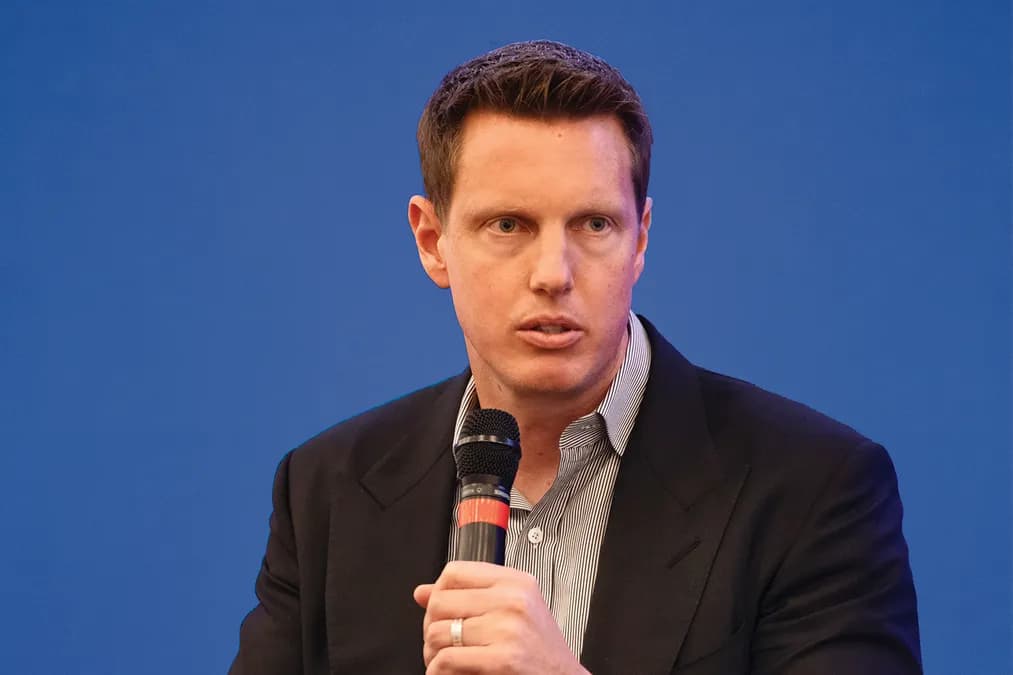
On Tuesday, as the ink dried on one of the most consequential corporate transactions in Hollywood history, George Cheeks addressed the staffers who would now look to him for direction. Newly appointed co-chair and chief content officer of Skydance TV, Cheeks took the occasion of the official closing of the Paramount–Warner Bros. Discovery merger to map out his priorities — a signal, deliberate in its timing, that CBS and its sibling properties were entering a new operational era rather than simply a new ownership structure.
Cheeks arrives at Skydance TV with one of the more credible résumés in American broadcast television. Since taking the top role at CBS Entertainment in 2019, he presided over a network that has finished as the most-watched in primetime for the better part of two decades running. CBS drew more than 100 million viewers across its linear and streaming platforms during the 2024–25 season, a figure that rivals — HBO, Netflix, even ABC — rarely match on a weekly basis. Procedural stalwarts like NCIS, long-form competition franchises including Survivor and The Amazing Race, and a robust NFL broadcast package have kept CBS reliably dominant even as cable and streaming eroded broadcast's overall share of the viewing universe. That operational track record is precisely the credential Skydance's leadership needs as it integrates a sprawling content portfolio that now spans two legacy studios and at least four major streaming platforms.
The memo that accompanied Cheeks' appointment came jointly from Skydance chairman and CEO David Ellison and co-CEO Ynon Kreiz — a dual-signature arrangement that underscores the governance model the new company is putting in place. Ellison, who has spent a decade building Skydance into a production force behind franchises like Mission: Impossible and Top Gun: Maverick, now commands a media empire at a scale even his most ambitious earlier projections likely did not anticipate.
The $111 Billion Merger That Reshaped Hollywood
The $111 billion valuation attached to the Paramount–Warner Bros. Discovery combination does not just make it large. It makes it the biggest media merger ever recorded, surpassing two transactions that themselves redrew the industry's competitive map. AT&T's acquisition of Time Warner, completed in 2018 for roughly $85 billion, folded HBO, CNN, and Warner Bros. film under a telecommunications umbrella — an experiment that ultimately unwound when Warner Bros. Discovery was spun off in 2022. Disney's purchase of 21st Century Fox's entertainment assets, closed in 2019 for approximately $71 billion, gave the House of Mouse control of the X-Men, FX Networks, and a controlling stake in Hulu, fundamentally altering the streaming race.
Read next 1963 : le tube yéyé qui a enflammé la France — reconnaîtrez-vous cette voix ?The Paramount–WBD deal eclipses both. At $111 billion, it consolidates CBS, Paramount+, Showtime, MTV, Nickelodeon, CNN, HBO, Max, Warner Bros. film, and dozens of regional and international assets under one organizational roof. The sheer breadth of overlapping content libraries, distribution agreements, and technology infrastructure will require years to rationalize. Media analysts tracking the deal have projected cost synergies in the range of $3 billion to $4 billion annually once integration is complete, with the largest savings expected to come from deduplication of streaming technology stacks, back-office consolidation, and the difficult but inevitable pruning of content budgets across overlapping genre categories.
The strategic rationale is hard to dispute even for skeptics. Scale has become the organizing principle of the streaming era. Netflix reached 301 million paid subscribers globally by the end of 2024. Amazon Prime Video and Disney+ have each crossed 150 million. Competing against those platforms with separate, subscale services — Paramount+ sat at roughly 71 million subscribers at its last public disclosure — was an exercise in diminishing returns. The combined entity enters the field with a subscriber base and a content library that changes the arithmetic of that competition meaningfully.
What Cheeks' Vision Means for CBS

The broadcast network sits at the strategic core of what Cheeks inherits and what he must protect. CBS generates advertising revenue, sports rights value, and affiliate fees that streaming services cannot replicate in the near term. The network's NFL rights alone, anchored by a long-term agreement with the AFC package and shared Super Bowl rotations, represent a recurring audience floor that no algorithm-driven recommendation engine can manufacture. Cheeks has consistently made the case during his tenure that broadcast's scale — reaching audiences in markets and demographics that remain resistant to cord-cutting — is an asset rather than a liability, and that argument will now carry weight at the enterprise level.
What his staffers heard Tuesday was presumably a version of that argument extended to the new organizational reality. The content officer title he carries at Skydance TV suggests his remit extends beyond CBS itself. The integration of CBS's production infrastructure with Warner Bros. Television, one of the most prolific suppliers in the scripted space, creates both opportunities and friction points. Both entities have long-running network relationships; both have streaming output deals; both maintain extensive overall agreements with showrunners. Rationalizing that overlap without destabilizing either pipeline will be among Cheeks' earliest operational tests.
The audience proposition for CBS viewers, at least in the near term, is unlikely to change dramatically. The network's scheduling philosophy — procedurals, competition formats, late-night franchises — has a proven advertiser profile and a loyal demographic. But the merger's downstream effects on content investment could reshape what gets developed in the 2027 and 2028 cycles, as budget synergies manifest at the development level.
Implications for the Broader Television Industry
The merger's closing sends a clear signal to the remainder of the television industry: consolidation at this scale is now executable, and the mid-tier players who spent the past five years hoping for a more fragmented competitive environment must reassess. NBCUniversal, Fox Corporation, and Sony Pictures Television each face a reconfigured landscape in which their largest syndication partners, licensing customers, and streaming rivals are now a single, integrated organization.
For talent — writers, directors, showrunners, actors — the implications are more ambiguous. Consolidation of this magnitude historically compresses the number of competing buyers for projects. When AT&T absorbed Time Warner, the merger contributed to a tightening of the overall deal market despite the volume of content both companies were producing. The WBD–Paramount combination, if anything, reduces competitive bidding tension further. Agents and managers who spent the pandemic years navigating a buyer's market for talent — when Apple, Netflix, Amazon, and a half-dozen other platforms were competing aggressively for exclusive relationships — are already recalibrating their expectations.
Regulators approved the transaction, but not without scrutiny. The behavioral and structural conditions attached to prior media mergers of this scale have generally proven difficult to enforce over time, a pattern that gives antitrust observers reason to watch how the combined company exercises its market power in affiliate negotiations and content licensing.
What Comes Next for Skydance's Combined Media Empire
The organizational architecture that Ellison and Kreiz announced — with Cheeks anchoring the television content operation as co-chair and chief content officer — suggests Skydance intends to run its acquired properties with a degree of brand autonomy rather than immediately flattening the org chart. That approach has historical precedent. Disney maintained ESPN and ABC as operationally distinct businesses for years after acquiring them through the 1996 Capital Cities/ABC deal, extracting synergies gradually rather than imposing a single culture across disparate franchises.
The harder question is streaming. Max and Paramount+ cannot both survive as full-service, general-entertainment platforms with comparable subscriber acquisition costs. The most likely trajectory, in the assessment of analysts at firms tracking the integration, is a tiered consolidation: a flagship combined service carrying the premium IP from both libraries, supported by a cheaper ad-supported tier, with more niche or regional services wound down or folded in. How Cheeks' content mandate interacts with the streaming rationalization strategy will be one of the defining decisions of the first eighteen months.
The merger has closed. The memos have been sent. George Cheeks CBS future is now inseparable from the future of the largest media company the industry has ever produced — and the real work, the painstaking, unglamorous work of integration, begins today.
Source: Variety