Paul McCartney Explains His Decision to Perform at Taylor Swift's Wedding
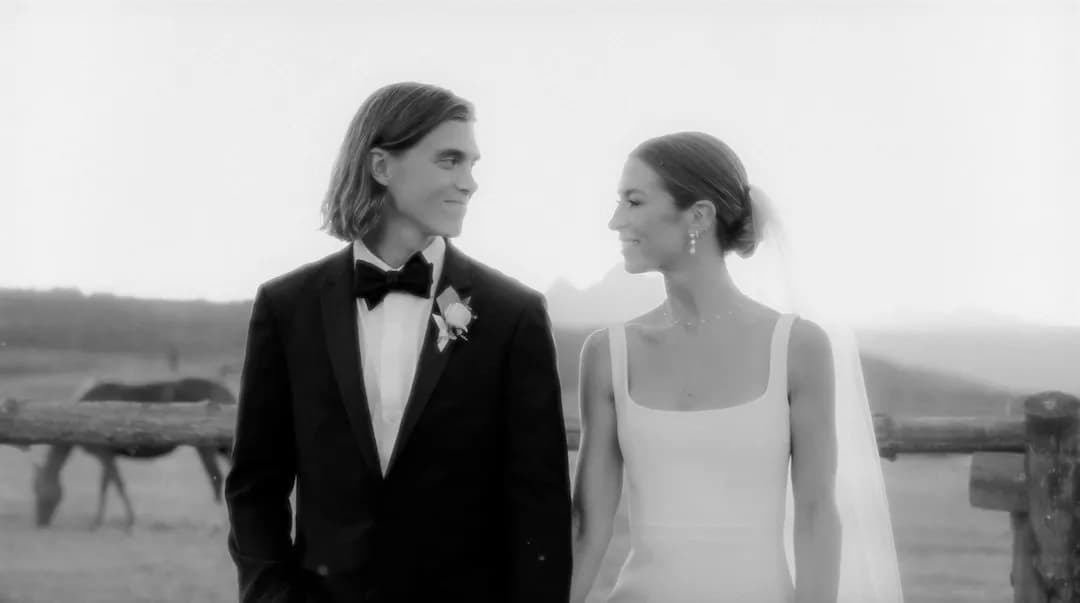
Paul McCartney doesn't do many weddings. Then again, most weddings don't feature a bride who has sold north of 200 million records and headlined the highest-grossing concert tour in history. In an appearance on Jimmy Kimmel Live reported by Rolling Stone, the 84-year-old Beatles legend addressed the question fans had been lobbing at him for months: why did he turn up to play at Taylor Swift's wedding? His answer was disarmingly simple. She asked him to do it.
That's it. No sprawling negotiation, no corporate sponsorship architecture, no carefully staged publicity rollout. The most successful recording artist of all time — a man whose songbook includes "Let It Be," "Yesterday," and "Hey Jude" — framed his decision as a favor to a fellow musician. The plainness of the explanation is the story. McCartney has spent six decades being asked to perform at everything from Live Aid to the Super Bowl halftime show, and he has learned that the only invitation worth accepting is one that carries genuine personal weight.
Consider the logistics alone. A McCartney live set is not a drop-in. His touring operation, honed across the "Got Back" runs and the decades of Wings and solo outings before them, is a full-scale production. For him to appear at a private event at all signals a relationship rather than a booking. The Rolling Stone report doesn't detail which songs he played or how long he stayed, and that restraint is appropriate — this was, whatever else it was, a wedding. What matters publicly is the confirmation itself: one Beatle, one pop titan, one night.
What McCartney's Appearance Says About Taylor Swift's Cultural Reach
Two years ago, the idea of a Beatle playing a pop star's wedding might have read as a novelty booking. Not anymore. Swift's Eras Tour, which ran across 2023 and 2024, shattered every meaningful record in live entertainment: more than $2 billion in ticket revenue, the first tour ever to cross that threshold, with attendance figures in the millions across five continents. Pollstar and Billboard both documented the scale in near-disbelief. When you are the biggest touring act on the planet, the guest list stops being aspirational and starts being curatorial.
Read next 1963 : le tube yéyé qui a enflammé la France — reconnaîtrez-vous cette voix ?Swift's career has been defined by a deliberate, almost scholarly engagement with the artists who came before her. She has name-checked Joni Mitchell and Carole King as formative influences. She brought Stevie Nicks onstage during her Speak Now era. She has repeatedly positioned herself inside a lineage of singer-songwriters rather than beside her chart contemporaries. Securing McCartney for her wedding is the logical endpoint of that instinct. It isn't a flex in the Instagram sense. It's an acknowledgment that the two of them occupy the same continuum — one that runs from the Cavern Club through Nashville to a stadium in Buenos Aires.
The crossover also cuts the other way. McCartney has been notably generous toward younger pop artists throughout his later career, collaborating with Kanye West on "Only One" and "FourFiveSeconds," appearing with Rihanna, and praising artists like Billie Eilish in interviews. He has never treated the pop mainstream as beneath him. That openness is part of why the Swift wedding news landed without cynicism. It read, instead, like two professionals recognizing each other.
The Larry David 'Hey Jude' Incident on Jimmy Kimmel Live
If the wedding answer was the sweet part of the Kimmel appearance, the Larry David story was the comedic counterweight. McCartney told Kimmel that he has effectively banned David from his concerts after the Curb Your Enthusiasm creator refused to sing along to "Hey Jude." The context matters here, because "Hey Jude" is not an ordinary song in a McCartney set. Its closing refrain — the "na-na-na-na" coda that stretches past the four-minute mark on the original 1968 single — has evolved into one of the most reliable mass sing-along rituals in popular music.
Audiences at McCartney shows have performed that coda for decades. At Glastonbury in 2022, tens of thousands of people carried it well after the band had stopped. At stadium dates across the "Got Back" tour, the pattern repeats nightly. For McCartney, that participation isn't a bonus; it's the point. The song was written to be sung by crowds, and its live identity depends on them. To stand in that audience and refuse is, in his telling, a category of behavior he simply won't accommodate.
David, for his part, has built an entire public persona around exactly this kind of refusal. His comedy rests on the premise that social conventions are absurd and that he is the only person honest enough to say so. Declining to sing "Hey Jude" at a Paul McCartney concert is, in that light, almost too on-brand — the Curb character made flesh. McCartney's response is equally in character: dry, decisive, delivered as a joke that isn't entirely a joke. Neither man comes off badly. One is a curmudgeon by profession. The other is a songwriter who knows precisely what he's owed by a room.
Paul McCartney's Legacy as a Live Performer
The numbers behind McCartney's touring career explain why his presence anywhere is newsworthy. He has been a headline live act across seven different decades, from the Beatles' final paid concert at Candlestick Park in 1966 through Wings' 1970s stadium runs and into a solo touring career that has repeatedly ranked among the highest-grossing in the world. Billboard has named him among the top touring artists of multiple decades. His 2018 "Freshen Up" tour and the subsequent "Got Back" dates continued to sell out arenas and stadiums into his eighties — a feat with essentially no parallel in rock history.
Longevity of that kind does something to an artist's cultural position. McCartney is no longer simply a former Beatle; he functions as a living archive of twentieth-century popular music, and audiences treat his concerts accordingly. A McCartney setlist spans "Can't Buy Me Love," "Maybe I'm Amazed," "Band on the Run," and material from McCartney III. The demographic in the room runs from teenagers to grandparents. That is the context in which his wedding performance should be read. He is not a nostalgia act accepting a private gig. He is an active performer at the peak of his drawing power, choosing where to deploy it.
Reactions from Fans and the Entertainment World
The reaction online split, predictably, along generational lines — and then quickly converged. Swift's fanbase treated the news as confirmation of something they already believed about her standing. McCartney's fans treated it as evidence that their man remains plugged into the present rather than resting on the past. The Larry David material did its own work, generating the kind of cross-demographic amusement that only happens when two very different kinds of famous people collide.
What emerges from both stories is a portrait of McCartney as a working musician with clear preferences. He plays where he's asked by people he respects. He expects a room to meet him halfway. And he retains, at 84, the willingness to say no — to a wedding, to a concertgoer, to anyone who won't sing the chorus. For a figure whose public image has been polished across six decades, that stubbornness reads as authenticity. The man who wrote "Hey Jude" still wants to hear it sung back.
Source: Rolling Stone