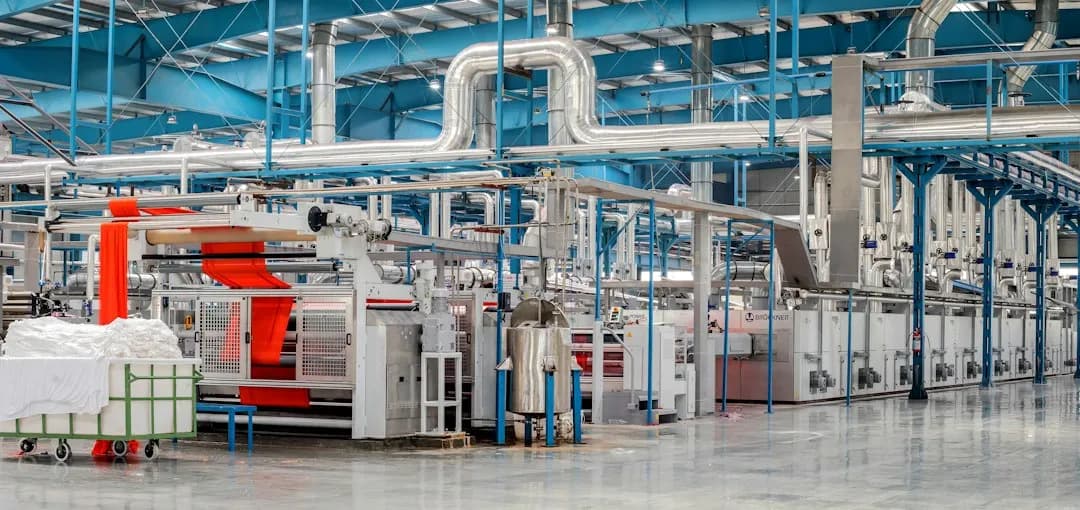
Proxima Fusion's €140M Factory Plan at a Glance
On September 10, 2026, Munich-based Proxima Fusion announced plans to construct a €140 million ($162.6 million) manufacturing facility dedicated to producing fusion-grade high-temperature superconducting (HTS) tape. The Proxima Fusion HTS tape factory represents one of the largest single capital commitments by a private fusion startup to a component supply chain rather than to reactor construction itself.
The distinction matters. Most fusion ventures direct capital toward plasma physics research, magnet design, or full reactor prototyping. Proxima is making a different calculation: controlling the supply of a critical enabling material is as essential to commercial success as engineering the machine that consumes it. HTS tape sits at the heart of the high-field superconducting magnets that define the company's reactor architecture. Without a reliable, performance-consistent source, a fusion reactor exists mostly on paper.
Why High-Temperature Superconducting Tape Is a Critical Fusion Ingredient

Superconducting magnets carry electrical current with zero resistance, generating extraordinarily strong magnetic fields that confine the superheated plasma required for nuclear fusion. Conventional low-temperature superconductors must be cooled to near absolute zero — around 4 Kelvin — using liquid helium, a logistically demanding requirement. High-temperature superconductors operate at temperatures achievable with liquid nitrogen or advanced cryocoolers, typically between 20 and 77 Kelvin. That gap translates directly into lower system complexity and operating cost.
Read next Laika's Wildwood: Stop-Motion Fantasy at TIFF 2026Commercial HTS tape uses a compound called yttrium barium copper oxide, or YBCO, deposited in thin layers onto a metallic substrate — usually hastelloy or stainless steel — resulting in a flexible ribbon-like conductor wound into magnet coils. Each tape carries significant current density, but fusion-grade magnets require enormous quantities: hundreds of kilometers per reactor in some high-field designs.
Performance requirements for fusion applications exceed those in most other superconductor markets. MRI machines and particle accelerators also use superconducting magnets, but fusion reactors demand tapes sustaining performance under high mechanical stress, intense neutron bombardment, and extreme magnetic field conditions simultaneously. "Fusion-grade" describes a genuinely distinct specification tier, not a marketing qualifier.
The Problem: Asian Suppliers Dominate Global HTS Tape Output
Global HTS tape production is heavily concentrated in Asia. Japan's Fujikura and Sumitomo Electric, South Korea's SuNAM, and multiple Chinese manufacturers collectively account for the substantial majority of worldwide output. The United States has one significant domestic producer, SuperPower — itself a subsidiary of Japan's Furukawa Electric. European production capacity is negligible relative to projected fusion-industry demand.
This concentration carries real consequences. Lead times for HTS tape from Asian producers can extend 12 to 18 months for large orders. Quality consistency — particularly the critical parameter of current density across long tape lengths — varies between manufacturers and between production runs. For a startup designing magnets around specific performance envelopes, external sourcing introduces engineering uncertainty alongside supply-chain risk.
Geopolitics adds another layer. Technology competition between Western nations and China has accelerated export controls on dual-use advanced materials. YBCO-based HTS tape occupies the same category of strategic material that has already attracted regulatory scrutiny across semiconductor supply chains. European policymakers have noted the vulnerability. The EU Critical Raw Materials Act, which entered force in 2024, identifies materials critical to energy transition and emerging technology sectors as requiring domestic supply security. Superconducting materials fit that framework's logic directly, even if HTS tape has not yet been formally designated.
What European Domestic HTS Tape Production Could Change
The Proxima Fusion HTS tape factory would, if completed as planned, establish one of the first large-scale European manufacturing operations for this class of material. At €140 million, the investment is substantial enough to support meaningful production volumes rather than a boutique R&D facility. A factory at that capital scale could feasibly supply not only Proxima's own reactor program but also other European fusion ventures and adjacent industrial users in research magnets and medical technology.
This dual-use potential matters for the economics. A factory supplying only one customer must amortize its cost over a narrow demand base. One serving the broader European superconductor market operates with a more diversified revenue profile. Commonwealth Fusion Systems, Tokamak Energy, and other HTS-magnet-dependent fusion companies are all scaling programs — European-manufactured tape could find ready buyers across the sector.
Supply-chain proximity also carries engineering advantages. Co-locating tape manufacturing with a magnet development team enables rapid iteration on specifications. When a design engineer identifies a performance shortfall in a coil, modifying tape parameters becomes a matter of internal meetings rather than transatlantic freight coordination. That compressed feedback loop could meaningfully accelerate development timelines.
Strategically, the Proxima Fusion HTS tape factory aligns with a policy argument Brussels has been pressing across multiple sectors: Europe should not replicate the semiconductor supply-chain exposure of the previous decade, when decades of offshoring left the continent vulnerable when geopolitical tensions tightened. The European Chips Act and Critical Raw Materials Act together signal that supply-chain self-sufficiency in advanced technology components is a precondition for industrial competitiveness. A domestic HTS tape producer would be a concrete demonstration of that principle in the energy sector.
Broader Implications for Fusion Energy's Commercial Roadmap
Proxima's announcement reflects a maturation in how the private fusion sector thinks about commercialization. The early years of the fusion startup wave were dominated by plasma physics milestones and reactor concept announcements. Increasingly, leading ventures are confronting the industrial-scale manufacturing challenges that must be solved before any fusion power plant can be built at volume.
HTS tape is not the only bottleneck. Tritium fuel supply, specialized vacuum vessel components, high-heat-flux plasma-facing materials, and advanced control systems all represent potential choke points. But superconducting tape is among the most capital-intensive and technically demanding to manufacture, and it sits on the critical path for every high-field tokamak and stellarator design currently in development.
The Proxima Fusion HTS tape factory therefore signals something beyond one company's supply-chain hedge. It suggests that fusion's commercial horizon is close enough that vertical integration into component manufacturing now makes economic sense. That carries weight. Investment in component factories implies that investors and management believe a paying market for fusion-grade tape will exist within the factory's operational lifetime — a materially different claim than building a plasma experiment.
Whether Proxima's reactor design proves commercially competitive, the European fusion ecosystem benefits from having domestic HTS tape manufacturing capacity. The alternative — continued dependency on Asian suppliers for a material no high-field fusion reactor can function without — represents a strategic liability that grows more acute with every year the sector advances toward actual deployment. Proxima has placed a €140 million bet that the liability is real and the timing is right.
Related coverage
- Toyota Training Workers to Teach 400,000 Factory Robots
- Fusion Startups Find New Defense Partners in 2026
Source: TechCrunch