San Francisco's car break-in epidemic once defined the city's reputation as much as the Golden Gate Bridge. Visitors left rental cars empty with windows down, hoping to avoid the smash-and-grab that had become routine. Now city leaders say that story has changed — and they credit a network of AI-powered cameras. The question is whether the technology deserves the credit, and what residents are trading away to get it.
San Francisco's Car Crime Decline: What the Data Shows
San Francisco's property crime numbers have moved sharply in recent years, and the shift in auto-related offenses is among the most dramatic. City leaders point to a steep drop in car break-ins and vehicle theft as evidence that their enforcement strategy is working. That decline is real, and it is measurable in the data the city collects.
But the timing matters enormously for anyone trying to assign credit. Auto burglaries in San Francisco had already begun falling from their pandemic-era peak before automated camera networks reached meaningful scale. Some of the largest year-over-year drops occurred during periods when the cameras were still being piloted or covered only a fraction of the city. That chronological overlap complicates any simple claim that the technology caused the improvement.
Public safety data in San Francisco is reported through multiple channels — the police department's incident reports, the city's open data portal, and quarterly crime dashboards maintained by the controller's office. Each tells a slightly different version of the same story: a significant decline, but one that began amid broader shifts in policing, prosecution, and economic activity. Understanding those distinctions is essential before crediting any single tool.
How AI-Powered Camera Networks Work

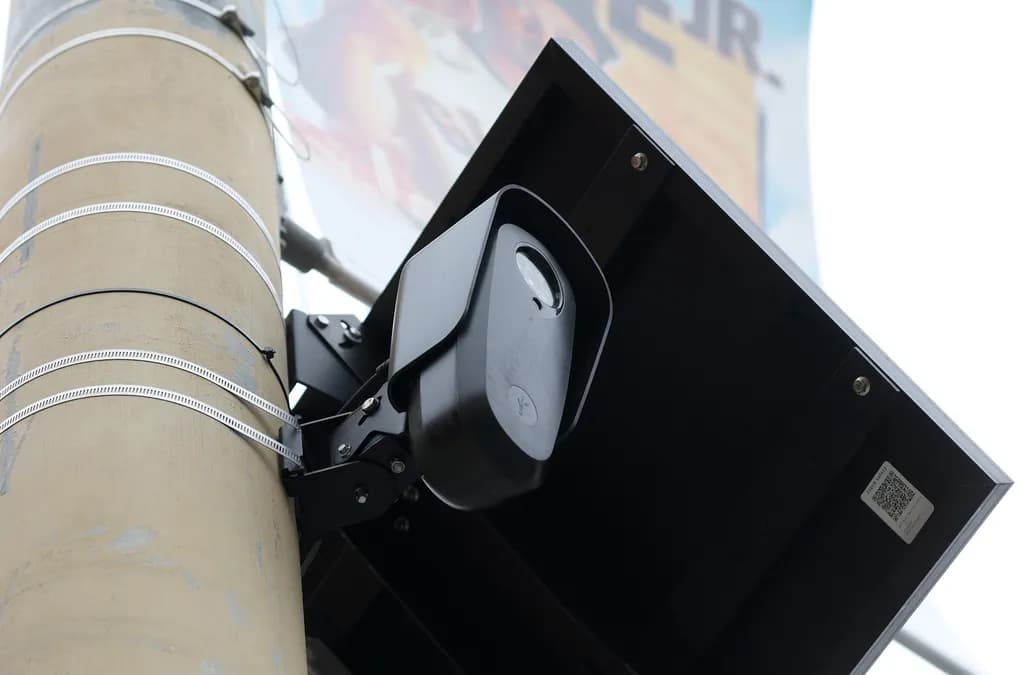
Automated license plate readers are the backbone of the system. Mounted on poles and patrol cars, these cameras photograph every passing vehicle and convert the plate into machine-readable text. That text is checked against hotlists — databases of plates linked to stolen cars, warrants, or missing persons. An alert fires when there's a match.
Read next Medicaid Work Requirements Strand Cancer SurvivorsThe "AI" layer does something more. Modern systems use machine learning to categorize vehicles by make, model, color, and other visual features, letting investigators search for a car matching a witness description rather than a specific plate. Some networks can flag vehicles associated with patterns of movement — a car circling a block repeatedly, for instance.
The critical detail for civil liberties is not the camera. It's the database. Every plate photographed is a record, whether or not the vehicle is connected to any crime. Those records accumulate into a searchable history of where a particular car — and by extension, its driver — has been. How long that history is retained, who can query it, and whether it gets shared with other agencies determines the true scope of the surveillance.
Can the City Fully Credit AI Cameras for the Crime Decline?

The honest answer is that no one can yet say with confidence. Criminologists who study surveillance technology have long cautioned against drawing causal conclusions from simultaneous trends. Crime falls for many reasons at once, and the introduction of a new tool rarely happens in isolation.
Consider what else changed in San Francisco during the same period. Prosecution policies shifted. Retail corridors reorganized. Some neighborhoods saw increased police presence independent of any camera deployment. Vehicle technology itself evolved, with more cars shipping with factory-installed tracking and immobilizer systems. Any of these factors could contribute to a decline in car crime.
There's also the displacement question. Researchers who study camera networks in U.S. cities have documented a recurring pattern: crime drops in the monitored zone but rises in adjacent areas that lack coverage. If that's what's happening in San Francisco, the citywide number would still fall — but the public safety gain would be smaller than it appears, and it would come at the cost of pushing risk onto neighborhoods without cameras.
The distinction between correlation and causation isn't academic. It determines whether the city's investment is delivering genuine deterrence or simply redistributing where offenses occur. City leaders have leaned on the headline numbers. Researchers would want a controlled comparison: areas with cameras versus similar areas without them, tracked over the same period.
Civil Liberties Concerns: The Cost of Constant Surveillance
The American Civil Liberties Union and the Electronic Frontier Foundation have spent years documenting how license plate reader networks expand beyond their original purpose. The pattern is consistent across cities: a system justified for stolen vehicles gradually gets queried for immigration enforcement, protest monitoring, and low-level ordinance violations. Each expansion is defended as a minor extension of existing capability.
Data retention is the flashpoint. Short retention windows — days rather than months or years — sharply limit what a network can reveal about ordinary people. Long retention turns the same cameras into a historical tracking system capable of reconstructing someone's movements over weeks. Civil liberties groups argue that retention periods should be the shortest operationally necessary, with independent audits and clear prohibitions on sharing data with agencies outside the jurisdiction that installed the cameras.
Mission creep has precedent. In several U.S. cities, audits have found that license plate data was accessed for purposes unrelated to the stated public safety mission, sometimes by outside agencies without local oversight. The risk isn't hypothetical; it's documented. For San Francisco, the relevant question is what legal and technical guardrails exist to prevent the same drift.
There's also the question of who gets watched most. Camera networks tend to concentrate in neighborhoods with the highest reported crime — which in American cities often means communities of color. Residents there may gain safety while bearing a disproportionate share of surveillance. That trade-off deserves explicit acknowledgment rather than being buried in a policy document.
Policy Safeguards: Can San Francisco Have Both Safety and Privacy?
Yes — but only with deliberate design choices. The cities that have managed this balance best share several features: defined retention limits measured in days, mandatory audits by an independent body, restrictions on data sharing with federal agencies, and public reporting on how the system is used.
Transparency matters more than most residents realize. If the public cannot see how many queries the network processes, what purposes they serve, and how often they lead to arrests, there's no way to evaluate whether the system is proportionate. Annual audits published in full — not summarized — give the public and researchers something to work with.
Sunset provisions are another lever. Requiring the city to reauthorize the program on a fixed schedule forces periodic public debate rather than allowing the network to become permanent by default. That mechanism also creates space to adjust retention rules or add oversight as new risks emerge.
None of these safeguards eliminates surveillance. They constrain it, and they make its expansion visible. That's the realistic goal: not a pristine privacy environment, but a system where the trade-offs are known and contestable.
What San Francisco's AI Camera Experiment Means for Other Cities
San Francisco is a bellwether. Its size, its data infrastructure, and its progressive political culture make it an unusually instructive test case. If a city with strong civil liberties traditions can deploy an AI camera network and keep it accountable, that model will spread. If it can't, the failure will be equally instructive.
Other cities are watching the crime numbers, not the oversight debates. The risk is that San Francisco AI cameras get adopted elsewhere on the strength of a decline that may have multiple causes, without the safeguards that make the program defensible. Officials in those cities would be wise to build oversight in before deployment rather than after — because retrofitting accountability onto an entrenched surveillance system is far harder than designing it in from the start.
The evidence so far supports a measured conclusion. Camera networks may contribute to reductions in car crime, but the data doesn't yet isolate their effect, and the civil liberties costs are real and documented. San Francisco's experiment isn't a verdict on surveillance. It's an ongoing test of whether a city can pursue public safety without quietly abandoning the privacy its residents expect.
Source: NPR Topics: News