The Promise and Failure of Maximum Pressure
Every administration that has reached for maximum pressure as a foreign policy tool has done so with the same conviction: that pain, applied relentlessly enough, produces compliance. The Trump maximum pressure policy rests on that conviction more than any other doctrine — and its record is becoming one of the clearest refutations of that logic in recent American history.
Maximum pressure is not a new idea. The United States applied variations of it against Cuba for more than six decades, against North Korea through successive administrations, and against Iran through waves of financial sanctions and diplomatic isolation. The Council on Foreign Relations has documented the persistent gap between the coercive goals of sanctions regimes and their actual outcomes: governments endure, populations bear the cost, and the targeted states adapt — often becoming more entrenched in the very behaviors the pressure was meant to change. Robert Pape, whose research at the University of Chicago remains the benchmark study of coercive military and economic force, found that economic coercion alone achieves its stated objectives in only a fraction of cases, and that success rates drop sharply when the target state perceives an existential threat to its governing regime.
That is precisely the trap maximum pressure sets. By framing diplomacy in terms of unconditional surrender — "total capitulation" in the language that often accompanies these campaigns — it removes the off-ramp that would allow a target government to comply without losing face or power. The result is not leverage. It is a standoff, dressed as resolve.
When Ceasefires Are Neither Peace Nor War

The most revealing symptom of this failure is what ceasefires look like when maximum pressure defines the strategic frame. Far from delivering the clean resolution that coercive campaigns promise, the reality on the ground in multiple theaters has been something harder to categorize: a state in which bombardment pauses without genuine political settlement, in which neither side can claim victory, and in which the nominal cessation of hostilities functions as a pressure valve rather than a foundation for peace.
Read next Ukraine War Is Quietly Breaking India's StrategyThis is the blurred terrain that Pedro Abramovay and Julia Sakr Tierney described in their Project Syndicate analysis — a dissolution of the meaningful distinction between war and peace. When months of sustained bombardment fail to produce anything approaching a strategic victory, the ceasefire that follows is not the endpoint of a successful campaign. It is acknowledgment, however tacit, that force could not deliver the outcome promised. The fighting stops, but the political problem remains intact, often more entrenched than before the first strike.
Political scientists describe this outcome as "pyrrhic coercion" — the use of overwhelming force that consumes resources, reputation, and credibility without resolving the underlying conflict. The United States has encountered this dynamic before. American bombing campaigns in Vietnam demonstrated with brutal clarity that tactical military superiority does not translate automatically into strategic political outcomes. The lesson was theorized, documented, and then repeated.
How Militarism Erodes the Power It Claims to Project

There is a paradox embedded in coercive militarism that its proponents consistently underestimate: the more force is used without decisive result, the less credible the threat of further force becomes. Power — particularly the kind that underwrites global order — depends as much on perceived capability as on demonstrated force. When the demonstration falls short of the promise, the perception shifts.
Joseph Nye's concept of soft power captures one dimension of this erosion. Military posture can reinforce hard power without destroying soft power — but only when military action is seen as proportionate, purposeful, and bounded by a coherent political strategy. When it is not, the watching world draws its own conclusions. Allies recalculate their exposure. Adversaries test the boundaries. Neutral states quietly shop for alternatives.
What the Trump maximum pressure policy has accelerated is precisely this recalculation. The embrace of coercive militarism as a first-resort posture, rather than a tool embedded in a broader diplomatic strategy, signals to the international system that American power is less a guarantor of order and more a source of unpredictable disruption. That signal has strategic consequences that outlast any single campaign.
The Strategic Cost to US Global Dominance
American dominance in the post-Cold War era rested on a combination of military primacy, economic centrality, and institutional leadership — a package that RAND Corporation analysts have described as "deep engagement," the ability to shape the international environment rather than merely react to it. Maximum pressure, by its nature, is reactive. It responds to behavior it cannot control by escalating costs. It does not construct the conditions for a different equilibrium.
The strategic cost of this posture is visible in multiple domains. In financial markets, the weaponization of dollar-denominated payment systems — a core tool of maximum pressure — has accelerated discussions among economies in the Global South about reducing dollar dependency. In multilateral institutions, American credibility as a neutral arbiter has eroded precisely as that role matters most. In alliance structures, partners who once regarded American commitments as unconditional have begun building hedges.
None of this represents a sudden collapse. American power remains substantial, and the structural advantages of the United States — in technology, military capacity, and capital markets — do not disappear because of a failed pressure campaign. But dominance that must be reasserted through coercion is already diminished. The costs compound slowly, then visibly.
A New Multilateralism Fills the Vacuum
The erosion of American coercive credibility has not produced a leaderless world. It has produced a competitive one — and in that competition, new formations are finding their footing.
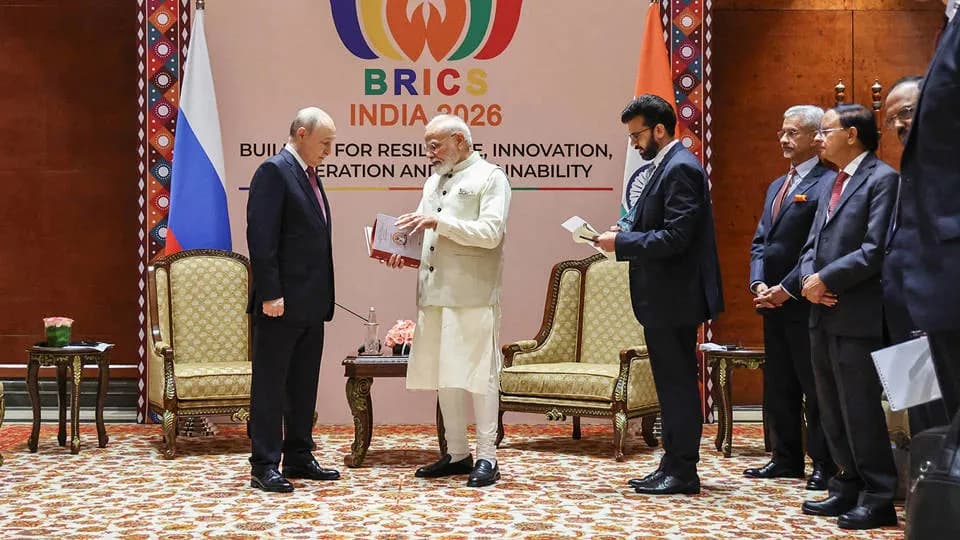
The rise of what analysts are calling a "new multilateralism" is not a coordinated challenge to American power so much as an opportunistic adaptation to its inconsistency. Regional powers that once deferred to Washington on security questions are negotiating their own arrangements. Economies that once anchored their trade infrastructure to American-led institutions are building parallel systems. The diplomatic space that opened when the United States signaled that maximum pressure was its primary mode of engagement has been filled, not by a single rival, but by a diffuse network of bilateral and regional relationships that reduce dependence on any single center of gravity.
Former senior diplomat and scholar Richard Haass, among others, has argued publicly that the erosion of the "rules-based international order" creates conditions not for American reassertion but for competitive disorder — a world in which no single framework commands sufficient legitimacy to manage collective action problems. Maximum pressure accelerates this disorder by replacing the architecture of negotiated norms with a transactional logic that other powers simply adopt for their own purposes.
Conclusion: Rethinking the Role of Force in Foreign Policy
The evidence from the Trump maximum pressure policy points toward an uncomfortable but necessary conclusion: force is a means, not a strategy. Applied without a coherent political endpoint, it does not project strength — it demonstrates the gap between military capability and political achievement.
Genuine strategic power requires something coercive militarism cannot supply: the ability to construct outcomes that endure beyond the application of pressure. That requires diplomacy, institutional investment, and a willingness to accept that adversaries and competitors have interests that must be managed rather than simply overridden.
The distinction between tactical military success and strategic political outcome is not semantic. It is the difference between winning battles and winning the conditions that make conflict less likely. When ceasefires resolve nothing, when months of bombardment produce neither victory nor settlement, and when the watching world recalibrates its trust in American guarantees, the lesson is not that more pressure is needed. The lesson is that a different kind of power must be built — one that does not exhaust itself in its own demonstration.
Source: Project Syndicate