A New Era for U.S. Foreign Aid: What Changed on October 1
October 1 has long marked the start of the federal fiscal year, but for the agencies and organizations that administer American assistance overseas, this October 1 represented something more consequential: a formal shift in how the United States extends healthcare and development aid to other countries. Under the new America First strategy, partner nations are now asked to sign a Memorandum of Understanding as a condition for receiving certain healthcare and development assistance. The change was announced against the backdrop of a foreign assistance apparatus that, at its peak, disbursed tens of billions of dollars annually across more than 100 countries, according to figures historically tracked by USAID and the State Department's Office of Foreign Assistance. Even after recent contractions, that footprint remains the largest of any single donor nation.
The scale is what makes the shift significant. For decades, U.S. foreign aid operated largely through bilateral agreements and implementing partners, with funding channeled to health programs, food security, governance work, and humanitarian relief. The new strategy reframes that relationship. Rather than treating assistance as a largely open-ended transfer, the America First foreign aid policy explicitly ties eligibility to a negotiated document that both governments must sign. Supporters describe the approach as a long-overdue correction. Critics describe it as a barrier dressed up as a reform. Both camps agree on one thing: the terms of the conversation have changed.
The Memorandum of Understanding Requirement
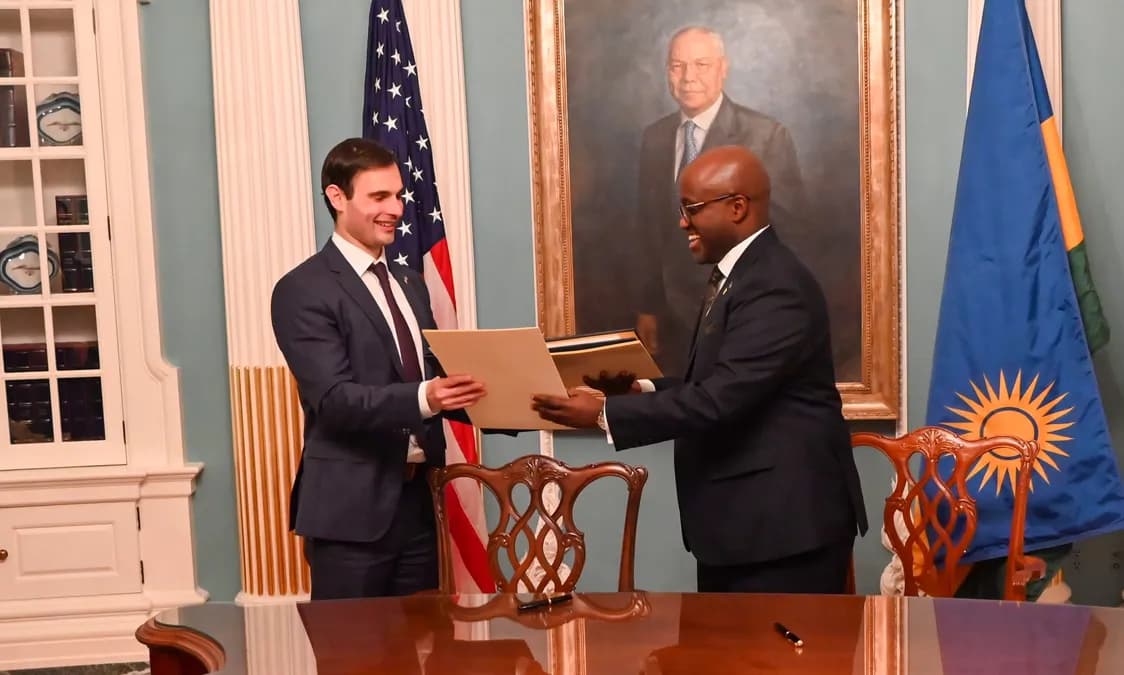
At the center of the overhaul sits a single instrument: the Memorandum of Understanding. Under the new framework, healthcare and development aid is conditioned on a partner government entering into such an agreement with the United States. The summary of the policy makes clear that the MOU functions as a gate — without it, the assistance does not flow. That marks a departure from the traditional practice in which aid relationships were governed by a patchwork of grant agreements, cooperative agreements, and country strategies rather than a single precondition applied across the board.
Read next Medicaid Work Requirements Strand Cancer SurvivorsThe MOU model is not unprecedented in development finance. The Millennium Challenge Corporation, created in 2004, has long required eligible countries to sign compacts tied to governance and economic benchmarks before receiving large grants. What is new here is the breadth. Where compact-based conditionality once applied to a subset of countries and a distinct funding stream, the MOU requirement now sits at the entrance to healthcare and development assistance more generally. In practical terms, that means ministries of health, finance, and foreign affairs in partner countries must negotiate and sign before clinics, vaccination programs, and maternal health initiatives can be certain of continued support.
The design reflects a theory of change: that a written, mutually agreed document creates clearer expectations, sharper accountability, and a pathway toward eventual self-reliance. Whether that theory survives contact with reality is the question now facing policymakers, implementers, and the patients whose care depends on the outcome.
The Case For: Promoting Self-Reliance and Accountability

Proponents of the new framework point to a persistent critique of traditional aid: that it can create dependency rather than capacity. The argument has deep roots in development economics. Research from the Center for Global Development and the Brookings Institution has repeatedly examined how conditionality shapes recipient behavior — and has found that conditions tied to clear, measurable commitments tend to be more effective than vague or unenforceable ones. From this vantage point, an MOU is not a hurdle but a handshake with teeth.
The self-reliance rationale also aligns with a broader bipartisan current in Washington. For years, officials across administrations have argued that the goal of assistance should be to work itself out of a job — that the measure of success is a partner country that no longer needs the money. The MOU requirement operationalizes that idea by forcing an explicit negotiation over what each side will contribute and what each side expects. In theory, that conversation surfaces commitments on domestic health spending, governance reforms, and program sustainability that might otherwise remain unspoken.
Supporters also argue that conditionality protects American taxpayers. If assistance is contingent on agreed terms, the reasoning goes, funds are less likely to disappear into systems with no accountability. The policy's champions describe it as aid with a spine — assistance that demands something in return rather than dispensing resources on autopilot. For a domestic audience skeptical of overseas spending, that framing carries obvious political weight.
The Case Against: Critics Raise Concerns Over Conditions
Global health experts and former foreign aid officials have raised a different set of concerns. Their central worry is timing. In public health, delays are not abstract; they translate into missed vaccinations, interrupted drug regimens, and closures of clinics that serve populations with no alternative. If the MOU requirement slows the disbursement of healthcare funding — even temporarily — the human cost can be measured in outcomes that never happen.
Critics also question whether conditionality of this kind produces self-reliance or simply resentment. Decades of research on aid conditionality have produced mixed results at best. The Center for Global Development has documented cases in which conditions were met on paper but not in practice, and others in which governments rejected terms they viewed as infringements on sovereignty. When the condition is a signed agreement rather than a specific reform, the dynamic can become transactional: countries sign to keep the money flowing, without the underlying changes taking root.
There is also the question of capacity. Many partner governments lack the legal and technical staff to negotiate complex agreements quickly. A ministry already stretched thin by a disease outbreak or a budget crisis may find itself negotiating paperwork instead of delivering care. Former officials have noted that the countries most in need of assistance are often the least equipped to satisfy new procedural requirements — a paradox that could leave the most fragile states worse off. The praise for self-reliance, critics argue, rings hollow if the mechanism for achieving it excludes the very countries the program is meant to help.
Will the America First Aid Strategy Actually Work?
The honest answer is that no one knows yet — and the evidence base for strong claims in either direction is thin. The policy took effect on October 1; the MOUs it requires are still being negotiated. Any assessment of success or failure at this stage rests on projection rather than results.
What can be said is that the strategy's fate will hinge on execution. If MOUs are negotiated quickly, with standard terms and technical support for partner governments, the disruption may be minimal and the accountability gains real. If negotiations stall, or if terms are perceived as coercive, the result could be a contraction of American health and development programming at precisely the moment global need remains high. The history of conditionality suggests the difference between those outcomes lies in design details that rarely make headlines: timelines, dispute resolution, waivers for humanitarian emergencies, and whether conditions are tied to measurable reforms or to signatures alone.
There is also a strategic dimension. The United States is not the only donor in the field. China, European governments, and multilateral funds all compete for influence through development finance. If American assistance becomes harder to access, partner countries may simply turn elsewhere — a possibility that some analysts argue undermines the very influence the policy seeks to preserve. Whether the MOU requirement strengthens America's hand or weakens it depends on how partners respond, and that response is still being written.
What Comes Next for U.S. Foreign Assistance
The next twelve months will be decisive. Watch three things. First, the pace of MOU signings: how many countries conclude agreements, and how quickly. Second, the composition of aid flows: whether healthcare and development funding continues at prior levels or contracts as negotiations proceed. Third, the response from implementing organizations, which must adapt their programs to a new set of preconditions.
Congress also retains a role. Lawmakers who fund foreign assistance can shape how the strategy is administered, and oversight hearings will likely probe both its costs and its consequences. Meanwhile, global health advocates will continue to press for carve-outs and safeguards, arguing that life-saving care should not be held hostage to diplomatic paperwork.
The America First foreign aid policy represents a genuine inflection point. It asks a question that has haunted development work for generations: should assistance be given freely, or should it be earned? The answer the United States has now chosen is conditional. Whether that conditionality builds stronger partners or erects higher walls will be determined not by the announcement of October 1, but by the months of negotiation that follow — and by the health outcomes that no memorandum can guarantee.
Source: NPR Topics: News