Brazil's Left Faces Its Worst Defeat in Decades
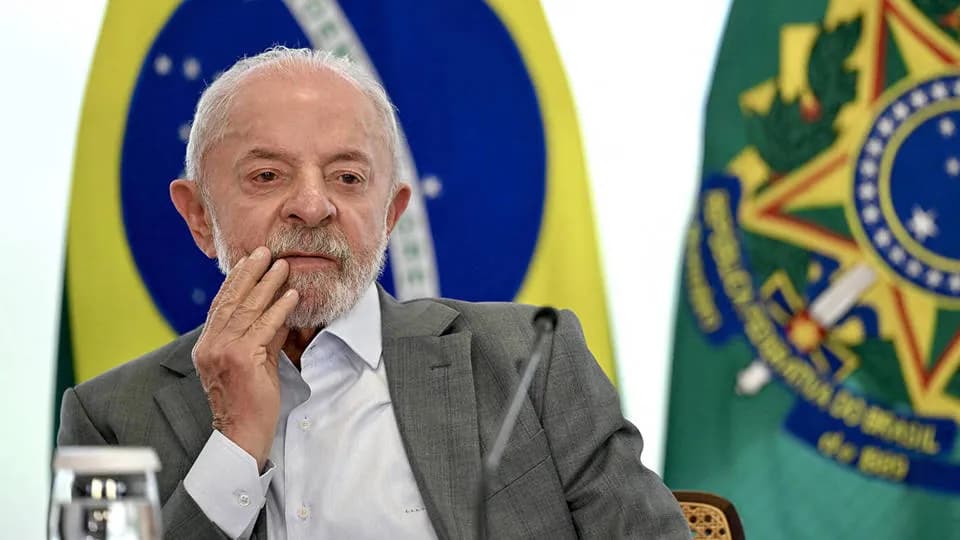
The Partido dos Trabalhadores — the Workers' Party, or PT — was born out of São Paulo's metalworkers' strikes in the late 1970s, forged in the fires of resistance against military dictatorship. For nearly half a century it represented one of the most organized and ideologically coherent left-wing movements in the Western Hemisphere. That legacy now lies in ruins. Brazil's left has just suffered a crushing defeat in municipal and legislative elections, and the presidency — the institution Lula himself came to personify — appears set to slip from the coalition's grasp by the end of October.
This is not a cyclical setback. It is structural, and the evidence has been accumulating for years. The PT's share of city council seats has declined steadily since its peak years in the mid-2000s. Approval ratings for the Lula government have trended downward through 2025 and into 2026, weighed down by voter frustration with inflation, a cost-of-living squeeze that never fully eased, and a federal administration that too often looked like it was governing for the party rather than for the country. A progressive movement that once promised transformation has, in the eyes of millions of Brazilians, delivered management — and not particularly good management at that.
The Lula Problem: Building a Movement Around One Man

Political scientists have long warned about what Steven Levitsky and others have called "personalism" — the tendency of Latin American political movements to concentrate legitimacy, authority, and public identity in a single charismatic leader rather than in institutions, programs, or party structures. The danger is obvious in retrospect: when the person falters, so does the movement. No other Latin American example illustrates this more clearly than Brazil's current crisis.
Read next France Is Dragging the Eurozone Toward a Debt CrisisLula is a genuinely extraordinary political figure. His story — from factory floor worker to three-term president — remains one of the most compelling in modern democratic history. He demonstrated, across administrations spanning from 2003 to 2010 and again from 2023 onward, a rare capacity to hold together contradictory coalitions: agribusiness and landless peasants, evangelical Christianity and secular progressivism, Wall Street bond markets and favela residents. That talent is real. It is also, paradoxically, the source of the PT's present catastrophe.
Because the movement was built around Lula's singular appeal rather than around a durable institutional framework, the PT never needed to develop the thing that strong parties require above all else: a bench. In parliamentary democracies from Sweden to Germany, parties invest decades in identifying, mentoring, and elevating second and third-tier leaders. The PT invested in Lula. And so, when voters in 2026 look at the party's lineup and ask who comes next, the honest answer is: no one ready.
The Succession Trap: No Heir, No Future

Lula's longstanding refusal to groom an appealing successor is now recognized, even within left-wing circles in Brazil, as a defining strategic failure. This is not merely an internal party complaint. It is a structural vulnerability with measurable electoral consequences.
The pattern is familiar to students of Latin American political history. Hugo Chávez spent two decades constructing Venezuelan chavismo entirely around his own persona; when cancer took him in 2013, Nicolás Maduro inherited the name but not the legitimacy, and the results have been catastrophic. In Argentina, Kirchnerismo's dependence on the Kirchner family brand has produced a similar brittleness — a movement incapable of generating new faces capable of winning independently.
Lula's version of this trap is subtler but no less damaging. Unlike Chávez or the Kirchners, he showed little interest in actively blocking rivals. His failing was more passive: an unwillingness to do the hard, unglamorous work of building successors, mentoring regional leaders, or stepping aside early enough to let a new generation test itself before the stakes became existential. By the time the electoral arithmetic made the succession question unavoidable, the cupboard was bare. No PT figure exists today who commands anything approaching Lula's cross-regional, cross-class appeal.
Structural Weaknesses Behind the Collapse
The succession problem does not exist in isolation. It sits atop a series of structural weaknesses that the PT's years of dominance allowed it to ignore.
First, the economics never fully delivered on the transformative promise. The commodity boom of the 2000s funded genuine poverty reduction — the Bolsa Família program pulled tens of millions out of destitution and remains a legitimate achievement — but it also masked an underlying economy that failed to diversify. When commodity prices fell and inflation rose, the redistributive gains of the Lula years looked more fragile than advertised. Voters with longer memories connected the dots between PT governance and economic volatility.
Second, the party's corruption scandals — the Mensalão affair of 2005 and the sprawling Petrobras revelations of the Lava Jato investigation — inflicted lasting reputational damage that opponents have exploited at every election cycle since. Lula's own conviction, later annulled on procedural grounds, gave his enemies a permanent weapon. The PT never developed an effective response beyond denialism and victimhood, strategies that play well to the base and poorly to everyone else.
Third, and perhaps most consequentially, the PT failed to hold cultural ground. Brazil's electorate has shifted rightward on social issues — crime, family values, religious identity — in ways that the left consistently underestimated. The rise of Jair Bolsonaro between 2018 and 2022 was a shock to the PT's self-image, but the conditions that produced it — a vast, socially conservative, religiously observant middle-and-lower-middle class that felt culturally unrepresented by Lula's coalition — predated Bolsonaro and will outlast him.
Can Brazil's Left Rebuild Without Lula?
Rebuilding will require the PT to do something it has never convincingly done: become a party rather than a movement. The distinction matters enormously. Movements rally around individuals and moments; parties build institutions, develop platforms, and survive transitions of leadership. The Nordic social democracies, the most durable left-wing electoral machines in history, succeeded precisely because they subordinated individual ambition to institutional continuity. Olaf Scholz is not Willy Brandt. That, counterintuitively, is why German social democracy still exists as a competitive political force.
For the PT, the path forward runs through painful internal democracy: competitive primaries, investment in municipal and state-level politics, a willingness to lose short-term influence in order to develop candidates who can win on their own merits rather than borrowed Lula charisma. None of this is impossible. But it requires the party leadership to accept a diagnosis they have resisted for years — that the Lula model, however brilliant in its moment, has become an obstacle.
What This Means for Latin American Progressive Politics
Brazil is the largest country in Latin America. Its political weather patterns travel. When the PT suffers, progressive movements from Buenos Aires to Bogotá pay attention.
The lesson being absorbed across the region right now is uncomfortable but necessary. Charismatic leadership is an electoral asset. It is also a liability that compounds over time when it substitutes for institution-building. The left's most durable successes in modern Latin America — Uruguay's Frente Amplio comes to mind — came from parties that distributed authority broadly, respected internal pluralism, and refused to bet everything on a single face.
The Lula Brazil election defeat is not the end of progressive politics in Latin America. The underlying conditions that produce demand for redistributive government — inequality, inadequate public services, concentrated economic power — have not disappeared. But demand without supply is just frustration. Brazil's left must now do the hardest kind of political work: building the supply side of progressive governance, brick by brick, candidate by candidate, without the shortcut of a single extraordinary man to carry the weight of history on his shoulders.
That work begins the morning after October's expected defeat. Whether the PT is capable of it remains genuinely uncertain. What is certain is that the alternative — waiting for the next Lula — is not a strategy. It is a surrender.
Source: Project Syndicate