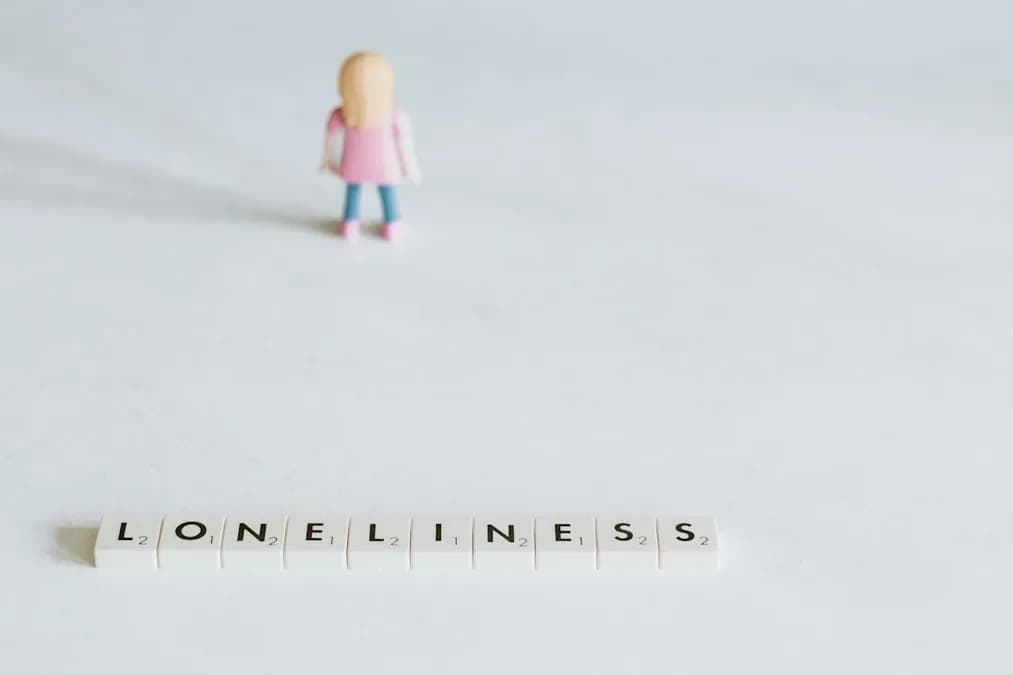
The Loneliness Epidemic Among Young People
In September 2026, a 25-year-old man posted a question to the r/ForeverAlone subreddit that has since resonated far beyond that corner of the internet. He wanted to know how to cope with touch starvation. Sex no longer preoccupied him, he explained. What he missed was simpler and more fundamental: hugs, cuddles, the ordinary physical warmth of being close to another person. "I don't have many friends and none with that kind of physical relationship," he wrote. "Some days, I feel so desperate for a hug with someone I love."
His post is not an outlier. It is a data point in what public health officials now describe as a young people loneliness epidemic—one that spans continents, cuts across income levels, and appears to be worsening even as digital connectivity reaches unprecedented heights. According to the World Health Organization, which in 2023 declared loneliness a pressing global health threat, roughly one in four older adults experiences social isolation—but the sharpest increases in reported loneliness are now concentrated among adolescents and young adults. Cigna's Loneliness Index, a national survey first fielded in 2018, found that Generation Z adults scored as the loneliest generation on record, with roughly half reporting they sometimes or always feel alone. The UK's Office for National Statistics has similarly documented that 16- to 29-year-olds report feeling lonely more often than any other age group.
The demographic inversion is striking. Loneliness was once understood as a condition of old age—a consequence of retirement, bereavement, and shrinking social networks. Today, the people most likely to report chronic loneliness are the ones with the most presumed social opportunity.
Touch Starvation: The Hidden Symptom of Isolation

The r/ForeverAlone poster put a name to something clinicians have studied for decades: touch starvation, sometimes called skin hunger. It is the physiological and psychological distress that arises when a person goes extended periods without physical contact. The science here is well established. Affectionate touch—hugging, holding hands, a hand on the shoulder—triggers the release of oxytocin, a hormone associated with bonding and calm, while simultaneously lowering cortisol, the body's primary stress hormone. Peer-reviewed research in fields such as psychoneuroendocrinology has repeatedly linked consistent physical contact to reduced blood pressure, improved immune function, and lower rates of anxiety and depression.
Read next Medicaid Work Requirements Strand Cancer SurvivorsWhen that contact disappears, the body registers the absence. Studies on touch deprivation have found associations with elevated stress responses, sleep disruption, and worsened mood. For young people navigating the transition into adulthood—leaving family homes, moving to unfamiliar cities, working remote jobs—the loss of casual touch can be abrupt and total. A person can go days without physically contacting another human being, and the body notices even when the mind does not consciously name it.
Loneliness, in other words, is not merely an emotion. It is a biological signal, as real as hunger or thirst, and its chronic activation carries measurable health consequences. Research cited by the US Surgeon General's advisory on loneliness and isolation—issued by Vivek Murthy in 2023—links social disconnection to a 29 percent increased risk of premature death, a risk comparable to that of smoking up to 15 cigarettes a day.
This is why the young man's plea resonated. He was not asking for romance. He was asking for the basic regulatory comfort that human contact provides, and he had no obvious path to it.
Why Is This Generation So Much Lonelier?

The explanations are layered, and honest analysis requires distinguishing correlation from causation. Social media is the most frequently blamed culprit, and the evidence is genuinely mixed. Heavy social media use correlates with higher reported loneliness, but researchers disagree on direction: lonely people may gravitate toward online platforms, platforms may displace face-to-face time, or both dynamics may reinforce each other. What the research does not support is a simple story in which smartphones single-handedly caused the crisis.
Structural factors carry more explanatory weight. Young people today change cities, jobs, and social circles more frequently than previous generations. Remote work and remote schooling—accelerated by the pandemic and never fully reversed—removed the incidental daily interactions that once built friendships: the commute, the lunchroom, the post-lecture walk. Membership in community institutions, from churches to unions to local clubs, has declined steadily for decades, leaving fewer ready-made venues where relationships can form without effort. The result is what sociologists call a "structural loneliness"—not a personal failing, but a scarcity of the conditions under which connection naturally occurs.
The cultural dimension matters too. Young people report higher levels of social anxiety and lower tolerance for the awkwardness of early friendship. If every interaction can be optimized, postponed, or replaced by a screen, the muscle for tolerating discomfort atrophies. Learning to be one human among many has always been a little lonely and discombobulating. What has changed is that young people now have fewer structured opportunities to practice it—and more digital alternatives that simulate connection without its risks or its rewards.
The Global Scope of the Youth Loneliness Crisis
This is not an American phenomenon, nor a Western one. The World Health Organization has framed loneliness as a global public health priority, noting that social isolation affects physical health, mental health, and longevity across every region it tracks. In Japan, the government has appointed a minister of loneliness—a position first created in 2021—to address rising social withdrawal among young adults. The UK established its own loneliness minister in 2018 after a cross-party commission found that millions of people of all ages considered loneliness a chronic condition. Across Europe, surveys consistently place young adults at the top of loneliness rankings, overturning decades of assumptions about who suffers most.
What unites these countries is not culture or politics but a shared set of modern conditions: urban anonymity, labor market precarity, delayed family formation, and digital life that substitutes breadth of contact for depth. A 20-something in Seoul, Manchester, and São Paulo may have little in common materially, but many report the same experience—surrounded by people, known by none.
What Can Be Done? Paths Toward Connection
In 2023, Surgeon General Vivek Murthy issued a formal advisory declaring loneliness and isolation an epidemic, framing social connection as a public health priority comparable to nutrition or tobacco. The advisory called for rebuilding social infrastructure: the physical spaces, programs, and institutions that make connection possible. That means funding libraries, parks, community centers, and third places where people gather without spending money. It means designing workplaces and schools that preserve incidental interaction rather than eliminating it. And it means treating loneliness as a legitimate clinical concern, not a private shame.
At the individual level, the evidence favors small, repeated, low-stakes contact over grand gestures. Showing up at the same café, joining a recurring class, volunteering on a schedule—these build the familiarity from which friendship grows. For those experiencing touch starvation, therapists increasingly recommend structured physical contact: massage, partner dance, team sports, or simply asking a trusted friend for a hug. The ask feels awkward. The alternative, as the Reddit post illustrates, is worse.
A Generation Relearning How to Be Human Together
The 25-year-old who asked how to survive touch starvation received hundreds of replies. Some offered practical suggestions. Others simply said: me too. That collective recognition—the discovery that a private ache is widely shared—is where repair begins. A generation that has been told it is the most connected in history is now learning the difference between connection and contact, between being seen and being held. The loneliness epidemic among young people will not be solved by one policy or one platform. It will require rebuilding, deliberately and patiently, the ordinary human conditions under which no one has to ask how to survive without a hug.
Source: Society | The Guardian