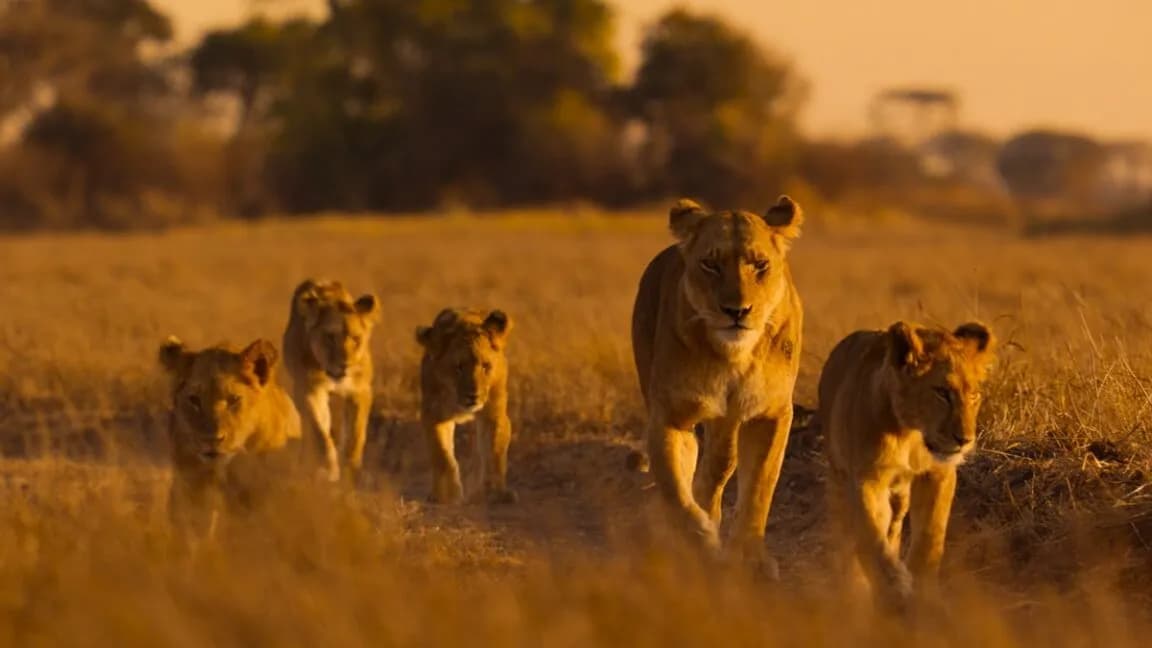
Inside National Geographic's New Africa Wildlife Documentary Series
Four years. Nearly thirty countries. Seven episodes. Those numbers alone signal that Africa: Earth's Wild Home is not a casual nature series assembled from stock footage and narration. National Geographic's ambitious new Africa wildlife documentary is the opening chapter of a planned continent-by-continent franchise — one that, if the first installment holds up, promises to set a high bar for wildlife filmmaking in the years ahead.
The series arrives at a moment when attention to African ecosystems matters enormously. Africa holds roughly a fifth of all known animal and plant species on Earth, spanning biomes that range from hyper-arid deserts to equatorial rainforests to alpine meadows above four thousand metres. No single camera crew, no matter how well-equipped, could capture that breadth in a weekend shoot. The production's decision to commit four years to the project — spreading crews across an estimated 30 African nations — reflects a genuine attempt to represent the continent's ecological complexity rather than flatten it into a greatest-hits reel of lions and elephants.
National Geographic frames the series as the first of seven, with separate productions planned for each remaining continent. If those sequels match the ambition shown here, the franchise could become a defining wildlife series of this decade.
Episode Breakdown: Seven Ecosystems, Seven Stories

Each of the seven episodes is anchored to a distinct African ecosystem, and the structural decision pays off. Rather than cutting restlessly between biomes in a single hour, the series grants each environment enough screen time to breathe — to show predator-prey dynamics, seasonal rhythms, and the pressures bearing down on local species.
Read next Laika's Wildwood: Stop-Motion Fantasy at TIFF 2026The ecosystems covered move from the obvious to the genuinely surprising. Jungle sequences explore the dense, layered canopy of central Africa's rainforests. Desert episodes push into the Sahara and the Namib, where survival is measured in millimetres of annual rainfall. Plains episodes cover the grassland corridors — the Serengeti and its neighbours — that most viewers associate with African wildlife. Mountain and island segments round out the series, documenting ecosystems that receive far less documentary attention despite hosting species found nowhere else on the planet.
Every episode closes with a spotlight segment dedicated to the scientists, photographers, and National Geographic explorers whose work made the footage possible. The choice to show the human infrastructure behind wildlife filmmaking — the weeks of waiting, the local knowledge, the conservation entanglements — grounds the series in something more than spectacle. It is, in effect, a documentary about documentation.
Standout Animals Featured in the Series

Three animal sequences stand out as likely talking points long after viewers finish the series.
The first involves chimpanzees. In what the series presents as a rare example of primate tool use, chimps are filmed fishing for algae — behaviour that sits at the edge of what primatologists typically document in non-human apes. Tool use in chimpanzees is well established; the Gombe research pioneered by Jane Goodall in the 1960s confirmed that chimps strip twigs to extract termites. But algae-fishing represents a distinct and less frequently observed technique, adding to the growing body of evidence that chimpanzee material culture is both widespread and locally varied across sub-Saharan Africa. The sequence is a small scientific document as much as a visual one.
The second standout involves a wild African black panther — in fact, a melanistic leopard, the dark coat a result of a recessive genetic variant — filmed hunting in its natural habitat. Black panthers in Africa remain rare enough that credible camera footage is genuinely uncommon. The series apparently secured extended footage of one, and the result is the kind of imagery that justifies a production's entire budget.
Third: a baby pangolin, orphaned and alone, working out how to climb without a mother to model the behaviour. It is a quieter sequence, less dramatic than a big-cat hunt, but arguably the most emotionally affecting. All eight pangolin species are listed on the IUCN Red List, with several classified as Critically Endangered due to the illegal wildlife trade — pangolins are among the most trafficked mammals on Earth. Watching one infant navigate the world without guidance carries weight that no narration needs to supply.
A fourth sequence, simpler in premise but hard to forget, shows a green sea turtle exhausted after laying eggs on a remote island beach, too depleted to make it back to the water on her own. Local humans step in, carrying her to the water's edge. Green turtles (Chelonia mydas) are classified as Endangered on the IUCN Red List; their nesting beaches face threats from coastal development, artificial lighting, and rising sea temperatures that skew hatchling sex ratios. The image of people gently returning one turtle to the ocean is not a triumphant conservation story. It is a small, specific act of care — which is often what conservation actually looks like.
Conservation at the Heart of the Series
The final episode abandons the ecosystem-per-episode structure to focus entirely on the people working to preserve what the preceding six hours documented. Local conservation leaders and researchers — not Western scientists parachuting in, but African professionals embedded in their communities — take centre stage.
This framing matters. African conservationists have long argued that the international conservation establishment has historically treated the continent as a resource to be managed by outside expertise, often at the expense of local knowledge and local agency. By closing the series with African researchers as its primary subjects, the production makes a deliberate editorial choice: the future of Africa's biodiversity depends on the people who live alongside it.
The series does not reduce this to sentiment. Conservation science is hard, granular work — population monitoring, habitat corridor negotiation, community engagement, anti-poaching intelligence. The final episode apparently engages with enough of that texture to feel substantive rather than decorative.
Why Africa's Biodiversity Matters Now More Than Ever
Africa's wildlife faces pressures that are accelerating, not stabilising. Habitat loss driven by agricultural expansion continues across the Sahel, the Congo Basin, and the East African savannahs. The illegal wildlife trade — the same trade pushing pangolins toward extinction — moves billions of dollars annually through supply chains that stretch from rural Africa to urban markets in Asia and beyond. Climate change is altering rainfall patterns that entire ecosystems depend on, compressing the range of montane species and drying out wetlands that serve as migration waypoints.
Against that backdrop, an Africa wildlife documentary that took four years and covered nearly 30 countries is more than a viewing experience. It is a record. Documenting species behaviour, habitat extent, and ecological relationships creates a baseline — something researchers, policymakers, and future filmmakers can measure change against. National Geographic has a long institutional history of that kind of archival work, and Africa: Earth's Wild Home fits squarely within it.
The series also functions as an argument: that Africa's ecosystems are sufficiently complex, sufficiently interconnected, and sufficiently threatened to warrant the kind of sustained, serious attention that a seven-episode production provides. That argument needs to be made repeatedly, to different audiences, in different formats. A well-made documentary reaching millions of viewers on a major streaming platform is one of the more effective ways to make it.
How to Watch Africa: Earth's Wild Home
Africa: Earth's Wild Home is a National Geographic production. As of publication, the series is available through National Geographic's standard distribution channels, which include Disney+ in markets where the streamer carries NatGeo content. Viewers without a Disney+ subscription can also access National Geographic programming through select cable and satellite providers that carry the NatGeo channel.
The seven-episode run makes the series well-suited to either a single weekend watch or a more measured one-episode-per-sitting pace. Given the closing spotlight segments in each episode, the latter approach is worth considering — those segments reward attention rather than fatigue.
For viewers interested in the conservation science underlying specific sequences, the IUCN Red List database (iucnredlist.org) provides species-level threat assessments and population trend data for the pangolin, green turtle, chimpanzee, and leopard featured prominently in the series. It is a useful companion to the visuals.
Source: Ars Technica - All content