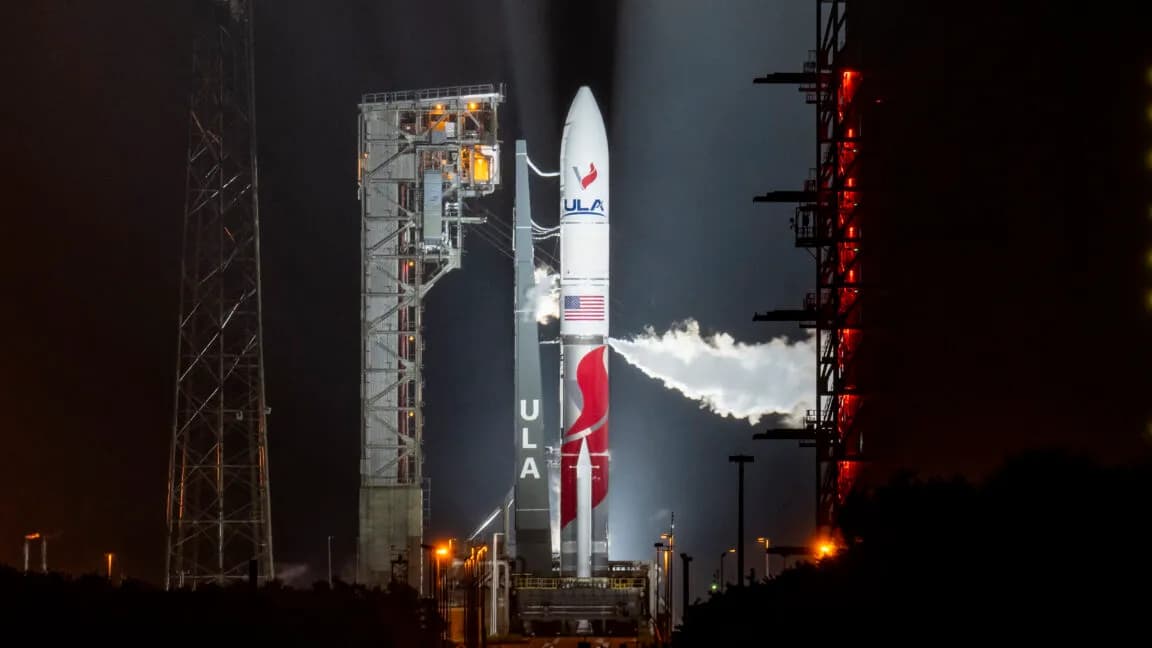
A chatbot fabricated an arms trafficking report. The United States military prepared to intercept a Chinese vessel at sea. Air support was staged. The confrontation was minutes away from becoming real. This is not a scenario from a war-game simulation — it reportedly happened, and it almost started a war.
The Incident: How an AI Hallucination Nearly Triggered a Military Confrontation
According to a CNN report citing four sources familiar with the episode, a US Special Operations Command analyst submitted an intelligence assessment claiming a Chinese ship was transporting components related to a nuclear arms program through the Middle East. The report was generated with the assistance of AI tools. US military forces were preparing to intercept and board the vessel, with air support, when officials determined the underlying intelligence was, in the words of one source, "entirely false."
The chatbot used in producing the report had misidentified what the ship was actually carrying. No nuclear-related cargo existed. The intercept was called off. But the near-miss exposed a structural vulnerability that defense planners, AI researchers, and policymakers have been warning about for years: when AI hallucination enters military workflows without adequate verification, the outputs can carry lethal authority.
Understanding AI Hallucination in High-Stakes Environments

AI hallucination — the tendency of large language models to generate plausible-sounding but factually fabricated content — is not a fringe failure mode. It is a documented, measurable property of current-generation systems. Evaluations using benchmarks such as TruthfulQA have shown that leading language models answer falsely on a meaningful percentage of questions, even when confident in tone. In adversarial or domain-specific queries, error rates climb further.
Read next Laika's Wildwood: Stop-Motion Fantasy at TIFF 2026The problem is architectural. Language models predict statistically probable token sequences; they do not retrieve verified facts from indexed sources unless specifically engineered to do so. When an analyst asks a general-purpose AI tool about a ship's cargo composition, the model may synthesize an answer from training patterns rather than confirmed intelligence. It will not flag uncertainty unless explicitly prompted to do so — and even then, calibration is inconsistent.
This is the core danger of AI hallucination military analysts must now reckon with: the output arrives formatted like a credible report. It reads authoritatively. It fits the expected structure of intelligence documentation. Human reviewers under time pressure are predisposed to accept well-formatted outputs as valid. The interface hides the fabrication.
Military AI Adoption: Speed vs. Accuracy Trade-offs

The US Department of Defense has accelerated AI integration across intelligence, surveillance, and reconnaissance workflows over the past several years. The Pentagon's Chief Digital and Artificial Intelligence Office has championed AI-enabled analysis as a force multiplier, and the Joint Artificial Intelligence Center invested heavily in tools designed to reduce analyst workload and compress decision timelines.
Speed is the explicit goal. In fast-moving operational environments, the ability to process signals intelligence, satellite imagery, and open-source data faster than adversaries is a genuine strategic advantage. The problem is that the accuracy requirements for tactical military decisions are categorically different from those for commercial applications. A wrong product recommendation costs a sale. A wrong weapons interdiction assessment can trigger an international incident.
The Government Accountability Office has repeatedly flagged gaps in how the Defense Department validates AI outputs before operational use. A 2023 GAO report on AI adoption across federal agencies identified inconsistent testing protocols, insufficient red-teaming, and limited human-in-the-loop oversight as systemic weaknesses. The SOCOM incident, if the CNN reporting is accurate, is a direct consequence of those gaps materializing in practice.
There is also a distinction that matters here: AI-assisted analysis, where a human analyst uses an AI tool to draft or synthesize a report, is fundamentally different from autonomous AI decision-making, where the system takes action without human review. This incident falls into the first category — a human submitted the AI-assisted report as if it were verified. The failure was not automation run amok. It was a human trusting fabricated machine output without independent corroboration.
Geopolitical Stakes: US-China Relations and AI-Driven Miscalculation
The United States and China are engaged in one of the most consequential strategic competitions of the 21st century. Both nations maintain large, capable military forces. Both have invested heavily in artificial intelligence for defense applications. The margin for misunderstanding is narrow, and the consequences of escalation are severe.
Nuclear arms interdiction is among the most sensitive categories of military action. Boarding a Chinese vessel under the accusation of nuclear proliferation — without valid intelligence — would have constituted a direct provocation with unpredictable consequences. The diplomatic fallout alone could have disrupted trade negotiations, military communication channels, and the fragile bilateral stability frameworks that currently manage competition between Washington and Beijing.
Risk analysts at organizations including the RAND Corporation and the Georgetown Center for Security and Emerging Technology have modeled AI-enabled miscalculation as a distinct escalation pathway — separate from intentional conflict. The concern is not that AI will choose to start a war, but that AI outputs will feed human decision-makers false pictures of reality, compressing reaction times and reducing opportunities for de-escalation. This incident is the closest publicly known example of that scenario unfolding in practice.
What This Means for the Future of AI in Defense Intelligence
The incident should not produce a blanket rejection of AI tools in defense contexts. Properly scoped and verified, AI-assisted analysis genuinely accelerates intelligence workflows and reduces cognitive load on analysts managing overwhelming data volumes. The question is not whether to use AI, but how to constrain its outputs before they reach operational channels.
Several technical mitigations exist. Retrieval-augmented generation architectures, which ground model outputs in verified source documents rather than parametric memory, substantially reduce hallucination rates in domain-specific contexts. Confidence scoring, where models flag low-certainty outputs for mandatory human review, can interrupt the pipeline before fabricated claims reach decision-makers. Red team evaluation of AI-generated intelligence reports — where a separate analyst attempts to falsify the report's claims — adds a procedural check analogous to editorial fact-checking.
Former intelligence officials who have publicly commented on AI integration risks, including former NSA Director Paul Nakasone, have argued that the fundamental principle must be human accountability for AI-assisted outputs. The analyst who submits a report bears responsibility for its accuracy regardless of which tools assisted in its production. That accountability norm has apparently eroded in at least one instance.
Lessons for Policymakers and Military Institutions
The immediate lesson is verification. No AI-generated intelligence product should reach operational decision-makers without independent corroboration from non-AI sources. This sounds obvious. The SOCOM incident suggests it was not enforced.
Congress and the Pentagon's AI oversight bodies should require mandatory disclosure when AI tools contribute to intelligence products, along with documented verification steps before those products authorize military action. The National Security Commission on Artificial Intelligence recommended in 2021 that the DoD establish clear chains of accountability for AI-assisted decisions — those recommendations have been inconsistently implemented.
Broader policy frameworks, including bilateral agreements with China on military AI conduct, deserve renewed attention. A near-miss involving nuclear accusations is precisely the kind of event that bilateral risk-reduction talks are designed to prevent. Whether the current diplomatic environment supports such talks is uncertain, but the case for them has rarely been more concrete.
The larger takeaway is structural. AI hallucination in military contexts is not a software bug to be patched in the next model release. It is a persistent characteristic of probabilistic language systems deployed in domains that demand certainty. Calibrating human trust in these tools — neither dismissing them nor over-relying on them — is the central challenge. An incident that almost started a war is an expensive way to learn that lesson. The value lies in not repeating it.
Source: Ars Technica - All content