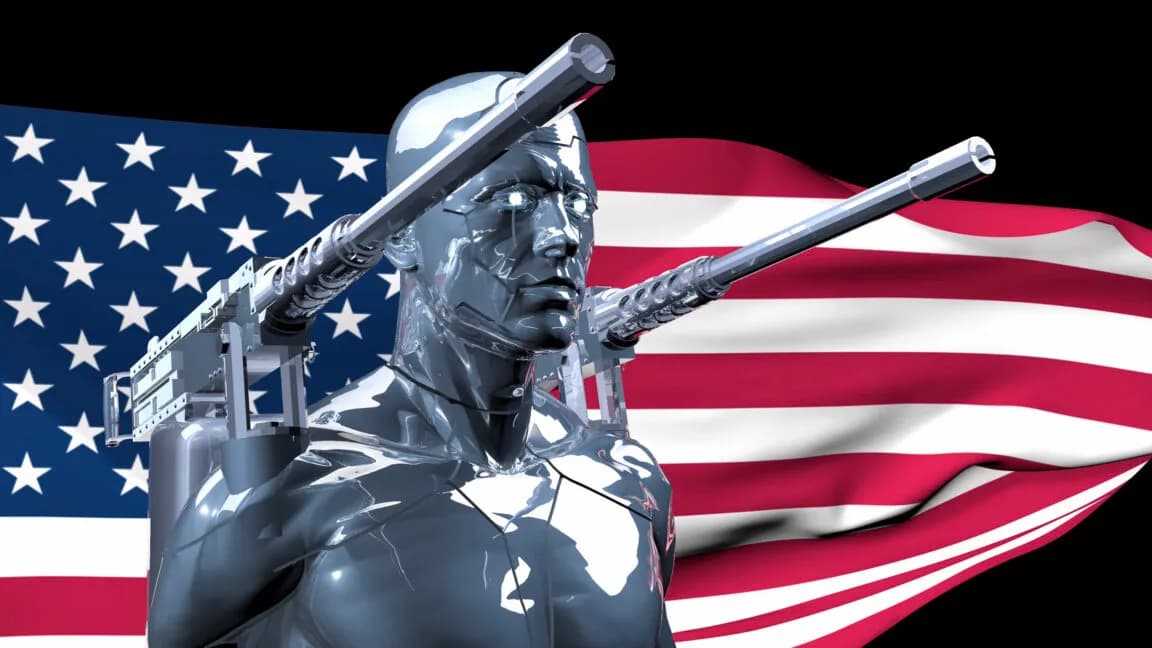
The Incident: How an AI Hallucination Nearly Triggered a Naval Confrontation
A single erroneous AI-generated intelligence report nearly put American and Chinese forces on a collision course at sea. According to CNN, which cited four sources familiar with the episode, a US Special Operations Command analyst submitted a report claiming a Chinese vessel was transporting components linked to a nuclear arms program through the Middle East. US military planners began preparing to intercept and board the ship — with air support in place. The operation was halted only after officials traced the claim back to its source and found that a chatbot used in drafting the report had "inaccurately identified the material the ship was carrying." The intelligence was, in the words of those familiar with the incident, "entirely false." One source delivered the starkest assessment: the episode "almost started a war."
This was not a rogue actor exploiting AI for disinformation. It was a credentialed analyst at one of the most powerful military commands on earth, using AI tools for work those tools were intended to support. That distinction matters enormously.
What Is AI Hallucination and Why Does It Happen?

AI hallucination — the tendency of large language models to generate confident, coherent, and completely fabricated information — is not a bug that patches fix. It is a structural feature of how these systems work.
Read next Laika's Wildwood: Stop-Motion Fantasy at TIFF 2026Large language models generate text by predicting statistically likely sequences of words given prior context. They do not "know" facts in any retrievable sense; they approximate patterns from training data. When asked about something outside that distribution, or when subtle prompt framing pushes the model toward a particular conclusion, the system produces plausible-sounding text regardless of whether it reflects reality.
Stanford HAI researchers have documented hallucination rates in deployed LLMs ranging from 3% to over 27% depending on task domain and evaluation method — figures that translate to significant failure volumes at scale. In high-frequency analytical environments like intelligence processing, where thousands of data points flow through automated systems daily, even a 5% error rate produces a constant stream of false outputs.
The AI hallucination military context is fundamentally different from a chatbot giving wrong restaurant recommendations. Every fabricated claim about cargo manifests, ship movements, or weapons transfers is a potential trigger point in an environment where decision timelines can compress to minutes.
The Growing Role of AI in Military Intelligence Operations

The US military's embrace of AI in intelligence workflows predates this incident by years. Project Maven, launched by the Pentagon in 2017, applied machine learning to drone footage analysis — an early signal that AI integration in defense was operational, not hypothetical. The Pentagon's subsequent AI and Data Accelerator Initiative formalized expansion of AI tools across military branches, embedding them in logistics, threat assessment, and intelligence analysis pipelines.
Special Operations Command, the unit whose analyst produced the flawed report, operates in precisely the environments where AI adoption is most attractive and most dangerous: high operational tempo, fragmented intelligence, and constant pressure to synthesize information faster than adversaries. AI tools promise exactly this — faster synthesis, broader pattern recognition, reduced cognitive load.
Speed and confidence are not the same as accuracy. AI systems do not flag uncertainty the way trained analysts are supposed to. A model producing an intelligence summary does not annotate its output with "this claim has a 15% hallucination probability." It presents all outputs in the same authoritative register, leaving human reviewers to catch errors that are, by design, difficult to distinguish from valid findings.
The Systemic Problem: Verification, Oversight, and Human Accountability
The near-boarding incident exposes a verification gap that researchers at Georgetown's Center for Security and Emerging Technology have flagged repeatedly: the human-in-the-loop assumption is failing in practice, even when nominally present on paper.
Doctrine around AI hallucination military applications typically calls for analyst review before outputs enter decision chains. That review was nominally present here — an analyst submitted the report, not a machine. But if the analyst cannot reliably distinguish an AI hallucination from valid intelligence, the human checkpoint becomes a formality rather than a safeguard. This is the core failure mode: not AI acting autonomously, but AI degrading the quality of human judgment without the human recognizing it.
The AI Now Institute has argued that this pattern — humans deferring to AI outputs they cannot easily verify — is predictable when systems are deployed faster than validation frameworks develop. Analysts trained to process structured intelligence may lack the adversarial mindset needed to interrogate outputs from probabilistic text generators. Asking "did the AI fabricate this?" is not yet a standard step in most intelligence production workflows.
Accountability structures present a parallel gap. When an analyst submits AI-assisted work, where does responsibility for errors reside? The analyst? The command that issued the tools? The vendor? Diffuse accountability slows systemic correction and gives every party an incentive to treat the problem as someone else's.
What This Means for the Future of Military AI Governance
This episode should be read as a predictable outcome, not a freak event. Deploying probabilistic systems — which hallucinate at measurable, documented rates — in high-consequence decision environments without robust validation protocols is not risk management. It is risk acceptance without acknowledgment.
The AI hallucination military problem demands governance responses at multiple levels. At the technical layer, AI tools used in intelligence workflows need mandatory uncertainty quantification. Outputs should carry confidence estimates and provenance flags alongside conclusions. Where a model cannot source a claim from verifiable data, that gap must surface to the reviewer before the summary reaches a decision chain.
At the procedural layer, military commands need adversarial verification requirements: independent confirmation before AI-generated intelligence informs operational planning, particularly when that intelligence concerns adversaries with nuclear capabilities. A single analyst's review of an AI-generated summary is an insufficient threshold for mobilizing forces with air support.
At the policy layer, the incident argues for formal oversight mechanisms governing how AI tools are approved, monitored, and audited within intelligence workflows — structures analogous to those governing other high-consequence technologies. The Pentagon's Responsible AI guidelines exist in principle. Enforcement and audit mechanisms need to carry actual weight.
International dimensions complicate this further. A false intelligence report about a Chinese ship carrying nuclear components is not a contained organizational failure. It is an incident with bilateral escalation potential between nuclear-armed states. Strategic stability between those states depends on predictability and communication channels that fabricated AI outputs actively corrode.
Conclusion: A Near Miss That Should Reshape AI Policy
Air support was in position. Ships were on course to intercept. Then someone pulled a thread and found that the underlying intelligence was built on a chatbot's fabrication.
The near-miss should concentrate minds in Washington and at AI development labs simultaneously. The gap between AI capability and AI reliability is not merely a technical embarrassment — in military applications, it is a geopolitical liability. Deployment speed has consistently outpaced the development of validation frameworks, oversight structures, and clear accountability chains.
AI hallucination military risks will not diminish as models scale. Larger, more capable models still hallucinate; they simply do so more fluently, making errors harder to catch. The answer is not to halt AI adoption in defense — competitive dynamics make that unlikely. The answer is to build the verification infrastructure that should have preceded deployment, before a second near-miss produces a different ending.
This incident was a warning. Whether it generates lasting policy reform or fades into a classified after-action report may determine how the next one ends.
Source: Ars Technica - All content


