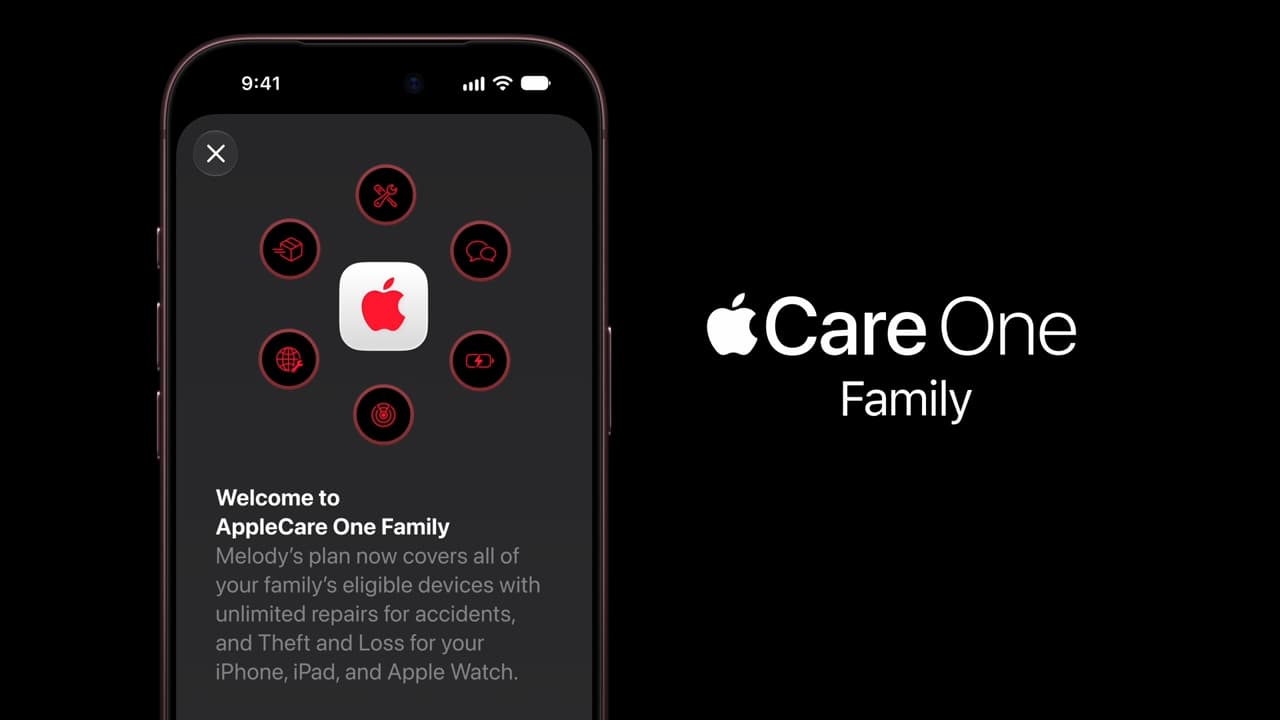
A broken iPhone screen costs $279 to $379 to fix out of warranty at Apple's own service centers. Multiply that by the number of iPhones sitting in your kitchen charging drawer right now, and you can see why Apple's newest subscription tier has households doing math. On September 14, 2026, Apple quietly opened enrollment for AppleCare One Family in the United States, a plan that folds up to six people's devices under a single $49.99 monthly bill. MacRumors was among the first to report the rollout.
The pitch is simple: one plan, one price, every eligible device tied to your Family Sharing group. The reality is more textured. Whether AppleCare One Family saves you money or quietly drains it depends on how many devices you own, how old they are, and whether your teenagers treat their iPhones like frisbees. Let's run the numbers.
What Is AppleCare One Family?
AppleCare One Family expands the individual AppleCare One concept into something resembling a household utility. For $49.99 per month, every eligible Apple device in a Family Sharing group gets covered under a single policy, up to six people.
The benefits mirror AppleCare+ almost exactly. That means accidental damage protection, plus theft and loss coverage for iPhone, iPad, and Apple Watch. The same service fees and deductibles you already know from AppleCare+ still apply — this plan doesn't waive them. What changes is the administrative overhead: instead of managing five or six separate monthly charges, you manage one.
Here's the detail that makes the plan genuinely interesting from a consumer standpoint. Devices already protected by AppleCare at signup, along with devices purchased within the last 60 days, get automatically enrolled during setup. You don't have to chase down individual serial numbers for your newest gear. Older devices up to four years old — or one year for AirPods and Beats — can be added too, though Apple may require a device check to confirm good working condition. Devices that fail that check cannot join.
Apple has placed few limits on the total number of devices a family can add. The six-person cap is on people, not products. A family of four with three iPads, four iPhones, two Macs, a couple of Apple Watches, and a drawer of AirPods could theoretically cover the whole collection.
Breaking Down the $49.99 Monthly Cost
Do the arithmetic against à la carte AppleCare+, and the value case either snaps into focus or falls apart, depending entirely on your device count.
Read next iPhone Duo's Hidden Fake Bezel Setting ExplainedApple's published AppleCare+ pricing tiers for iPhone run roughly $9.99 per month for standard models and higher for Pro devices. iPad coverage typically starts around $7.99 monthly, and Mac coverage scales upward from there depending on model. Watch coverage adds a few dollars more. Using conservative published tiers, here's how a family of four with a fairly typical device mix shakes out:
| Device | Individual AppleCare+ | Monthly Cost |
|---|---|---|
| iPhone (Person 1) | $9.99/mo | $9.99 |
| iPhone (Person 2) | $9.99/mo | $9.99 |
| iPad | ~$7.99/mo | $7.99 |
| Mac | ~$9.99/mo | $9.99 |
| Total à la carte | | ~$37.96 |
| AppleCare One Family | | $49.99 |
That's the awkward part. For a four-device household, AppleCare One Family costs roughly $12 more per month — about $144 a year — than buying coverage separately. The flat rate only starts winning when your device count climbs past four or five.
Add a third iPhone and an Apple Watch to that table, and à la carte pricing jumps to somewhere near $58–$62 monthly. Now AppleCare One Family saves you money. The break-even point sits somewhere around four to five devices depending on the mix — Macs and iPads cost less individually, so a Mac-heavy household needs more devices to justify the flat fee than an iPhone-heavy one.
The six-person framing matters here too. A family of six with even one device each will almost certainly come out ahead. A family of two with two iPhones should not sign up.
What's Actually Covered — and What Isn't
The coverage list reads generously at first pass. Accidental damage is covered. Theft and loss are covered for iPhone, iPad, and Apple Watch — notably, not for Mac. That's a meaningful gap for college students hauling laptops around campus, or anyone who works from coffee shops.
The real constraint is the claims cap: up to six loss and theft claims across the entire family per year. Apple doesn't advertise this number prominently, and for good reason. Six sounds generous until you map it against a real household.
Picture a family of five with four iPhone-carrying teenagers. One lost phone in September, a stolen iPad in November, a cracked-and-then-stolen iPhone in January — and you've burned half your annual theft/loss budget before spring break. Every claim past six in a twelve-month window comes out of pocket at full replacement cost.
Accidental damage claims, it's worth noting, are separate from the theft and loss cap. So a household that breaks screens constantly but rarely loses devices is less exposed than one with a theft problem. But the combination — clumsy and careless — is precisely the household most likely to hit the ceiling.
Service fees and deductibles still apply on every claim, just as with AppleCare+. That means a screen repair under the plan isn't free; it's discounted and expedited. The $279–$379 out-of-warranty screen repair figure remains the anchor for the risk calculus: without coverage, that's your bill. With coverage, you pay the applicable service fee, which is meaningfully lower but not zero.
For devices up to four years old (one year for AirPods and Beats), the device check requirement creates a practical hurdle. A 2022 MacBook with a swollen battery or a cracked iPad from 2023 won't pass. Apple's condition requirement effectively means the plan covers well-maintained older devices, not the battered ones most in need of protection.
Device Eligibility Rules and the 60-Day Window
The 60-day auto-enrollment window is the plan's most consumer-friendly feature and its most time-sensitive one. Buy a new iPhone today, and it slides into AppleCare One Family automatically at setup if you're in a Family Sharing group. Wait past 60 days without coverage, and that device becomes an "add-on" subject to the device check.
This creates a genuine strategic question for families mid-upgrade-cycle. If you're planning to replace two phones in the next six months, signing up now enrolls your current devices at their current ages — which may put them near the four-year eligibility ceiling. Waiting until the new phones arrive gets you fresh 60-day windows on the replacements.
The auto-enrollment mechanic also means there's no partial-family option. AppleCare One Family covers all eligible devices in the Family Sharing group. If your partner has a work-issued iPhone that shouldn't be on your personal plan, you'll need to sort out Family Sharing membership carefully before signing up. Get the group structure wrong, and you may enroll devices you didn't intend to cover.
Is AppleCare One Family Worth It for Your Household?
Run the honest math. Count your eligible devices. Price them individually against Apple's published AppleCare+ tiers. Compare against $49.99.
A household with two iPhones, one iPad, and one Mac pays more under AppleCare One Family. Full stop. That's roughly $38 monthly à la carte versus $49.99 flat — a $144 annual premium for convenience you may not need.
A household with four iPhones, two iPads, two Macs, and a couple of Watches is looking at $70–$80 monthly à la carte. AppleCare One Family saves that family $240–$360 annually. That's real money.
The theft and loss cap cuts both ways. Households with responsible device handlers — adults who keep track of their phones — rarely approach six claims. Households with teenagers who lose things constantly may blow through the cap and find themselves paying full price for the seventh lost iPhone in a year, on top of the $49.99 monthly they're already paying.
There's also a psychological factor worth naming. Flat-fee subscription plans reduce decision friction. When every repair has a visible price tag, families delay them — cracked screens linger for months, batteries swell, small problems become large ones. A single $49.99 line item that covers everything can nudge households toward actually fixing things. That behavioral benefit doesn't show up in a spreadsheet, but it's real.
Final Verdict: Who Should Sign Up
AppleCare One Family is a good deal for large households and a mediocre one for small ones. That's the entire verdict, and it hinges almost entirely on device count.
Sign up if you have five or more eligible Apple devices across your Family Sharing group, if your household includes multiple iPhone users (especially teenagers), or if you value consolidating four to six separate monthly charges into one. The auto-enrollment for recent purchases and existing AppleCare coverage makes the transition frictionless.
Skip it if you're a family of two or three with a modest device roster. You'll pay a premium for a flat rate you don't need. Buy AppleCare+ individually on the devices that matter — the ones most likely to break, get stolen, or cost the most to replace — and self-insure the rest.
The uncomfortable truth about any device protection plan is that Apple prices it to profit. AppleCare One Family isn't charity; it's a bet that most families won't claim enough to offset the premium. For households with six people and a dozen devices, that bet is one Apple is likely to lose. For everyone else, it's often a bet you'd rather not take.