Court Rejects Trump's Forced Coal Plant Extensions as
Federal Court Strikes Down Trump's Coal Plant Emergency Order
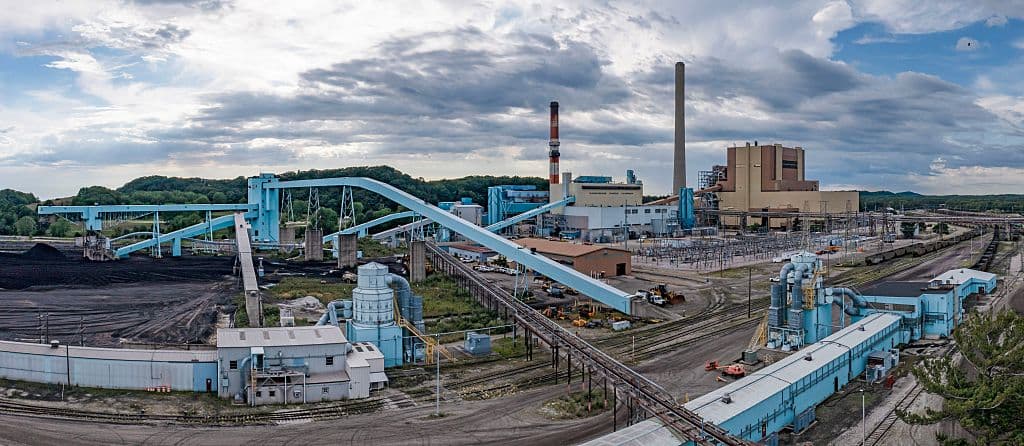
A unanimous three-judge panel of the U.S. Court of Appeals for the D.C. Circuit ruled Friday that the Department of Energy's declaration of an energy emergency to keep a Michigan coal plant running was contrary to the statute that authorized it. The case centered on the J.H. Campbell Generating Plant, a facility that had been scheduled to close before DOE intervened. The panel's reasoning was blunt enough to travel: if the emergency authority does not cover this plant, it does not cover the others either.
The decision lands as the first judicial test of a strategy the second Trump administration has pursued more aggressively than the first. Rather than trying to revive coal demand through markets or subsidies, DOE has simply ordered plants slated for retirement to stay online, invoking a wartime-or-shortfall emergency provision. Friday's ruling says that invocation does not fit the facts. The court's reading of the statute, not its view of coal policy, is what will constrain the government going forward.
For an industry that has watched coal's share of U.S. electricity generation fall for roughly twenty years, the order had represented one of the few direct levers available to halt retirements. The D.C. Circuit has now narrowed that lever considerably.
How the Trump Administration Tried to Keep Coal Plants Open

The mechanism at issue is a DOE emergency authority that permits the agency to act in two circumstances: wartime, or a sudden shortfall in electricity generation. Those are narrow triggers. They contemplate abrupt disruption—loss of supply, attack, cascading failure—not the slow, predictable retirement of uneconomic plants. The administration stretched the provision to cover planned closures, treating the mere subtraction of generating capacity from the grid as a shortfall regardless of whether the system needed that capacity.
Read next Top Technology Trends in 2026 You Need to KnowUnder that reading, a plant with a scheduled retirement date could be compelled to keep running even where grid operators had already accounted for its exit in their resource plans. That is what happened at J.H. Campbell. The plant was not needed to keep the lights on; it was needed, politically, to keep coal burning.
The legal problem is straightforward. An emergency power tied to wartime or sudden shortfalls cannot be used to override ordinary retirement decisions made years in advance and already absorbed into reliability planning. Parties challenging the declaration—including states where coal plants have been slated to close—argued exactly that, and the D.C. Circuit panel agreed. The court found the emergency declaration contrary to the statute, meaning DOE exceeded the authority Congress gave it.
Energy law scholars have flagged this as the central vulnerability since the first such order. Emergency statutes are construed narrowly precisely because they concentrate power in an agency and bypass normal process. A "shortfall" that is forecast, scheduled, and priced into the market is not sudden by any ordinary meaning of the word. The panel's decision adopts that reading, and its logic does not depend on the particular plant, the particular state, or the particular administration.
Why Coal Has Been Declining for Two Decades

Coal's slide on the U.S. grid is not a recent development, and it is not primarily a regulatory artifact. According to the Energy Information Administration, coal has fallen from supplying roughly half of U.S. electricity generation in the mid-2000s to well under 20 percent in recent years—a decline of more than two decades' duration. The first Trump administration's efforts to arrest that trend did not change its direction.
The drivers are economic. Natural gas plants, particularly combined-cycle units, have undercut coal on operating cost for years. Renewables—utility-scale solar and wind—have added enormous volumes of low-marginal-cost generation, pushing coal to the margin and then off it. Aging coal units face rising maintenance costs, tighter environmental compliance expenses, and the simple arithmetic of capacity factors that keep falling. When a plant's retirement is announced, it is usually because the numbers no longer work, not because a single rule forced it shut.
That distinction matters for the emergency-authority debate. If a plant is closing because it is uneconomic, ordering it to stay open does not restore demand for its output; it shifts costs onto ratepayers and grid operators. And if a plant is closing on a known schedule, grid planners have already procured replacements and reserves. The reliability case for forced extensions is therefore weakest exactly where the administration has used them most.
The two-decade trend also explains why the first administration's interventions failed and why the second reached for a blunter instrument. Market forces of that scale are hard to reverse administratively. The emergency order was an attempt to substitute legal compulsion for economics. Friday's ruling says the statute does not permit that substitution.
Implications for Every Blocked Coal Plant Closure
The D.C. Circuit's decision technically affects one plant in Michigan. Its reasoning affects all of them. Because the panel held that the emergency declaration was contrary to the statute, the same defect will apply to any other closure blocked under the same theory. The government cannot distinguish J.H. Campbell on the facts without abandoning the premise that scheduled retirements count as emergencies—which is the entire basis for the broader program.
That is how appellate reasoning works in practice. A unanimous panel opinion construing a statutory trigger becomes the framework lower courts and subsequent panels apply. Plants whose retirements were stayed by DOE order now sit under a cloud: each extension rests on an authority the D.C. Circuit has read narrowly, and each affected operator, state, or challenger has a template for litigation.
The practical exposure is not limited to coal. If the emergency provision cannot be stretched to cover planned retirements, it also cannot be stretched to cover other generation the administration might want to keep online for policy reasons. The ruling draws a line around the emergency power itself, and that line constrains future uses regardless of fuel type.
Grid reliability analysts have long argued that forced extensions can create their own risks—keeping uneconomic units online can defer needed transmission and replacement capacity, and can distort the price signals that tell developers where to build. A plant kept open without need is not a reliability asset; it is a cost. The court's decision effectively returns those decisions to the planners and markets already making them.
What Comes Next: Legal and Energy Policy Outlook
The government's options are limited but not zero. It could seek rehearing by the full D.C. Circuit or petition the Supreme Court, though a unanimous panel construing statutory text is a difficult candidate to overturn, and the administration would need to persuade a higher court that scheduled retirements qualify as sudden shortfalls—a reading the panel rejected on the words of the statute. It could also ask Congress to rewrite the emergency authority to cover planned closures, a legislative fix that would face its own obstacles.
Meanwhile, the underlying trend continues. Coal's share of generation has been falling for about twenty years under administrations of both parties, and the forces behind that decline—cheap gas, cheap renewables, aging plants—have not reversed. Every retirement that was blocked now has a legal path to proceed, and every operator weighing a closure has a clearer sense of the government's limits.
For the broader energy-policy picture, Friday's ruling is a reminder that emergency powers are not general-purpose tools. They exist for sudden, specific crises. A planned coal plant closure, forecast years in advance and already built into grid plans, is neither. The D.C. Circuit said so, and its reasoning will follow every coal plant closure blocked under the same theory.
Source: Ars Technica - All content


