Crazy Rich Asians Makes Its HBO Debut With Original Cast
When Jon M. Chu's Crazy Rich Asians opened in August 2018, it grossed $238 million worldwide against a $30 million production budget — numbers that made it the highest-grossing romantic comedy in more than a decade and announced, loudly and unmistakably, that Hollywood had been leaving money on the table. Now, eight years after Rachel Chu first stepped off that plane in Singapore, the story is returning — this time as a one-hour drama series at HBO, and with four of the film's principal cast members back in their roles.
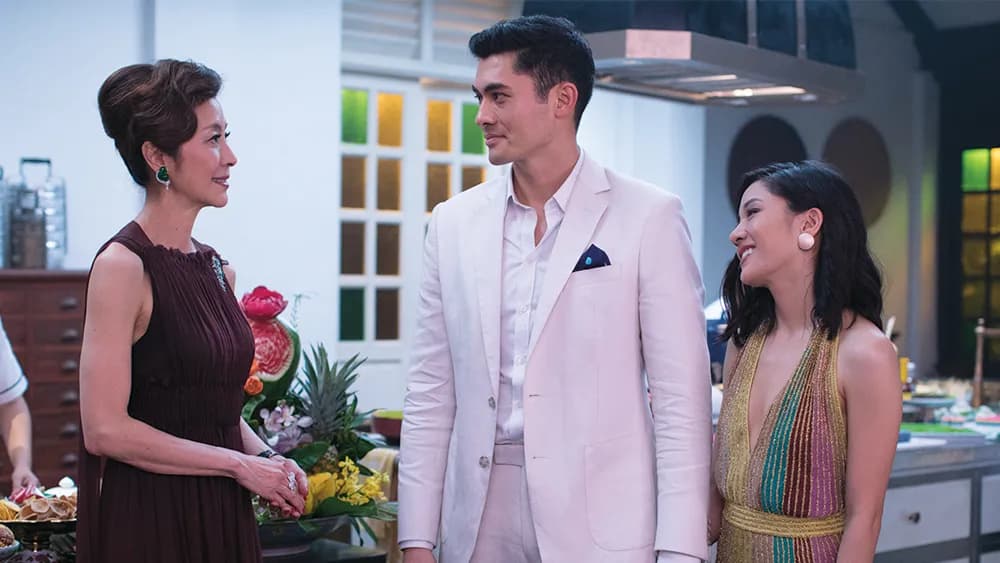
Constance Wu, Henry Golding, and Ronny Chieng have signed on as series regulars for the new production. Oscar winner Michelle Yeoh will appear in a recurring capacity. All four will reprise the characters audiences came to know from the film, a creative continuity that is rare enough in Hollywood's IP-recycling machine to genuinely matter.
From Blockbuster Film to Premium TV: The Transition

The move from theatrical release to premium cable is not a simple upsize. Films and television series are different instruments, and what works at 120 minutes rarely translates mechanically into a multi-episode run. The history of film-to-TV adaptations at prestige networks is instructive: some transitions have amplified the source material — Fargo on FX built a richer, stranger universe from the Coen Brothers' original — while others have struggled to justify their own existence.
Read next 1963 : le tube yéyé qui a enflammé la France — reconnaîtrez-vous cette voix ?HBO occupies a specific position in that landscape. The network's track record with prestige drama — from The Wire to Succession to The White Lotus — establishes a particular expectation in the minds of viewers and critics alike. When a property lands at HBO rather than, say, a broad streaming platform, the implicit promise is that character complexity and production craft will be held to a higher standard than fan service. That context makes the casting announcement more meaningful than it might appear at first glance. HBO is not just buying the Crazy Rich Asians brand; it is asking the original performers to bring their full weight to a format that rewards sustained psychological depth over the compressed emotional arcs of a two-hour film.
The one-hour drama designation is the clearest signal of intent. This is not a half-hour comedy — a format that might have defaulted to the rom-com register of the original — but a full drama series, which opens narrative space to explore the Singaporean elite's social architecture, family politics, and the particular pressures of class anxiety in ways the film could only gesture toward.
Michelle Yeoh's Recurring Role and What It Means
Eleanor Young — imperious, calculating, and ultimately more complicated than she first appears — was one of the 2018 film's most discussed performances. Michelle Yeoh brought layers to a character that on paper risked being a stock disapproving mother-in-law, and the role contributed meaningfully to the broader recognition that eventually led to her Academy Award for Everything Everywhere All at Once in 2023.
Her return in a recurring capacity rather than as a series regular carries its own logic. Eleanor functions best as a gravitational force — a figure whose presence reshapes every scene she enters, but whose continuous visibility would risk flattening that power. A recurring role allows the writers to deploy her strategically, preserving the character's capacity for surprise. It also reflects, candidly, the demands on Yeoh's schedule at a moment when she is among the most sought-after performers in international cinema.
What her involvement does confirm is that the HBO series is not attempting a soft reboot that preserves only the premise. Eleanor's relationship with Rachel is one of the emotional engines of the original story, and having Yeoh return — even in a limited capacity — means that particular engine stays running.
The Cultural Significance of Asian Representation on HBO
The representation argument around Crazy Rich Asians was well-documented from the moment the film was announced. Media scholars and critics noted its position as the first Hollywood studio production with a predominantly Asian cast since Wayne Wang's The Joy Luck Club in 1993 — a 25-year gap that was not an accident of demographics but a consequence of systemic industry assumptions about what kinds of stories deserved mainstream distribution and marketing budgets.
The film's commercial success did not automatically dissolve those assumptions, but it complicated them in durable ways. Since 2018, there has been a measurable increase in Hollywood productions centering Asian and Asian-American narratives, from Minari to Past Lives — though scholars including those writing for the Journal of Chinese Cinemas have been careful to distinguish between genuine structural change and a cycle of exception-proving that leaves underlying patterns intact.
Bringing the franchise to HBO represents a different kind of claim than the original film did. Theatrical releases are events; premium television series are sustained cultural presences. A multi-season drama on HBO occupies the cultural conversation in a way that a single film, however successful, cannot. For Asian-American audiences who watched the 2018 film with the particular attention of people accustomed to seeing themselves marginalized or erased from mainstream storytelling, the prospect of Constance Wu and Henry Golding as series regulars on one of American television's most prestigious networks is not a small thing.
What Fans Can Expect From the One-Hour Drama Format
Kevin Kwan's source novels — Crazy Rich Asians, China Rich Girlfriend, and Rich People Problems — provide far more material than a single film could contain. The drama format creates the opportunity to excavate that material properly: the labyrinthine Young family dynamics, the competing social hierarchies among Singapore's various elite factions, the psychological toll of vast inherited wealth on the people who carry it.
The hour-long drama format also allows for more rigorous treatment of class and aspiration than the film's romantic comedy framework demanded. Rachel Chu's position as an outsider looking into the closed world of Singapore's ultra-wealthy was the film's central tension; stretched across a season, that tension can be explored with the kind of patience that reveals genuine complexity rather than resolving neatly in the final act.
Returning cast members bring their characters' histories with them, which should accelerate the drama's ability to operate at depth. Viewers who spent two hours watching Nick Young navigate the collision between his love for Rachel and his family's expectations do not need re-orientation. The series can begin from a more informed emotional baseline.
Looking Ahead: HBO's Bet on Prestige Franchise Television
HBO's investment in the Crazy Rich Asians series reflects a broader strategic calculation about what premium television audiences want in the current era. The network has shown, through properties like House of the Dragon and The Last of Us, that prestige franchise television — meaning adaptations of established IP handled with the craft and budget of original drama — can satisfy both critical and commercial audiences simultaneously.
The Crazy Rich Asians franchise occupies a specific niche within that strategy. It arrives with a demonstrated global fan base, a story world rich enough to sustain long-form narrative, and a cast that carries the cultural credibility of the original work. Those are not guarantees of success; prestige television is difficult under any conditions, and the adaptation of beloved film properties carries the particular hazard of disappointing audiences whose affection for the source is already intense.
What the casting news confirms is that HBO is approaching this seriously rather than as a brand exercise. When you bring back Constance Wu, Henry Golding, Ronny Chieng, and Michelle Yeoh — performers with substantial independent careers who have no shortage of alternatives — you are making an argument about the quality of the material and the ambition of the production. The Crazy Rich Asians HBO series is not trying to remind you that the film existed. It is trying to make a case that the story has more to say.
Whether it delivers on that case remains to be seen. But the conditions for something genuinely worthy of the original are, at minimum, in place.
Source: Variety