What Happened: Ellison Scraps the $7.5 Billion Oracle Share Plan
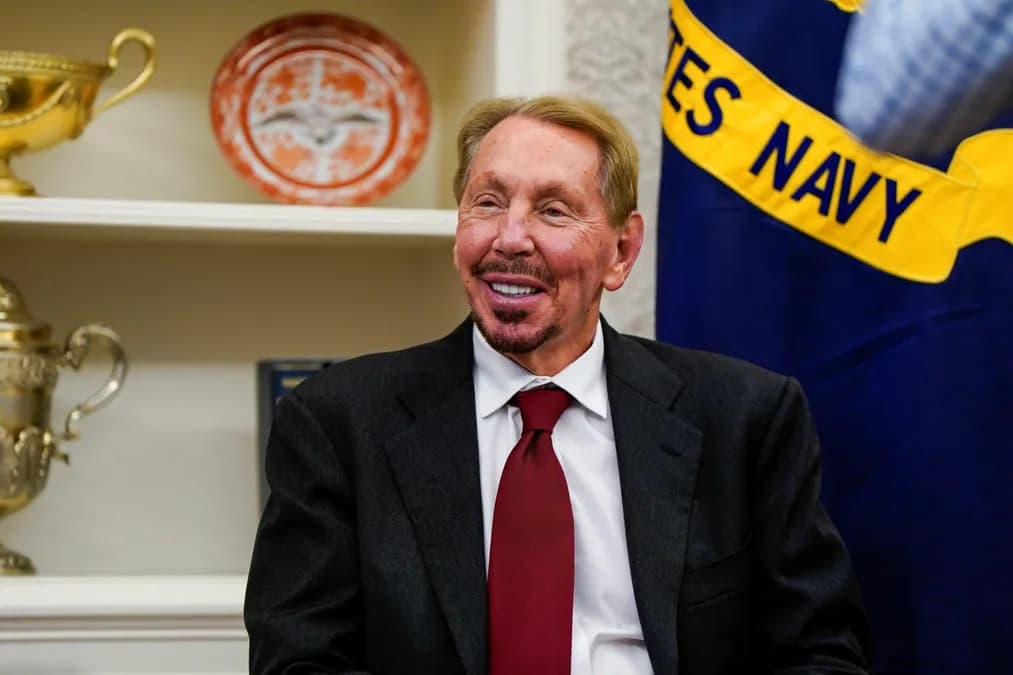
Larry Ellison canceled a pre-scheduled plan to sell 50 million Oracle shares worth up to $7.5 billion, confirming that no shares changed hands before the plan was withdrawn. The move — the termination of a Rule 10b5-1 trading plan — reverses what would have been one of the largest single insider dispositions in recent tech history.
The Larry Ellison stock sale canceled announcement drew immediate attention for one structural reason: Ellison controls roughly 40% of Oracle's outstanding shares. At current valuations, that stake is worth well over $100 billion. The $7.5 billion figure, while staggering in absolute terms, represented only a fraction of his total position — yet the plan's existence signaled he was open to reducing exposure. Its cancellation signals the opposite.
Oracle (ORCL) has been on a notable run. The company's shares appreciated substantially over the past two years, driven by aggressive cloud infrastructure investment and growing demand for AI-adjacent database services. That context matters when evaluating why a founder would establish — then pull back — a nine-figure divestment plan.
Why Insiders Cancel Planned Stock Sales
Fewer than 15% of pre-scheduled 10b5-1 plans are withdrawn before execution, according to research cited by the SEC during its 2022 rulemaking process that tightened insider trading plan disclosures. That statistic alone makes the Larry Ellison stock sale canceled event statistically notable rather than routine.
Read next Iran's Hormuz Leverage and What It Means for Oil PricesA 10b5-1 plan allows corporate insiders to sell shares on a predetermined schedule, insulating them from accusations of trading on material non-public information. The mechanics require the plan to be established when the insider lacks inside information — and once in place, sales execute automatically. Cancellation breaks that automaticity. It is a deliberate, discretionary act.
Securities law practitioners and corporate governance scholars broadly agree that 10b5-1 plan withdrawals don't happen by accident. They happen because something changed — either the insider's financial situation, their outlook on the company, or the surrounding legal and tax environment. The question is which factor drove this withdrawal.
There are legitimate, outlook-unrelated reasons for cancellation. Estate planning adjustments, charitable giving structures, and shifts in personal liquidity needs can all prompt termination with no connection to company performance. Trust restructurings and tax strategy revisions are equally common drivers. Investors should weigh the Larry Ellison stock sale canceled news against this full range before drawing firm conclusions about Oracle's trajectory.
That said, plan withdrawals remain rare enough that markets assign meaning to them — especially when the founder in question holds four-in-ten shares outstanding.
What the Reversal Suggests About Oracle's Business Outlook
The bullish interpretation is straightforward: Ellison doesn't need the liquidity, or he believes Oracle shares are worth more than the price at which he was prepared to sell. Founders with concentrated positions have historically been reluctant to sell when they see near-term catalysts. The cancellation of a $7.5 billion plan could be read as a vote of confidence in Oracle's cloud transition and AI infrastructure positioning.
The cautionary interpretation is equally valid. Canceling a planned sale does not require an optimistic business view. Personal liquidity needs shift. A founder may decide the tax treatment is unfavorable in a given year. An estate plan revision may eliminate the need for cash proceeds. The Larry Ellison stock sale canceled announcement tells investors what didn't happen — it doesn't explain why.
Academic research on insider trading signals is instructive here. Studies published in the Journal of Financial Economics consistently find that insider purchases are stronger predictive signals than plan cancellations. A canceled sale is a weaker signal than an outright purchase, but carries more weight than routine execution of an existing plan. It clears one hurdle; it doesn't vault over all of them.
Oracle's cloud momentum is real, documented in quarterly filings, and independent of this insider development. The cancellation is a data point consistent with founder confidence — not evidence of a specific undisclosed catalyst.
Market Reaction and Impact on ORCL Stock
Oracle shares have been trading at elevated multiples relative to five-year historical averages, already pricing in strong growth expectations from AI-driven cloud demand. The Larry Ellison stock sale canceled disclosure layers a secondary data point onto a stock where expectations are already high.
Institutional investors tend to parse insider filings methodically. When a 10b5-1 plan cancellation surfaces on SEC filings, the immediate price response is typically muted compared to a direct purchase announcement. Retail investors sometimes overweight the signal — treating a canceled sale as functionally equivalent to a buy. It is not.
What ORCL watchers should track is whether Ellison establishes a replacement plan in the coming months. Under SEC rules updated in 2023, insiders must observe cooling-off periods before new plans become effective. If a replacement plan appears at a materially higher price target or with a longer timeline, that would carry meaningfully bullish implications. If no new plan is filed, the picture stays ambiguous.
Key Risks Oracle Investors Should Still Monitor
A canceled stock sale doesn't eliminate competitive risk. Oracle faces sustained pressure from Amazon Web Services, Microsoft Azure, and Google Cloud in infrastructure. Oracle's cloud revenue growth, while improving, still trails the hyperscalers in absolute scale — a gap that matters when enterprises commit to multi-year contracts.
Ellison's ~40% concentration is a structural factor worth keeping in view. A stake that size means that when he eventually does sell — for any of the non-outlook-related reasons discussed above — the market impact could be significant. The Larry Ellison stock sale canceled event should not be read as a permanent signal that no future sales are coming.
Oracle's current valuation also carries execution risk. Premium pricing assumes the company converts AI infrastructure demand into durable high-margin revenue. Delays in customer migrations, pressure on legacy database licensing, or an enterprise IT spending slowdown could compress multiples regardless of Ellison's trading activity.
Corporate governance observers have long flagged founder-controlled companies for concentration risk. With 40% voting power concentrated in one person, minority shareholders have limited structural recourse if strategic decisions diverge from their interests.
Bottom Line: How to Interpret This Signal as an Oracle Investor
The Larry Ellison stock sale canceled development is best understood as a mildly positive data point, not a thesis-changing event. The base rate — fewer than 15% of 10b5-1 plans get withdrawn — confirms this is unusual. But "unusual" and "definitively bullish" are different categories.
For retail investors, the practical response is disciplined: treat this disclosure as one input among many, not a standalone buy signal. Review Oracle's most recent earnings report, its cloud revenue trajectory, and its competitive positioning before adjusting a position. The cancellation of a $7.5 billion share sale tells you what didn't happen. Building a sound investment thesis requires understanding what will.
Institutional holders already model insider transaction patterns as a supplementary factor. The absence of 50 million shares coming to market removes a potential near-term supply overhang — a real, if modest, technical positive for ORCL. Beyond that, Oracle's story is unchanged: a legacy technology company in a credible but still-unfinished transition to cloud relevance.
Watch the next SEC filing, not the headline.
Related coverage
- Soft Jobs Data Fuels Stock Rally — But Is It Premature?
- BofA: Bond Yields Aren't the Real Stock Risk
- UBS Top AI Stock Picks: Amazon, Palantir & More
Source: WSJ.com: Markets