ICE's Secret Use of a New Jersey Warehouse as a Detention Site
For months this past summer, a quiet but persistent rumor moved through immigrant communities in North New Jersey: somewhere in the region, federal immigration authorities had converted a nondescript warehouse into an undisclosed holding facility. Neighbors noticed unusual activity. Community organizers heard fragments of accounts from people who had been held and released. And yet no official announcement had been made, no address appeared in any public detention roster, and no oversight body had formally acknowledged the site's existence.
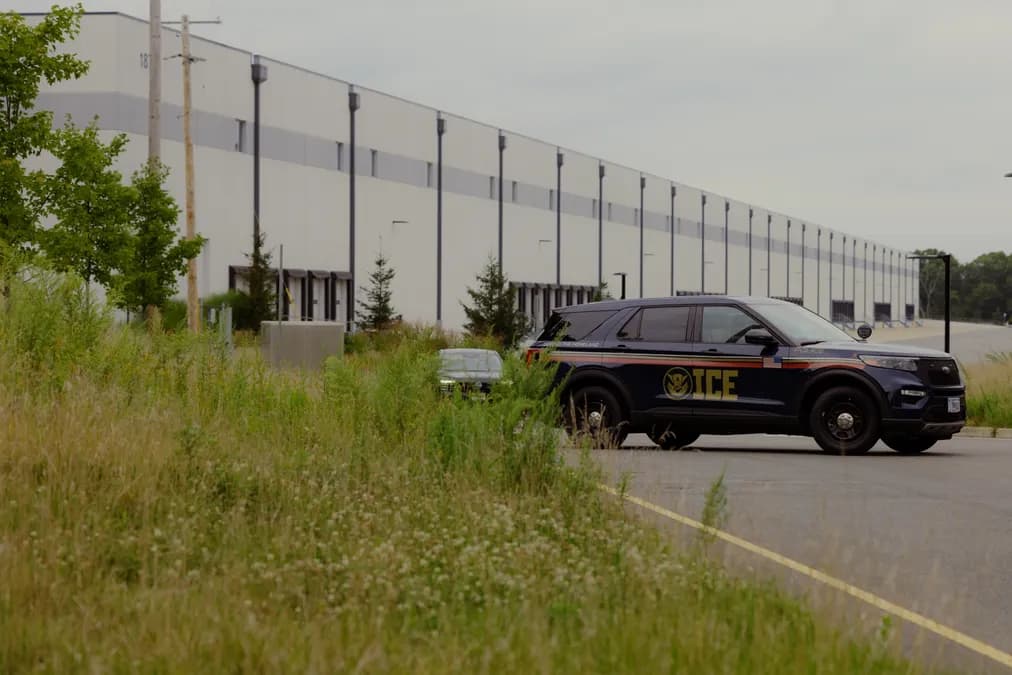
NPR investigated those rumors and found them to be grounded in reality. The outlet's reporting confirmed that Immigration and Customs Enforcement had indeed been operating out of a warehouse in the Roxbury area of New Jersey — a facility that functioned, in practical terms, as a detention center without ever being publicly designated as one. The discovery has galvanized immigration attorneys, civil liberties organizations, and lawmakers who say it represents a deliberate effort to hold individuals outside the formal accountability structures that govern the existing detention network.
The existence of this ICE shadow detention center in New Jersey is not simply a bureaucratic irregularity. It raises fundamental questions about transparency, due process, and the extent to which federal immigration enforcement has been operating in spaces deliberately kept from public view.
What Makes a 'Shadow' Detention Center Different

The United States operates one of the largest immigration detention systems in the world. On any given day, ICE holds tens of thousands of people across a network of county jails, private facilities, and dedicated federal detention centers — all of which are, at least nominally, subject to federal inspection standards, legal access requirements, and public reporting obligations.
Read next Medicaid Work Requirements Strand Cancer SurvivorsA shadow detention center operates outside that framework. It may occupy a building not listed in ICE's official Detention Facility Locator. Attorneys may not know to contact it. Families may not be able to determine whether a detained relative is being held there. Legal aid organizations cannot systematically monitor it. And the conditions inside — sanitation, access to medical care, ability to contact counsel — may fall entirely below the standards that the agency is legally required to uphold in formally designated facilities.
The warehouse in Roxbury embodies each of these characteristics. Because it was not publicly acknowledged as a detention site, it existed outside the chain of notification that immigration attorneys and civil rights monitors depend on to track detained clients and conduct legal outreach. Someone held in that building could effectively disappear from any system their family or lawyer knew how to search.
The Legal and Human Rights Implications
The use of an unlisted warehouse as a holding facility implicates a cluster of foundational legal protections. The Fifth Amendment guarantees due process for all persons on U.S. soil, regardless of immigration status. That protection is rendered hollow when a person's location is unknown to anyone in a position to assert their rights on their behalf.
The American Civil Liberties Union and Human Rights Watch have each documented, across multiple reports, the systemic barriers to legal access that exist even within ICE's officially recognized detention network — facilities where attorneys are sometimes denied entry, where phone access is restricted, and where language barriers compound procedural obstacles. When detention moves underground, into facilities that do not appear on any publicly accessible list, those barriers become effectively insurmountable.
The DHS Office of Inspector General has issued repeated findings over the years identifying gaps in ICE's internal oversight of detention conditions, including lapses in medical care, deficiencies in grievance procedures, and failures to comply with detention standards. Congressional testimony from immigration advocates and former detainees has reinforced those findings. The warehouse in Roxbury would fall outside even this imperfect oversight apparatus — there is no inspection regime for a facility that has not been formally declared.
Immigration attorneys working in New Jersey have noted that one of the most disorienting aspects of an undisclosed holding site is what it does to detained individuals' ability to prepare a legal defense. In the immigration court system, cases can proceed swiftly. A person held in an unofficial location, cut off from counsel and unable to document their conditions, faces compounding disadvantages that can be difficult or impossible to overcome even once they reach a formal proceeding.
A Pattern of Unofficial Immigration Detention in the US
The New Jersey warehouse is troubling in isolation. It is more troubling as part of a pattern.
Immigration advocates have documented other instances over the years in which ICE or its contractors have used facilities — hotels, transit hubs, government buildings — as temporary or short-term holding spaces that do not appear in official detention records. In some cases these uses were brief and genuinely transitional; in others, people were held for extended periods in conditions that bore no resemblance to even the minimum standards applied to formal detention centers.
During periods of intensified interior enforcement, the pressure on the formal detention system tends to increase. Facilities reach capacity. Processing slows. And the improvised use of unofficial spaces tends to accelerate in ways that are difficult for outside monitors to track in real time. Roxbury did not emerge in a vacuum — it emerged during a summer in which immigration enforcement activity in New Jersey had been notably elevated and the formal detention network in the region was strained.
Civil liberties organizations have argued for years that the lack of a comprehensive, real-time, publicly accessible database of all locations where ICE is holding individuals represents a structural accountability gap that makes episodes like Roxbury not just possible but predictable.
What Authorities and Advocates Are Saying
ICE has not publicly confirmed the nature or extent of its use of the Roxbury warehouse, and the agency has not provided detailed responses to questions about the facility's operational scope, the number of individuals held there, or the conditions inside.
Immigrant advocacy groups in New Jersey reacted to the NPR investigation with urgency but not surprise. Organizations that conduct know-your-rights trainings in immigrant communities said they had been receiving fragmentary accounts from community members throughout the summer — accounts consistent with what the investigation ultimately confirmed. The difficulty, advocates noted, is that people who have been detained and released are often reluctant to speak publicly, both out of fear and because their immigration cases may still be pending.
Immigration attorneys who work in North New Jersey have called for a full accounting of how many people were held at the site, under what legal authority, for how long, and whether they were given access to counsel. The absence of that basic information, they argue, is itself evidence of the problem.
What This Means for Immigration Policy and Accountability
The Roxbury warehouse story arrives at a moment when the architecture of immigration enforcement is under intense public scrutiny. Debates about detention reform, alternatives to detention, and the appropriate scope of interior enforcement have been ongoing in Congress and in state legislatures for years. The revelation of an ICE shadow detention center operating in New Jersey without public disclosure complicates those debates — and raises the stakes.
For policymakers, the episode underscores the insufficiency of oversight frameworks that rely on ICE's voluntary compliance with reporting requirements. If a warehouse can function as a detention facility for an entire summer without appearing in any official record, the argument that self-reported data is adequate for accountability purposes becomes difficult to sustain.
For immigrant communities, the practical lesson is grimmer: if a family member is detained, they may be held somewhere that no attorney or advocacy organization knows to look. That reality demands structural reform — mandatory real-time disclosure of all detention locations, independent inspection authority that does not depend on agency cooperation, and enforceable standards that apply to any facility where immigration detainees are held, regardless of how that facility is officially classified.
The warehouse in Roxbury is empty of easy answers. What it is full of is evidence that the current system, left to its own devices, will produce exactly this kind of outcome again.
Related coverage
Source: NPR Topics: News