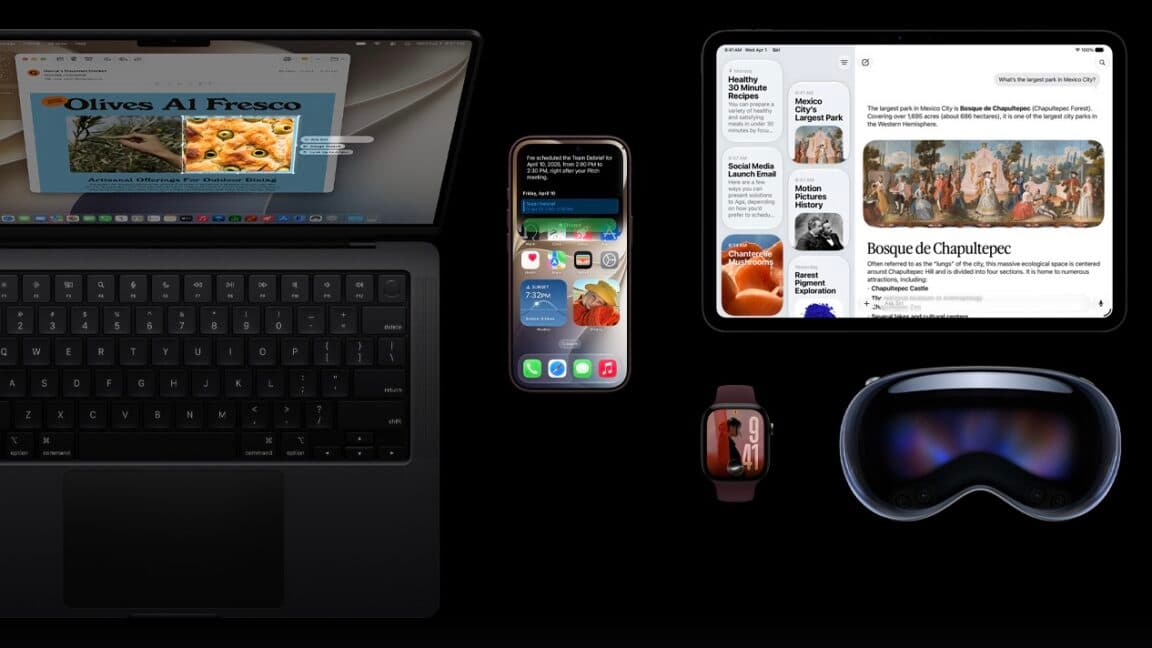
Apple released iOS 27 on September 14, 2026, alongside macOS 27 Golden Gate, watchOS 27, visionOS 27, and tvOS 27. After a year of promises, previews, and developer betas, the company's large language model overhaul of Siri is finally in the hands of every iPhone owner who installs the update. The wait was long. The stakes were higher than most annual releases.
This is the first iOS version in which Siri's core reasoning runs on an LLM rather than the intent-parsing pipeline Apple shipped for over a decade. It is also the first time all five of Apple's major platforms moved to a new version number on the same day with a shared AI feature threading through four of them.
What Is iOS 27 and Why It Matters
iOS 27 arrived on September 14, 2026, the same date Apple had signaled for months. That date puts it roughly a year after the previous cycle and places it squarely in the middle of a broader industry pivot toward generative assistants. Apple announced the release plan in advance, then executed it without a delay — a notable contrast with the company's more cautious pattern in prior years, when flagship features sometimes slipped to point releases.
The number "27" continues Apple's sequential naming convention rather than a year-based scheme. The companion Mac release carries a California landmark name, macOS 27 Golden Gate, a tradition that began with Mavericks in 2013.
Why does this version matter more than a typical annual bump? Because Siri is the interface through which most iPhone owners will experience on-device AI, whether they seek it out or not. The assistant sits behind the side button, inside CarPlay, in Messages, and in the system-wide text and voice entry points. Replacing its engine is not an app update. It is a change to the layer that mediates between the user and the entire operating system.
Apple's annual OS releases typically reach a large share of eligible devices within weeks, based on the company's own historical reporting on prior cycles. That distribution scale is the reason this release is the moment LLM assistants become mainstream by default rather than by choice.
LLM-Powered Siri: The Flagship Feature of iOS 27
Siri AI is the headline. Apple describes it as a large language model-based, context-aware overhaul of both the voice and text versions of the assistant. In practice, that means Siri on iOS 27 is designed to hold a conversation, track what was said earlier in the same session, and work from the context already present on your device rather than treating each request as an isolated command.
Read next Top Technology Trends in 2026 You Need to KnowTwo capabilities define the shift. First, context awareness: the assistant can draw on the situation at hand — where you are in the OS, what you were just doing — rather than requiring a fully specified command every time. Second, a generative model at the core: responses are composed rather than retrieved from a fixed set of canned answers.
The same Siri AI ships across iOS 27, macOS 27 Golden Gate, watchOS 27, and visionOS 27. One exception stands out. tvOS 27 does not get Siri AI. The television platform is the lone member of the 2026 family excluded from the flagship feature, a detail Apple confirmed in its release documentation and one that says as much about the Apple TV's interaction model as it does about engineering priorities.
For developers and power users, the meaningful change is architectural. Siri is no longer a set of if-then branches behind a voice front end. It is a model-backed service with a conversational state. That distinction shapes everything downstream, from how reliably it handles ambiguous requests to how it behaves when it is wrong.
Everything Else Shipping in Apple's 2026 OS Family

Five platforms, one release day. iOS 27 covers iPhone. macOS 27 Golden Gate covers the Mac and inherits Siri AI. watchOS 27 brings the new assistant to the wrist. visionOS 27 does the same for Apple's spatial computing headset. tvOS 27 updates the Apple TV but, as noted, sits out the Siri AI rollout.
The other named thread running through the family is Liquid Glass refinement. Apple introduced Liquid Glass as a design language built around translucency, depth, and light-reactive materials. The 2026 releases refine it rather than replace it.
That pattern — introduce, then iterate — is how Apple has handled visual overhauls for years. The company moved from skeuomorphism to flat design, then to layered depth and translucency, and now to the more physically motivated Liquid Glass treatment. Each transition drew criticism at launch and was softened in subsequent releases. The 27-series updates appear to be the softening phase for Liquid Glass, with adjustments aimed at legibility and consistency across a wider range of screens and lighting conditions.
Because tvOS 27 lacks Siri AI, Apple TV owners get the platform maintenance and any Liquid Glass adjustments but not the assistant overhaul. If you own an Apple TV and an iPhone, the two devices will behave differently when you speak to them.
How Apple's Siri Overhaul Compared to the Broader AI Landscape
Google and Amazon shipped LLM-based assistant overhauls well before Apple did. Google rebuilt Assistant around its Gemini models, and Amazon reworked Alexa around a generative model as well. Both companies announced and began rolling out those changes ahead of Apple's 2026 release. By the time Siri AI reached every iPhone, the "LLM assistant" concept was no longer novel — it was the baseline expectation.
That timing gap is the central fact of this release. Apple spent the interim period positioning its approach around privacy and on-device processing, themes the company has emphasized in its public statements about AI. The trade-off is familiar: tighter control over where data goes, in exchange for arriving after competitors had already set user expectations.
The competitive benchmark matters for a practical reason. People who have used Google's or Amazon's revamped assistants bring those expectations with them. They expect multi-turn conversation, tolerance for messy phrasing, and useful follow-ups. Siri AI is Apple's answer to that bar, not a leap past it.
Institutions tracking the space — from university HCI labs to the analyst firms that cover consumer platforms — have consistently framed assistant quality as a retention issue, not just a convenience one. A voice assistant that fails at basic conversational tasks nudges users toward the competition's hardware. A good one quietly locks them in.
What iOS 27 Means for Everyday iPhone Users
For most people, the first noticeable change will be that Siri stops demanding exact phrasing. Instead of wording a request the one way the old system understood, you can say it naturally and get a useful response. The second change is continuity: ask a follow-up without restating the subject, and Siri AI should keep the thread.
Concrete examples matter more than feature lists. A user asking Siri to summarize a long message thread, then asking "what did she say about Thursday?" benefits from context retention. A user dictating a reply benefits from a model that can smooth the phrasing rather than transcribe word-for-word. A user on watchOS 27 gets the same assistant on a screen too small for menus, which is exactly where conversational AI earns its keep.
Two caveats deserve airtime. First, LLM assistants make mistakes, and they make them fluently. A confident wrong answer is worse than an obvious failure, and that failure mode is inherent to the architecture, not unique to Apple. Second, Apple's privacy-first framing likely means some requests are handled on-device and others are not, a distinction worth understanding before you trust the assistant with anything sensitive.
The tvOS gap has a real consequence here too. If you use Siri on your phone all day and then pick up the Apple TV remote expecting the same experience, you will notice the difference immediately.
How to Update to iOS 27
iOS 27 is available now. On iPhone, open Settings, go to General, then Software Update. Your device will check for the release and offer the install. The same path applies to the other platforms: System Settings on macOS 27 Golden Gate, the Watch app on iPhone for watchOS 27, and Settings within the headset for visionOS 27.
Before you tap install, clear space and plug in. Major OS releases need room for the download and the unpacked files, and the installation itself is best done on power and Wi-Fi. Back up first — a full encrypted backup to iCloud or a computer — because downgrading after a major release is rarely painless.
If you manage a household of devices, check compatibility per platform rather than assuming. Apple's 2026 family spans five operating systems, and the feature set is not identical across them. tvOS 27 owners should set expectations accordingly.
The update is free, it is here, and for the first time, the assistant most iPhone owners already have on their home screen is running on a language model. Whether that turns out to be Apple catching up or Apple redefining the category will be answered over the next twelve months of use — by the people asking Siri questions they never bothered to ask before.
Source: Ars Technica - All content


