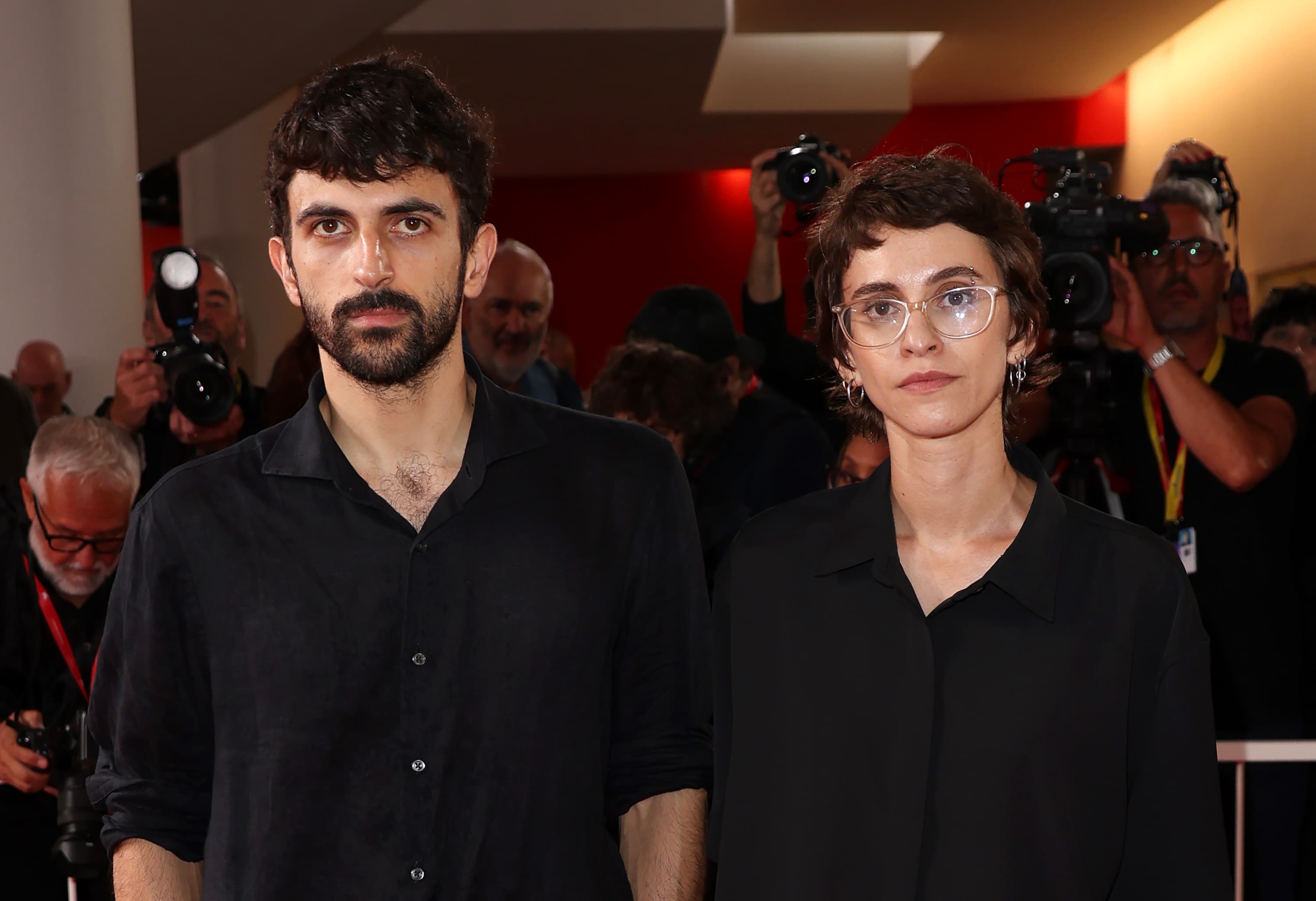
Israel's Culture Minister Threatens NAZA Directors with Citizenship Revocation
On September 13, 2026, Israel's Minister of Culture Miki Zohar publicly threatened to revoke the Israeli citizenships of Yuval Abraham and Rachel Szor, the co-directors of the documentary "NAZA." The announcement arrived with unusual bluntness: Zohar declared the film "shocking" and accused both filmmakers of "betraying the state." The threat was not a parliamentary motion or a formal legal proceeding — it was a ministerial declaration delivered in the public arena, aimed at a film and its makers before any judicial review had taken place.
The speed and severity of the threat immediately drew attention beyond Israel's borders. Using citizenship revocation as a punitive instrument against creative expression is not a move that most liberal democracies have made in recent decades. Whether Zohar possesses the legal authority to act on his words is a separate question from the chilling effect such statements generate — and that distinction is precisely what makes episodes like this consequential.
What Is the Documentary 'NAZA' About?
Specific details about the film's narrative and evidentiary claims remain limited in early reports. What the controversy itself reveals is that "NAZA" engages with subject matter that the Israeli government regards as fundamentally adversarial to the state's interests. Abraham and Szor are not unknown quantities. Abraham co-directed "No Other Land," the documentary that won the Academy Award for Best Documentary Feature in 2025, and he has previously used international platforms to call for a ceasefire in Gaza — remarks that generated their own political backlash within Israel.
Read next AI-Generated Culture: How AI Is Reshaping Society"NAZA" appears to continue in the vein of socially engaged filmmaking that examines Israeli military and political conduct from a critical perspective. That framing, based on the minister's own language — his references to "betrayal" and "harm to the homeland" — suggests the film presents accounts or footage that the government disputes or finds damaging to its international standing. Without access to the full film, the specific claims it makes cannot be independently evaluated here. What can be evaluated is the nature of the government's response, which chose escalation over engagement.
Miki Zohar's Accusations: 'Betrayal' and 'Self-Loathing'
The language Zohar deployed deserves close reading. He did not simply say the film was inaccurate or one-sided. He reached for moralized accusations — "betrayal," "self-loathing" — that frame critical documentary filmmaking not as protected speech but as a form of treason. His full characterization described filmmakers "willing to harm their homeland just to get applause from antisemites around the world."
That framing performs several functions simultaneously. It repositions the filmmakers not as artists exercising legitimate dissent but as collaborators with forces hostile to Jews broadly. It converts a domestic political dispute into an international security framing. And it provides rhetorical cover for punitive action that would otherwise look like an assault on free expression: if criticism of Israel is antisemitism, and the filmmakers knowingly court antisemitic audiences, then the state's response can be presented as defense rather than censorship.
Zohar's tenure as Culture Minister has been marked by contentious interventions in the Israeli arts ecosystem. He has previously threatened funding cuts to cultural institutions deemed insufficiently supportive of the government and has made public statements questioning the loyalty of Israeli artists who speak out about the war in Gaza. The September 2026 statement against Abraham and Szor is the sharpest escalation yet — moving from funding pressure to citizenship itself.
Legal and Constitutional Questions Around Citizenship Revocation
Israel's Citizenship Law, enacted in 1952 and amended multiple times since, does permit citizenship revocation in a narrow set of circumstances. Historically, these have included cases of voluntary acquisition of enemy-state citizenship, breach of allegiance during wartime, and specific fraud provisions related to naturalization. Stripping citizenship for speech acts — for making a documentary — has no established legal precedent under Israeli law.
Constitutional scholars and civil liberties organizations in Israel have repeatedly noted that citizenship revocation is among the most serious penalties a democratic state can impose. It renders a person stateless if they hold no other nationality, a condition that is itself a violation of international human rights norms under the 1954 Convention Relating to the Status of Stateless Persons, to which Israel is a signatory. The Association for Civil Rights in Israel (ACRI) has argued in multiple public filings over the years that citizenship revocation for expressive or political conduct would face serious constitutional challenge under Israel's Basic Law: Human Dignity and Liberty.
Whether the minister's threat could survive legal challenge is almost beside the point in the short term. Initiating such proceedings — even if ultimately unsuccessful — would impose years of legal uncertainty on the filmmakers, restrict their international travel, and drain resources that might otherwise go toward new projects. The threat, in this reading, functions as punishment regardless of outcome.
International Reaction and Press Freedom Concerns
Press freedom organizations track government threats against journalists and documentary filmmakers as a category of concern distinct from outright censorship. The Committee to Protect Journalists (CPJ) and Reporters Without Borders (RSF) have both documented an uptick in formal and informal pressure on Israeli cultural figures and media workers since October 2023, as Israeli government scrutiny of domestic critical voices intensified alongside the military campaign in Gaza. RSF's World Press Freedom Index has placed Israel in a declining trajectory on metrics related to political pressure on media and artistic expression.
International film organizations have not remained passive observers. The International Documentary Association and European documentary networks have previously issued statements in support of filmmakers facing political pressure in their home countries, and industry observers expect similar responses to the Zohar threat. The Cannes Film Festival, the Berlinale, and other major venues where Israeli documentary filmmakers have historically found audiences and accolades operate with explicit commitments to artistic freedom. Those institutions carry soft-power weight that governments cannot entirely ignore — though recent history also demonstrates that such declarations rarely produce policy reversals on their own.
The diplomatic dimension should not be underestimated. Israel maintains significant cultural and academic relationships with European nations and the United States. Threats to strip citizenship from internationally recognized documentary filmmakers create friction in those relationships and hand critics of the Israeli government a straightforward narrative: that the state punishes artists for telling inconvenient truths.
Broader Context: Government Pressure on Israeli Artists and Filmmakers
The threat against Abraham and Szor did not emerge from a vacuum. Since the formation of Israel's most right-wing government in its modern history in late 2022, the culture ministry has operated with an avowedly nationalist mandate. Funding bodies overseeing Israeli cinema have faced political pressure to prioritize projects that reflect state-sanctioned narratives of the conflict. Artists who have signed petitions or made public statements critical of military conduct in Gaza have reported professional consequences, including withdrawn invitations, cancelled grants, and informal blacklisting.
These patterns are consistent with what scholars of authoritarian backsliding describe as the "soft" phase of cultural suppression — before formal legal mechanisms are deployed, government officials use rhetorical delegitimization and funding control to narrow the space of permissible expression. Zohar's citizenship threat may represent a harder escalation of that logic.
For Abraham and Szor specifically, the threat carries additional weight given Abraham's international profile after "No Other Land." He is not an obscure filmmaker who can be quietly marginalized — he has a global audience and professional networks across Europe and North America. That visibility cuts two ways: it affords him protections that less prominent artists lack, while also making him a more attractive symbolic target for a minister seeking to signal toughness to a domestic constituency.
What happens next will tell observers a great deal about where Israel's democratic institutions stand. If the attorney general's office declines to pursue any revocation proceeding, the episode becomes a data point about ministerial overreach. If formal processes begin, the case will test Israeli courts in ways that have few precedents in the country's legal history. Either way, the message to Israeli artists working on politically sensitive material has already been sent.
Source: Variety


