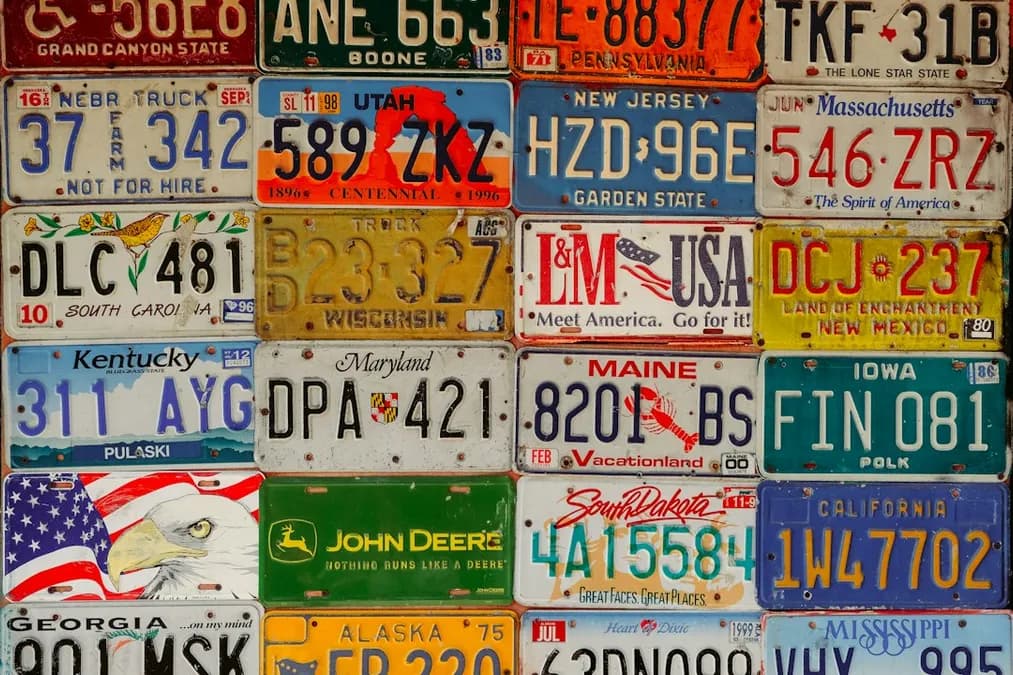
Federal Judge Rules Flock License Plate Search Violated Fourth Amendment
A federal judge has delivered a pointed rebuke to law enforcement's growing reliance on automated license plate reader networks, ruling that a sheriff's deputy violated a woman's Fourth Amendment rights by using the Flock Safety system to search for her license plate without first obtaining a warrant. The ruling characterizes the practice as "indiscriminate mass surveillance" — language that signals a judicial reckoning with technologies that have quietly embedded themselves into American policing over the past decade.
The case turns on a straightforward but consequential question: when a government official queries a database containing the recorded movements of ordinary civilians, does that act constitute a search requiring constitutional protection? This judge's answer was unambiguous. The Flock license plate search Fourth Amendment ruling places squarely before the legal system a surveillance technology that law enforcement agencies have adopted with minimal public debate and even less judicial scrutiny.
The decision does not exist in a vacuum. It arrives at a moment when courts across the country are grappling with how century-old constitutional protections apply to technologies that would have been unimaginable when the Fourth Amendment was ratified. The ruling is a significant marker in that ongoing legal reckoning.
What Is Flock Safety and How Do Automatic License Plate Readers Work

Flock Safety is a private company that sells automated license plate reader hardware and software to law enforcement agencies and, increasingly, to private homeowners associations and businesses. The core product is a network of fixed cameras that photograph passing vehicles, extract license plate numbers using optical character recognition, and store that data in a searchable cloud database accessible to law enforcement subscribers.
Read next Laika's Wildwood: Stop-Motion Fantasy at TIFF 2026The system does not merely capture vehicles suspected of crimes. It captures every vehicle that passes a camera — a surveillance sweep that is, by design, indiscriminate. According to data compiled by the Electronic Frontier Foundation, thousands of law enforcement agencies across the United States have adopted ALPR networks from various vendors, with the technology now present in communities spanning all fifty states. The EFF's Street Level Surveillance project has documented how these networks can reconstruct detailed patterns of movement for any vehicle whose plate is in the system — where someone works, worships, receives medical treatment, or attends political meetings.
When a deputy queries Flock's database using a license plate number, they are not simply checking a static record. They are potentially accessing a historical log of that vehicle's movements across every camera in the network — a comprehensive, warrantless window into a person's life.
The Fourth Amendment and Digital Surveillance: Legal Background

The Fourth Amendment protects against unreasonable searches and seizures. For much of the twentieth century, courts applied a doctrine known as the third-party doctrine — the principle that information voluntarily shared with a third party carries no reasonable expectation of privacy. If you told your bank about a transaction, or your phone company about a call, the government could obtain that information without a warrant because you had already exposed it to another party.
Digital technology has strained that doctrine to its breaking point. The most significant modern precedent is Carpenter v. United States (2018), in which the Supreme Court ruled 5-4 that law enforcement must obtain a warrant to access historical cell site location information from wireless carriers. Chief Justice John Roberts, writing for the majority, recognized that cell phone location records create a "near perfect surveillance" record of a person's movements — and that the sheer comprehensiveness of that record triggers Fourth Amendment protection regardless of the third-party doctrine.
The Carpenter decision did not resolve every question about digital surveillance and warrant requirements, but it established a crucial principle: when technology enables the government to reconstruct a detailed account of an individual's movements and associations, the constitutional stakes are qualitatively different from a simple records request. Automated license plate reader networks, critics have long argued, present precisely this problem. The Flock ruling applies Carpenter's logic to ALPR systems with notable directness.
Why This Ruling Matters for Privacy and Policing Technology
Legal scholars who study surveillance technology have argued for years that ALPR databases occupy a constitutional gray zone that courts have been slow to address. The concept of "indiscriminate mass surveillance" that the judge invokes in this ruling is not merely rhetorical. It describes a structural feature of how Flock and similar systems function: the data is collected on everyone before there is any individualized suspicion, and it can be queried at any time for any purpose the subscribing agency deems appropriate.
This distinguishes ALPR systems from traditional investigative tools. A wiretap requires prior judicial approval and targets a specific subject. A Flock query can target anyone whose plate appears in the database — retroactively, without a warrant, and with no contemporaneous judicial oversight. Privacy law scholars have noted that this arrangement inverts the Fourth Amendment's core premise, which is that the government must establish probable cause before conducting a search, not after.
The ruling's practical significance extends beyond the individual case. By finding that the warrantless Flock license plate search violated the Fourth Amendment, the court signals that law enforcement agencies using these systems without any judicial authorization may be operating on constitutionally precarious ground. Every case that produced an arrest based on an unwarranted ALPR query could potentially face suppression challenges.
Broader Implications for Mass Surveillance and Civil Liberties
The ACLU has documented how ALPR systems disproportionately impact communities of color, where law enforcement presence — and therefore camera density — tends to be higher. The organization has also raised concerns about mission creep: data initially collected for stolen vehicle recovery and fugitive tracking has been shared with immigration enforcement agencies and used in protests monitoring. The absence of a warrant requirement facilitates these secondary uses because there is no judicial checkpoint at which to examine the purpose of a query.
Mass surveillance, as a category of government conduct, has historically been treated with constitutional suspicion precisely because of its chilling effects on lawful behavior. When people know — or reasonably suspect — that their movements are being recorded and retained in a searchable government database, they may alter how and where they travel. This chilling effect on First Amendment-protected activities like political organizing, religious practice, and journalistic inquiry is a concern courts have recognized in other surveillance contexts.
The Flock ruling introduces judicial accountability into a surveillance ecosystem that has largely operated without it. For civil liberties advocates, the decision validates arguments that have been advanced for years: that widespread ALPR deployment without a warrant requirement creates exactly the kind of comprehensive, retrospective surveillance record that Carpenter held the Constitution does not permit without judicial authorization.
What Comes Next: Legal and Policy Outlook
This ruling is unlikely to be the last word. The government may appeal, and federal circuits have not uniformly addressed ALPR searches under the Fourth Amendment. A circuit split — where different federal appellate courts reach conflicting conclusions — could eventually force the Supreme Court to weigh in definitively, as it did with cell phone location data in Carpenter.
In the meantime, the ruling creates immediate practical pressure on agencies using Flock and competing ALPR platforms. Departments will need to assess whether their existing policies and practices can withstand Fourth Amendment scrutiny. Some may move to establish internal warrant requirements or use restrictions before courts compel them to. Others will wait for further appellate guidance.
At the legislative level, several states have enacted ALPR data retention limits and use restrictions in recent years, though these vary widely. A federal standard has not emerged. This ruling may reinvigorate legislative efforts to impose statutory warrant requirements on ALPR queries — a step that civil liberties organizations have long advocated.
What the ruling establishes, at minimum, is that "indiscriminate mass surveillance" is not a hyperbolic description of how Flock operates. It is, a federal judge has now found, an accurate one — and one the Constitution does not readily permit without meaningful judicial oversight.
Source: TechCrunch