The Push to Regulate Robotaxis Is Intensifying
Somewhere between the promise of frictionless urban mobility and the reality of a driverless vehicle navigating a crowded intersection at rush hour, a reckoning has arrived. Robotaxi regulation — once a peripheral concern for lawmakers focused on legacy transportation infrastructure — has moved to the center of policy debates in Washington, Sacramento, and city halls across the country. The question is no longer whether autonomous vehicle services need oversight. The question is what that oversight should look like, who should enforce it, and whether the current regulatory architecture is remotely equipped to handle technology that evolves faster than any rulemaking cycle.
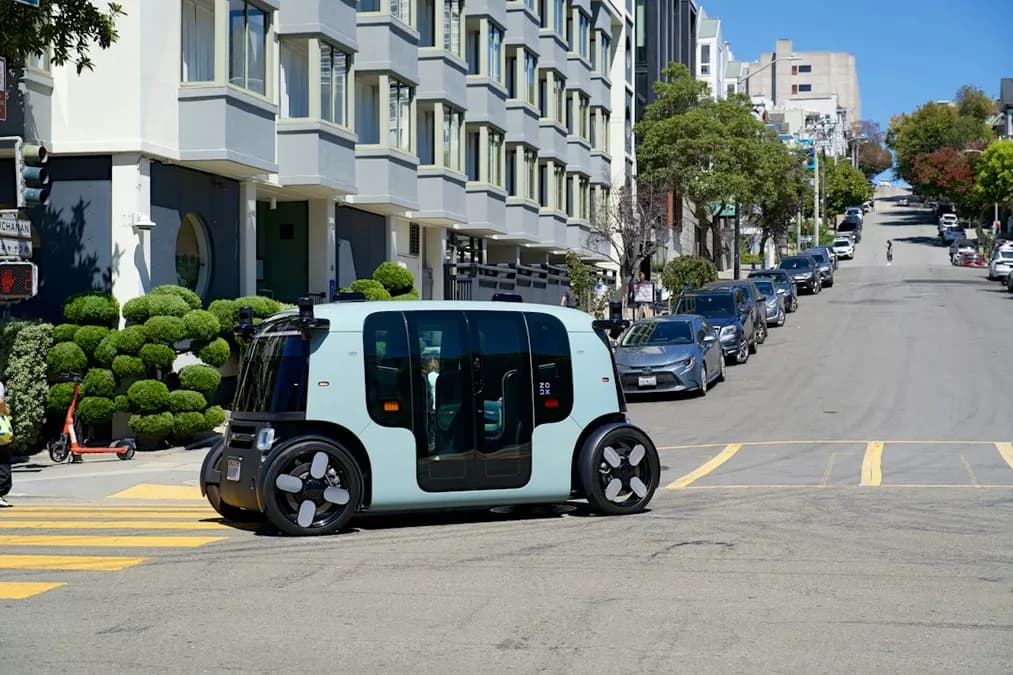
The moment feels urgent partly because deployment has outpaced governance. Autonomous vehicle programs have expanded from limited pilot corridors into commercial public services in multiple major American cities, carrying paying passengers without a safety driver behind the wheel. That transition — from test program to operational service — crossed a threshold that many regulators were not prepared for. The gap between what these vehicles can do and what the public can reasonably expect in terms of accountability and redress is now impossible to ignore.
How Regulators Are Responding to Autonomous Vehicle Growth

The federal response has been fragmented at best. The National Highway Traffic Safety Administration, which bears primary jurisdiction over motor vehicle safety standards, has worked under a regulatory framework built for human-operated vehicles. Autonomous systems introduce edge cases that existing standards simply were not designed to address — questions about decision hierarchies, sensor failure cascades, and the allocation of fault when no human driver is present. NHTSA's Standing General Order requiring AV manufacturers to report crashes has produced a growing public dataset, but reporting requirements are not the same as binding safety standards.
Read next Laika's Wildwood: Stop-Motion Fantasy at TIFF 2026At the state level, the regulatory picture is even patchier. California's Department of Motor Vehicles and Public Utilities Commission have sparred publicly over jurisdictional authority, a dispute that briefly resulted in the suspension of driverless commercial operations in San Francisco following a high-profile incident. Other states have taken a more permissive approach, treating AV deployment as an economic development opportunity and calibrating their oversight accordingly. The result is a regulatory patchwork that companies can navigate strategically, choosing permissive jurisdictions while the harder safety questions remain unresolved.
The absence of comprehensive federal preemption — a single national standard — means that robotaxi regulation currently depends on which state a company chooses to operate in. That is not a sustainable governance model for technology that does not respect state lines.
Safety Concerns Driving the Regulatory Conversation

Safety is the load-bearing argument for tighter robotaxi regulation, and the evidentiary record is increasingly detailed. The National Transportation Safety Board has investigated multiple incidents involving autonomous or semi-autonomous vehicles, producing technical reports that identify specific failure modes: inadequate sensor performance in adverse weather, edge-case handling deficiencies, and communication breakdowns between vehicle systems and remote monitoring operators.
The RAND Corporation, which has studied autonomous vehicle readiness extensively, has noted that validating the safety of highly automated systems requires orders of magnitude more real-world miles than traditional vehicle testing, precisely because rare but dangerous scenarios are statistically infrequent. That creates an epistemological challenge: how do you certify a system safe when the relevant failure events are by definition uncommon? The answer, several transportation policy researchers argue, is not to lower the evidentiary bar but to develop more sophisticated simulation and scenario-based testing frameworks that can stress-test edge cases at scale.
Public trust is also part of the safety equation. Surveys conducted by institutions including the Pew Research Center and the AAA have consistently found that a majority of Americans express skepticism about riding in a fully autonomous vehicle. That wariness is not irrational. It reflects a reasonable demand for demonstrated reliability before mass adoption. Regulatory frameworks that credibly require and verify that reliability are, paradoxically, among the most important tools available to companies that want to see autonomous mobility scale.
The Role of AI in Modern Mobility Systems
The AI systems powering modern robotaxis are substantively different from the rule-based automation of earlier autonomous vehicle generations. Contemporary platforms rely on large neural networks trained on massive datasets of driving behavior, combined with real-time sensor fusion that integrates inputs from cameras, lidar, radar, and high-definition mapping. The decision-making process is not a lookup table. It is a learned behavior — which means it can generalize to novel situations but can also fail in ways that are difficult to anticipate or explain.
This opacity creates genuine regulatory difficulty. When an autonomous vehicle makes a decision that results in a crash, reconstructing the causal chain through a complex AI system is technically demanding in ways that analyzing a human driver's actions is not. Transportation policy experts have called for requirements around algorithmic transparency — not full source-code disclosure, which would raise legitimate intellectual property concerns, but structured explanations of how systems behave in defined scenarios, available to safety investigators.
AI is also transforming fleet management, routing, and the broader infrastructure of urban mobility. Autonomous vehicles are not isolated units. They interact with traffic management systems, communicate with cloud infrastructure, and increasingly with each other. The cybersecurity surface that accompanies this connectivity is a dimension of mobility safety that regulators are only beginning to address seriously.
What Tighter Controls Mean for the Robotaxi Industry
Stricter robotaxi regulation carries real costs for operators, and the industry has made those costs visible in its public communications. More rigorous safety certification processes slow deployment timelines. Expanded incident reporting requirements increase administrative burden. Insurance mandates and liability frameworks that place clear responsibility on operators rather than distributing it ambiguously across manufacturer, software provider, and service company affect the economics of operating at scale.
But the framing of regulation as purely a constraint on industry misses a more complicated dynamic. Companies operating in markets where consumers do not trust the product face a ceiling on adoption that no amount of technology investment can break through. Credible third-party safety validation — the kind that only comes from robust independent oversight — can do more to build the public confidence necessary for mass adoption than any marketing campaign. Several serious voices within the autonomous vehicle sector have made exactly this argument, calling for proactive engagement with regulators rather than resistance.
The competitive implications of regulation are also non-trivial. Well-resourced incumbents can absorb compliance costs that squeeze out smaller entrants, potentially consolidating a market that might otherwise support more diverse approaches. Policymakers attentive to market structure, not just safety performance, will need to design frameworks with that dynamic in mind.
The Road Ahead: Balancing Innovation and Accountability
Transportation systems are public infrastructure in a deep sense. Roads are built with public funds, governed by public law, and used by everyone. The introduction of AI-driven commercial services into that shared space is not a purely private matter, regardless of how it is structured legally. That basic premise — that public infrastructure demands public accountability — is the philosophical foundation on which any durable framework for robotaxi regulation has to rest.
The path forward almost certainly requires federal minimum standards that apply uniformly across states, paired with enforcement mechanisms that have genuine teeth. It requires safety validation methodologies sophisticated enough to test the AI systems actually being deployed, not stylized simulations of simpler scenarios. It requires incident investigation processes adapted for the technical complexity of autonomous systems. And it requires a relationship between regulators and operators that is adversarial enough to produce honest safety data and collaborative enough to keep technically competent overseers in contact with rapidly changing technology.
None of that is simple. Regulatory agencies are resource-constrained, and the technical expertise required to meaningfully oversee AI-driven transportation systems is in short supply in government. Closing that gap — through investment in agency capacity, partnerships with academic institutions, and robust interagency coordination — is as important as any specific rule.
The promise of autonomous mobility is real: safer roads, reduced emissions, expanded access for populations underserved by existing transit. Realizing that promise depends on getting the accountability architecture right. AI is reshaping transportation. The governance structures surrounding it need to keep pace.
Source: TechCrunch