Sam Altman's Controversial AI Tradeoff Argument
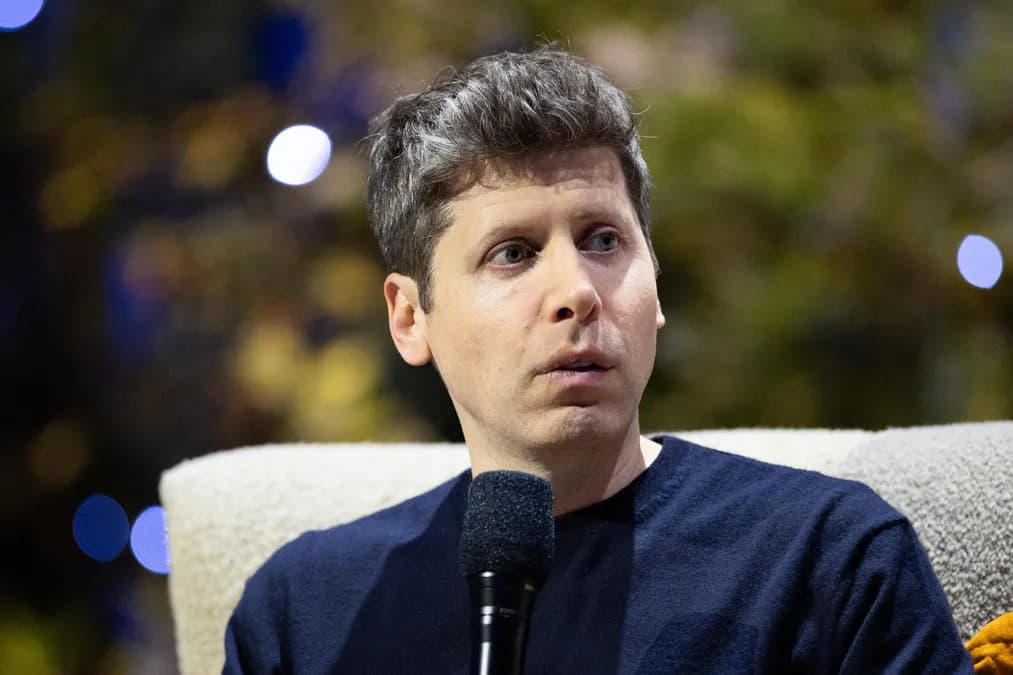
OpenAI CEO Sam Altman made a calculated statement that crystallized a debate the AI industry has long avoided confronting head-on: the technology's benefits will be so profound that society should accept collateral damage along the way. Speaking publicly, Altman argued that while hacks, scams, and other harmful outcomes are real and expected consequences of AI proliferation, the scale of positive impact will dwarf them. "People will do tremendously orders of magnitude more good stuff" with AI, he said — therefore the world should be willing to absorb some bad things happening.
The Sam Altman AI risks framing is not new, but his willingness to articulate the tradeoff this bluntly is. Most tech executives either downplay risks or speak in abstractions about responsible deployment. Altman named specific harms and then argued they are the price of progress. It is a utilitarian calculus that will satisfy some and unsettle many others.
The statement carries weight because Altman sits atop one of the most powerful AI companies in the world. OpenAI's models are already embedded in productivity tools, customer service systems, healthcare applications, and national security infrastructure. When its CEO frames harm as acceptable overhead, the implications extend well beyond boardroom philosophy.
The Real Costs: Hacks, Scams, and AI-Enabled Harm
The FBI's Internet Crime Complaint Center reported that cybercrime losses in the United States reached $12.5 billion in 2023, a 22 percent increase over the prior year. AI is accelerating these trends. Phishing attacks powered by large language models generate convincing, grammatically flawless lures at scale — a stark upgrade from the typo-ridden scam emails that security trainers once used as teaching examples.
Read next Laika's Wildwood: Stop-Motion Fantasy at TIFF 2026Cybersecurity firm Zscaler reported a 58 percent rise in AI-driven phishing attacks in 2023 alone. Vishing — voice phishing using synthetic audio — enables criminals to impersonate executives and family members with unsettling accuracy. In one widely reported case, a finance worker in Hong Kong was tricked into transferring $25 million after a deepfake video call appeared to show his company's CFO.
These are the "bad things" Altman referenced. They are not hypothetical. They are happening at scale, growing faster than law enforcement can respond, and disproportionately harming people with fewer technical defenses — elderly individuals, small businesses, and institutions in lower-income regions. Naming them an acceptable cost of progress requires a clear-eyed reckoning with who actually pays that cost.
The Case for AI's Benefits Outweighing the Risks

Altman's core argument rests on a magnitude claim: AI's benefits will so vastly outperform its harms that the calculus favors continued acceleration. There is credible research supporting the optimistic view.
Goldman Sachs estimated in 2023 that AI could raise global GDP by approximately 7 percent over the following decade — roughly $7 trillion in additional economic output. McKinsey Global Institute projected that AI and automation could add between $13 trillion and $22 trillion in global economic value by 2030. These figures represent advances in healthcare diagnostics, drug discovery, agricultural yield optimization, climate modeling, and educational access across the developing world.
In medicine specifically, AI models have demonstrated accuracy matching specialist radiologists in detecting certain cancers from imaging data. In drug development, AI-assisted platforms have compressed years of molecular screening into weeks. These gains translate directly into lives extended and suffering reduced.
Altman's "orders of magnitude" framing echoes this scale argument. If AI genuinely compresses decades of scientific progress into years, the case for accepting near-term collateral harm becomes harder to dismiss outright — even if it remains deeply uncomfortable.
Critics and Counterarguments: Who Bears the Cost?
The strongest objection to Altman's position is not that he is wrong about scale. It is about distribution. Sam Altman AI risks discourse tends to focus on aggregate benefit, but aggregate framing obscures who absorbs the downside.
Researchers affiliated with the Center for AI Safety have consistently argued that AI harms fall unevenly. Algorithmic bias, AI-enabled fraud, and deepfake harassment land hardest on marginalized communities, vulnerable individuals, and less-resourced institutions. Asking society to accept harms implicitly asks those communities to bear a disproportionate share of the cost so that productivity gains can accrue largely to early adopters, technology workers, and well-capitalized enterprises.
AI ethicist Timnit Gebru has described this as technological externalization — costs socialized while benefits are privatized. That critique applies squarely here. Saying the world should absorb more scams and hacks because AI will generate enormous economic value is, functionally, asking the most exposed populations to subsidize the most powerful actors.
Policy researchers add a more practical concern: no governance infrastructure currently exists to ensure those harms remain bounded or compensated. Unlike pharmaceutical approvals, which require demonstrated safety before mass deployment, AI systems reach hundreds of millions of users with harms documented only after the fact. The gap between deployment speed and accountability infrastructure is not an oversight — it is a structural feature of how the industry has chosen to operate.
How Society Should Weigh AI Risk vs. Reward
Risk-benefit analysis is standard practice in medicine, environmental regulation, and engineering. Drugs are approved when clinical evidence shows benefits outweigh harms for a defined population. Nuclear facilities are regulated by thresholds that treat acceptable risk as a function of probability and magnitude of consequence.
AI has largely bypassed that framework. The European Union's AI Act is the most structured attempt to date to codify risk tiers and matching obligations. The United States has relied primarily on executive orders and voluntary industry commitments rather than binding statute — a posture that gives companies wide latitude to define acceptable risk on their own terms.
The problem with Altman's formulation is that it leaves the calculation entirely to market actors with strong incentives to emphasize upside and underprice harm. Without independent risk assessment and enforceable accountability, "society should accept some bad things" functions as indefinite permission — without any mechanism for the people absorbing those bad things to refuse, seek redress, or even be counted.
What Altman's Statement Means for the Future of AI Development
Altman's willingness to name the tradeoff explicitly may, paradoxically, be more honest than the carefully managed safety communications typical of the industry. At minimum, it surfaces a conversation that needs to happen in public rather than inside product roadmaps.
But honesty about a tradeoff is not the same as a plan for managing it responsibly. Sam Altman AI risks commentary will resonate with those already persuaded of AI's transformative potential. It will alarm those who have experienced AI-enabled fraud, non-consensual deepfakes, or job displacement — people who had little say in whether that exchange was acceptable on their behalf.
The real test of Altman's argument will not be in how confidently it is stated. It will be in whether OpenAI and its peers invest proportionately in harm mitigation, support binding regulatory frameworks, and center the voices of those most exposed to downside risk in decisions that currently get made without them. Progress without accountability is not a tradeoff. It is a transfer — from the vulnerable to the powerful, dressed in the language of collective benefit.
Source: The Verge