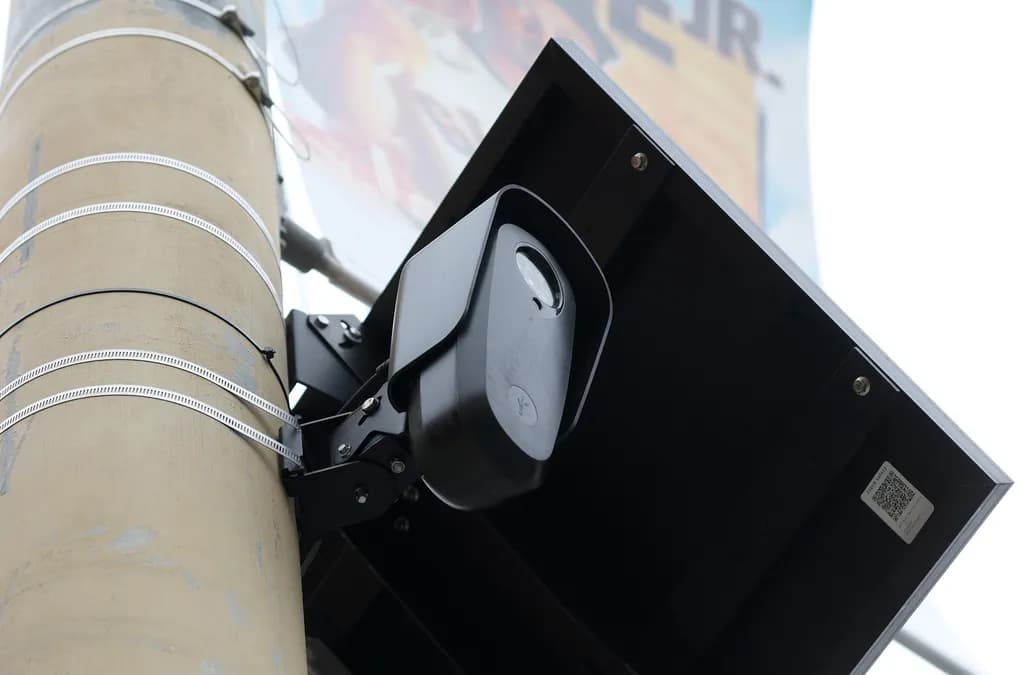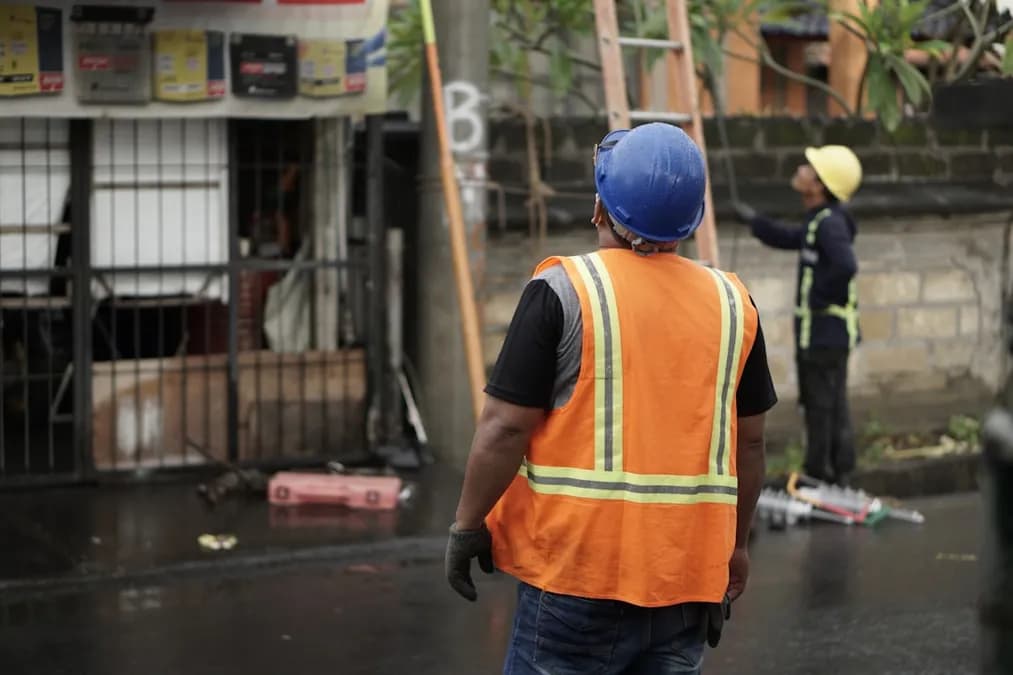
San Francisco officials stepped in front of microphones this week with a headline-friendly message: car crime has plunged, and AI-powered cameras deserve a share of the credit. The claim lands in a city that has spent years fighting a visible property-crime problem and a national reputation for disorder. It also lands in the middle of a far less settled argument about what happens when a dense camera network becomes permanent infrastructure.
The stakes reach well beyond the Bay Area. Dozens of American cities are weighing similar deployments, and the San Francisco AI camera surveillance experiment now functions as a test case — for effectiveness claims, for retention rules, and for whether residents can meaningfully consent to being watched by machines.
San Francisco's Car Crime Drop: How Much Did AI Cameras Contribute?
Start with the number every official wants to talk about: a dramatic decline in car crime. The dispute is over causation. Criminologists have long warned that camera networks produce attribution problems that are nearly impossible to clean up after the fact. A city installs cameras during a period when car break-ins are already falling, and the trend line obliges by falling further. The cameras get credit for gravity.
Three confounders muddy the San Francisco picture specifically. Policing strategies shifted alongside the technology — patrol realignment, targeted enforcement, and prosecutorial changes all landed in overlapping windows. Economic behavior changed too, as did the composition of who parks where. Most importantly, crime is cyclical. A city emerging from a multi-year spike will often record steep percentage declines even with no new intervention at all, a phenomenon researchers call regression to the mean.
There is a second, quieter measurement problem: displacement. Cameras do not necessarily stop crime; they can push it down the block, into the next neighborhood, or into garages and side streets outside the lens. An honest accounting of the San Francisco AI camera surveillance program would track break-ins in the surrounding geography, not just the covered corridors. The summary of the city's case does not resolve this question, and independent researchers who study camera networks generally caution that area-wide effects are smaller than site-specific ones.
The strongest defensible claim is modest. Cameras likely help with investigation — identifying vehicles tied to known offenses, generating leads, and raising the perceived risk for repeat offenders. Whether they bend the underlying curve is a live research question, and one city's experience, however celebrated, cannot settle it.
How AI-Powered Camera Networks Work in Urban Environments

A fixed camera that merely records is not the product being sold. Modern urban networks pair optical hardware with automated license plate recognition, running each passing plate against databases in near real time. The "AI" layer does the mechanical work faster than any human analyst: matching, flagging, and queuing alerts.
Read next Medicaid Work Requirements Strand Cancer SurvivorsThat distinction matters legally. A traditional CCTV system is used after the fact. An automated license plate reader system generates a searchable record of ordinary movement — trips to work, medical appointments, places of worship, protests. Most vehicles passing a reader have no connection to any investigation. They become data anyway.
Retention policy is where the architecture of surveillance actually lives. A system that deletes non-hit reads within days behaves very differently from one that stores them for months or years. The American Civil Liberties Union and the Electronic Frontier Foundation have documented both dynamics: agencies that kept plate data far longer than their own stated policies allowed, and individual officers who queried systems for personal reasons — in some documented cases, to look up an ex-partner or a romantic interest. The pattern is consistent enough that the risk is structural, not anecdotal. Concentrated data creates concentrated temptation.
Networks that share data across jurisdictions multiply the exposure. A plate logged in one city may be searchable by agencies in another, under different rules, with different oversight. Residents have no practical way to know which agency holds their movement history or how long it will sit there.
The Civil Liberties Debate: Who Gets Watched and Why It Matters

Camera placement is policy. A city that mounts readers on commercial corridors and arterial roads captures the daily movement of hundreds of thousands of people who have done nothing wrong. Coverage maps follow political geography as much as crime geography — and there is a documented history of surveillance infrastructure landing disproportionately in immigrant, Black, and low-income neighborhoods.
The San Francisco AI camera surveillance debate is not abstract for these communities. A dense network of readers can track individuals across a city without a warrant, effectively building a movement dossier through aggregation. Each data point is small; the composite is not. Courts have only begun to sort out how existing doctrine — developed for beepers, GPS pings, and cell-site records — applies when a city can query months of plate history with a single search.
Then there is the accuracy question. Automated matching generates false positives, and a false flag at a traffic stop is not a neutral event. It is an armed encounter. The error rate for any given read is low; multiplied across millions of daily scans, the number of misidentifications is not.
The pragmatic question is not whether surveillance has any value. It is what rules govern it. Audit requirements, retention limits, warrant standards for historical queries, and public reporting on who accesses the data are the difference between a tool and a dragnet.
Lessons for Other Cities Considering AI Surveillance Programs
The empirical record from cities that have deployed similar systems is uneven, and that unevenness is the lesson. Some cities have reported measurable reductions in specific property crimes in covered areas. Others have adopted the technology, measured the impact, and struggled to show effects separable from broader crime trends — leading several to cancel contracts or let programs lapse. A handful of municipalities have rejected the technology outright after public hearings on retention and sharing rules.
Three variables seem to separate the more defensible programs from the more troubling ones. First, scope: targeted deployment around known hot spots, not blanket coverage. Second, retention: enforced deletion schedules, not policies on paper. Third, transparency: published audit logs, independent oversight, and a clear answer to the question "who can search this, and for what?" Programs that skip the third variable tend to discover the omission only after a misuse scandal.
Cost-benefit math also deserves scrutiny. If cameras mostly improve clearance rates rather than prevent offenses, cities are purchasing investigative capacity, not deterrence. That can be worthwhile. It should be described accurately.
Can Cities Keep the Crime-Fighting Gains Without the Dragnet?
Yes, but the gains are narrower and the design burden is heavier than the political messaging usually admits. A city can plausibly capture investigative benefits from a limited network with strict retention, audited access, and independent review. It cannot plausibly claim those benefits prove the cameras caused a citywide decline.
The harder question is sunset. Temporary programs with mandatory review dates force a city to justify the system with evidence rather than inertia. Permanent systems rarely get re-examined; they expand by default, because the vendor relationship persists and the political cost of removing coverage is high.
San Francisco, watching 2026's promising numbers, has a genuine opportunity. Crime is down. The cameras are installed. Now comes the part the first press conference did not cover: retention limits, access rules, and honest measurement of what the network actually accomplishes. The cities watching from a distance will copy whatever rules emerge — or the absence of them. That is the real export of this experiment, and it is being written now, largely out of public view.
Source: NPR Topics: News