The Supreme Court's New Term: A Collision Course With Controversy
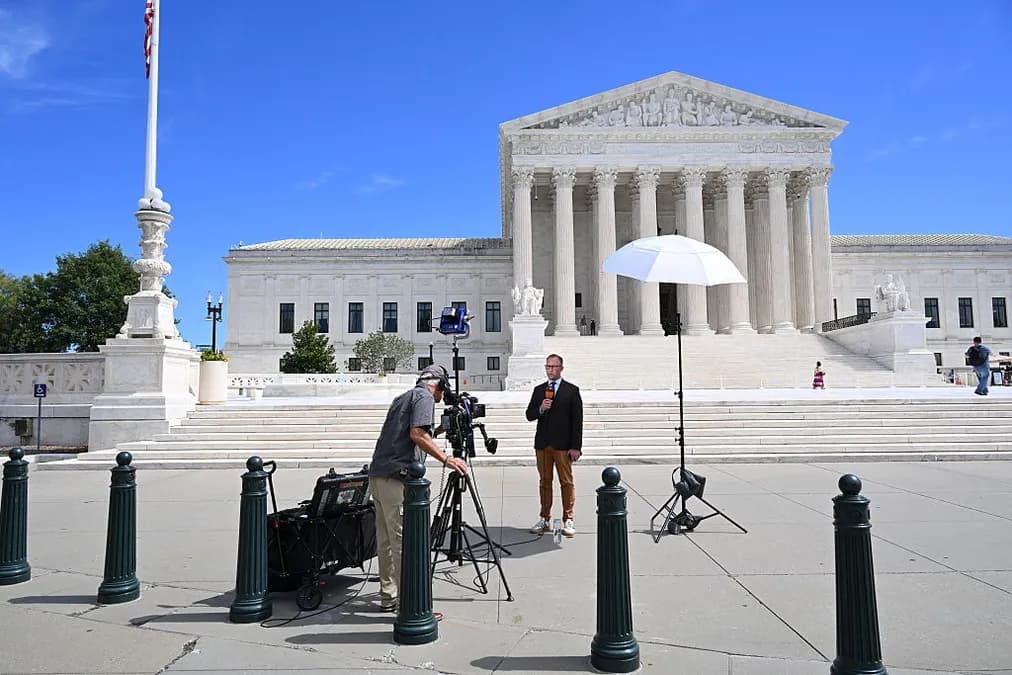
The nine justices return to the bench Monday to open a Supreme Court term 2026 that legal observers have been anticipating for months. The docket features major test cases on religion, guns and climate change — three of the most politically charged areas in American law. And the emergency docket, which has grown from a rarely used procedural tool into a central feature of the Court's work, keeps popping with requests that demand fast rulings.
The scale alone is notable. The Court has not shied from controversy in recent years. Its rulings have reshaped abortion access, affirmative action in college admissions, and the reach of federal regulatory agencies. Each of those decisions rippled far past Washington. A term-opening slate that includes religion, firearms and environmental regulation suggests the pattern will continue.
The stakes extend beyond the parties named in the briefs. A religion ruling can determine whether a synagogue, mosque or church receives public funds. A gun decision can decide what weapons law-abiding owners may carry and where. A climate case can shape whether federal agencies may limit emissions from power plants, factories and vehicles. The Court's conclusions will reach into statehouses, city halls and household budgets.
The term also arrives at a moment of sustained public attention to the judiciary. Pew Research Center has tracked declining confidence in the Supreme Court across party lines in recent years, even as its decisions touch more areas of daily life. That combination — high salience and low trust — raises the pressure on every opinion the Court issues between now and next summer.
Religion on the Docket: Church, State, and the Courts

A single religion case can redefine the boundary between government and faith for a generation. The Court's term includes a major dispute in this area, following a line of decisions that have steadily expanded religious liberty claims under the First Amendment's Free Exercise and Establishment clauses.
Read next Medicaid Work Requirements Strand Cancer SurvivorsLegal scholars have spent years debating what the current Court's religion jurisprudence means in practice. Law review commentary has focused on how the justices weigh neutrality principles against the accommodation of religious practice. The practical questions are concrete. May a state exclude religious schools from a tuition aid program? May a public employer accommodate an employee's Sabbath observance? May a city deny a religious group access to a public forum?
Each answer affects institutions that serve millions of Americans. Religious charities, hospitals, schools and social service agencies operate at the intersection of public funding and private belief. A ruling that broadens accommodation can require governments to adjust grant programs, zoning rules and employment policies. A ruling that narrows it can force religious organizations to choose between their convictions and their budgets.
The Court's religion docket also carries civic weight. The First Amendment's religion clauses were designed to prevent both the establishment of a national church and the suppression of minority faiths. How the justices interpret that dual command in a pluralistic country — where Christians, Jews, Muslims, Hindus, Buddhists and the nonreligious all live under the same laws — will shape public life well beyond any single case.
Guns and the Second Amendment: Ongoing Legal Battles

Lower courts have been flooded with Second Amendment litigation since the Court's landmark 2022 decision on carrying handguns outside the home. That ruling replaced a balancing test with a history-and-tradition standard, and judges across the country have struggled to apply it consistently. The new term gives the justices a chance to clarify what that standard requires.
The disputes are not abstract. They involve who may obtain a license, what conditions a state may impose, and which firearms fall outside constitutional protection. States have responded to the 2022 decision with a patchwork of laws — some permissive, some restrictive — and each variation produces fresh appeals. Gun owners, retailers, violence-prevention groups and law enforcement agencies all have concrete interests in the outcome.
Firearm policy also intersects with public health and local governance. Cities and counties must decide how to regulate firearms in sensitive places such as schools, transit systems and government buildings. The Court's guidance can determine whether those rules survive legal challenge or fall. For the roughly one in three American adults who report living in a household with a gun, according to long-running Pew Research Center surveys, the answers carry immediate practical consequences.
The justices' approach will also signal how much deference they give to legislatures. A muscular reading of the Second Amendment narrows the room for state and local experimentation. A more modest reading preserves it. Either way, the term's gun rulings will be cited in courtrooms for years.
Climate and the Environment: Regulatory Power Under Scrutiny
The climate case on the docket reaches the core question of how much authority federal agencies hold to regulate greenhouse gas emissions and other pollutants. The Court has repeatedly scrutinized agency power in recent terms, applying what has become known as the major questions doctrine — the principle that Congress must speak clearly before agencies take actions of vast economic and political significance.
That doctrine has already altered the regulatory landscape. Federal rules governing power plant emissions, vehicle standards and industrial permitting have all faced heightened judicial review. The pending case could further define the line between what Congress authorized and what agencies assumed.
The consequences radiate outward. Environmental regulators must decide whether to write new rules or wait for Congress. Utilities and manufacturers must plan capital investments years in advance without knowing which standards will survive. States with their own climate programs must assess whether federal law preempts or complements their efforts. And communities facing heat waves, wildfires and flooding have a direct stake in whether emissions limits remain enforceable.
The case also tests the Court's institutional role. Administrative agencies employ thousands of scientists, economists and engineers. Supporters of robust agency authority argue that Congress cannot anticipate every technical question and must delegate. Critics contend that major policy choices belong to elected lawmakers. The justices' ruling will not settle that debate, but it will determine how it plays out for the remainder of the decade.
The Emergency Docket: A Shadow Court in Plain Sight
On any given week, a single justice can receive a request for emergency relief — a stay of a lower court ruling, an injunction pending appeal, a fast-tracked application — and act before the full Court has heard argument. This is the emergency docket, sometimes called the shadow docket, and its growth has drawn scrutiny from scholars across the ideological spectrum.
The numbers tell the story. SCOTUSblog and academic researchers have documented a sharp increase in emergency applications over the past decade compared with the 1990s and 2000s. Where the Court once resolved a handful of such requests per term, it now fields dozens, often issuing brief orders with little or no explanation. The source report notes that the emergency docket "keeps popping" as the new term begins — a sign that the pattern is continuing.
The procedural mechanics matter as much as the outcomes. Orders issued on the emergency docket can take effect nationwide within hours. They can halt a regulation, pause an execution, or allow a policy to proceed while litigation continues. Because the justices often act without full briefing or oral argument, the reasoning behind a decision may remain unclear until a later merits ruling.
Legal commentators have proposed reforms — deadlines for applications, clearer standards for relief, more written explanations. Whether the Court adopts any of them is uncertain. What is certain is that the emergency docket now functions as a parallel track of decision-making, one that can shape American law before a case is ever argued.
Immigration Cases and the Court's Expanding Reach
Immigration enforcement and asylum processing generate a steady stream of appellate litigation, and this term is no exception. The cases reaching the justices involve questions about detention, removal procedures, and the scope of executive discretion in enforcing federal immigration law.
These matters rarely stay confined to the courtroom. Immigration policy determines whether families remain together, whether employers can fill positions, and how local governments allocate resources for schools, hospitals and shelters. A single procedural ruling can change how thousands of cases move through the system each year.
The Court's immigration docket also illustrates a broader theme of the term. Across religion, guns, climate and immigration, the justices are being asked to resolve disputes that Congress has left unresolved and that lower courts have answered inconsistently. The Supreme Court term 2026 will therefore function as a kind of national referee — setting rules that legislatures and agencies must then follow.
That role carries consequences for civic life. Every ruling arrives with a majority opinion, dissents and a public record that citizens can read and debate. The justices' decisions this term will determine how religious institutions operate, how gun owners exercise a constitutional right, how regulators protect the environment, and how immigrants are treated under the law. The Court opens Monday, and the country will be watching.
Source: NPR Topics: News