Tarantino Makes His Stage Debut with The Popinjay Cavalier
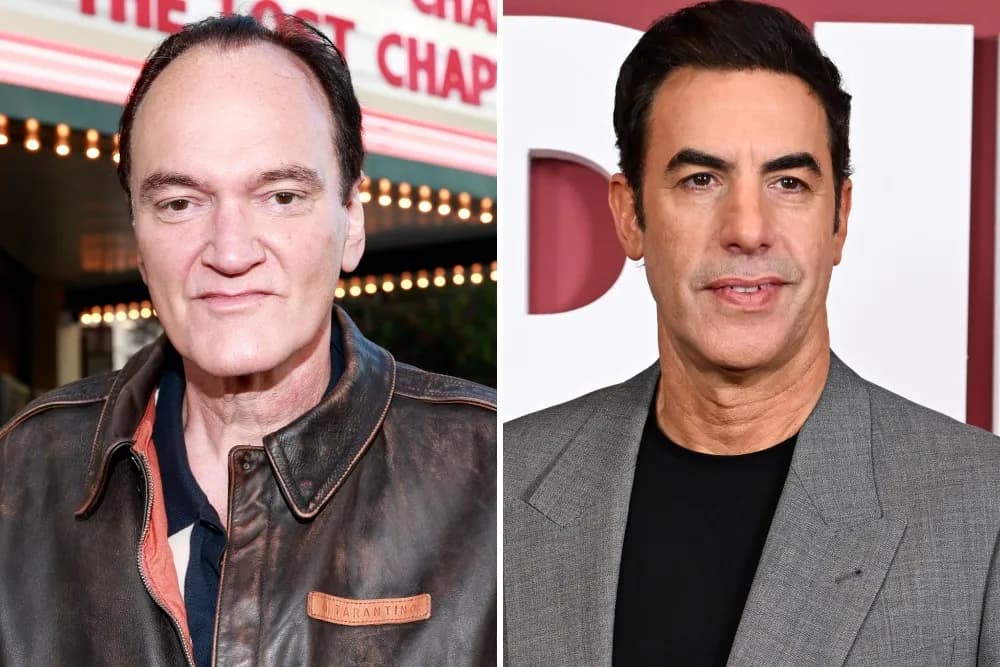
After more than three decades reshaping American cinema, Quentin Tarantino is crossing into territory he has never occupied before. The writer-director whose films have accumulated billions of dollars in global box office and reshaped the language of screen storytelling has written an original stage play — his first — and it will open in London's West End in March 2027. The Quentin Tarantino stage play, titled The Popinjay Cavalier, will begin previews at the Phoenix Theatre on February 23, with opening night set for March 18. The production is scheduled to run for three months.
The announcement marks a genuine rarity in contemporary culture: a filmmaker of Tarantino's stature not merely lending his name to a theatrical adaptation of existing work, but arriving as an original playwright. He is also directing the production himself, adding another dimension to an already unusual creative move. The Popinjay Cavalier has been described as a swashbuckling comedy — a genre framing that, given everything known about Tarantino's obsessions and influences, carries considerable interpretive weight.
Sacha Baron Cohen Stars in Tarantino's Swashbuckling Comedy

The production stars Sacha Baron Cohen, a choice that signals something distinct about the register Tarantino is working in. Baron Cohen is not a conventional dramatic lead; his reputation spans satirical performance, physical comedy, and an ability to inhabit heightened, almost theatrical personas with genuine commitment. His 2012 appearance in the film adaptation of Les Misérables demonstrated range beyond his Ali G and Borat personas, but the stage is where performers of his sensibility often find their most natural home.
Read next 1963 : le tube yéyé qui a enflammé la France — reconnaîtrez-vous cette voix ?The pairing of Baron Cohen with a "swashbuckling comedy" written by Tarantino invites obvious speculation. Tarantino's films have always been saturated with a love of genre — the spaghetti western, the blaxploitation picture, the war film, the martial arts epic — and his screenwriting voice has long drawn on pulp fiction traditions, florid dialogue, and the pleasures of heightened language. A swashbuckling comedy sits squarely inside that tradition. Think of the verbal jousting and theatrical violence of the adventure genre at its most playful: Alexandre Dumas, the Errol Flynn school of screen heroism, the kind of storytelling where wit and a rapier are equally prized weapons.
Baron Cohen has the physical comedic authority to embody that tradition convincingly, and Tarantino has the ear for dialogue that can make theatrical stylization feel electric rather than stagey.
Phoenix Theatre London: Dates, Previews, and Run Length
The Phoenix Theatre, located on Charing Cross Road in the heart of the West End, holds approximately 1,000 seats and has a track record of hosting significant commercial productions. Previews begin February 23, giving the creative team several weeks to calibrate the production in front of live audiences before the official opening on March 18. The play is then scheduled to close after a three-month run, placing the final performance somewhere in mid-to-late June.
That booking structure is worth examining. According to figures published by the Society of London Theatre (SOLT), the average West End commercial production runs between eight and sixteen weeks in its initial engagement, with star-driven limited runs often clustering in the ten-to-fourteen-week range. A confirmed three-month booking at a 1,000-seat house represents a serious commercial commitment — likely north of 80 performances — and suggests the producers have priced the risk with genuine confidence in demand.
West End premium seating for high-profile limited engagements routinely reaches £150 to £250 or beyond, with broader house pricing starting in the £30 to £50 range. For a production of this profile — one combining a globally recognised filmmaker making his stage debut with a major international comedic star — dynamic pricing pressure on the upper band will be considerable. Booking early, once tickets go on general sale, is not merely advice; it is the structural reality of how West End demand operates for events of this kind.
Tarantino as Playwright and Director: A New Creative Chapter
The crossover between major film directors and original theatrical playwriting is genuinely uncommon. Sam Mendes, who began his career in theater at the Royal Shakespeare Company before winning the Academy Award for American Beauty and later directing two Bond films, represents the most seamless transit between the two disciplines — but Mendes moved from theater to film, not the reverse. David Lynch, whose work shares with Tarantino a commitment to highly specific aesthetic worlds, has ventured into installation and performance art but not the conventional playwriting tradition. More recently, Martin McDonagh has traveled in both directions successfully, but McDonagh built his reputation as a playwright before his film career accelerated.
What makes Tarantino's situation distinctive is that he arrives at the stage as an established master of a different form, at a stage in his career when creative experimentation is presumably not financial necessity but genuine artistic curiosity. He has spoken publicly, over many years, about the possibility that his filmmaking output would be finite — that he envisioned a relatively small number of films as his complete cinematic body of work. Whether The Popinjay Cavalier represents a pivot, an addendum, or something else entirely is a question the production itself will eventually answer.
The directorial challenge is substantive. Film direction gives a storyteller control over time and space in ways that stage direction fundamentally cannot replicate. There is no cutting room in theater. The mise-en-scène must be composed for an audience sitting at fixed angles, absorbing the work in real time. Tarantino's instinct for tension-through-dialogue — scenes that run long by conventional film standards precisely because the words are doing so much work — may translate more naturally to the stage than it might first appear.
What This Means for the West End and Theater Culture in 2027
The commercial West End in 2026 and 2027 is operating in a market that remains intensely competitive for audience attention post-pandemic, with SOLT data showing that while visitor numbers have broadly recovered, the distribution of that attendance remains concentrated around a relatively small number of marquee productions. In that context, the arrival of a Quentin Tarantino stage play carries market weight beyond mere prestige.
Major film-world names arriving in the West End — whether as stars or creative forces — have a proven capacity to draw audiences who do not habitually attend theater. The phenomenon is well documented in the recent history of the National Theatre's productions and in the commercial sector's experience with productions headlined by film and television actors. The crucial question, from a theater culture standpoint, is whether those audiences then return — whether a high-profile limited run serves as an entry point or a one-off transaction.
For the broader theatrical community, the significance may ultimately rest on what kind of play The Popinjay Cavalier turns out to be. If it demonstrates that Tarantino's voice — which has always been fundamentally literary, rooted in the pleasures of extended dialogue and genre play — translates into compelling live performance, it opens a conversation about what other major screen artists might bring to the stage when the form is approached as a destination rather than a detour.
How to Get Tickets and What Audiences Can Expect
Tickets for The Popinjay Cavalier at the Phoenix Theatre will be available through the theater's official box office and standard West End booking platforms including ATG Tickets and Ticketmaster UK. Given the profile of the production, allocating time to book as soon as general sale opens is advisable; preview performances from February 23 will likely move faster than their discounted pricing might suggest, particularly given the concentration of interest around the March 18 opening and the weeks immediately following.
Audiences should arrive expecting something that sits in a different register from the dominant West End fare — not a musical, not a straight revival, but an original comic adventure written by a filmmaker whose relationship to genre has always been simultaneously reverent and subversive. The Popinjay Cavalier is a production that will generate opinions. It will be reviewed exhaustively, discussed with the fervor that attaches to any genuinely unexpected cultural event, and it will sell. What it will definitively be — as theater, as a statement about Tarantino's creative evolution, as an experience — remains the open question. That uncertainty is, in itself, the most interesting thing about it.
Source: Variety