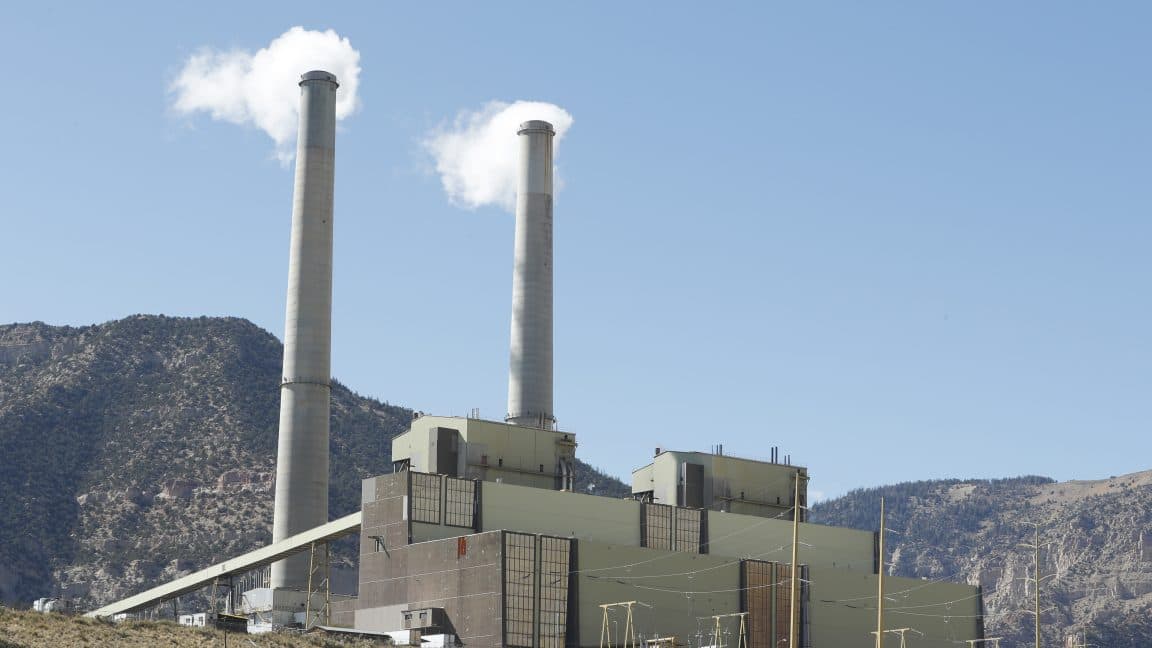
Trump EPA Moves to Eliminate Power Plant Climate Rules
The Trump EPA climate rules rollback arrived with striking timing. On Monday, the Environmental Protection Agency finalized a plan to gut the Biden administration's 2024 Carbon Pollution Standards — regulations designed to cap greenhouse gas emissions from the nation's power sector. The announcement landed weeks after scientists confirmed the hottest summer on record and days after a United Nations report warned that rising global temperatures are pushing climate risks to "increasingly dangerous heights." The EPA moved anyway.
The final rule dismantles the core of the 2024 Carbon Pollution Standards, which required power plant operators to adopt specific emissions-control technologies. In a companion proposal, the agency went further, recommending revocation of all remaining greenhouse gas requirements for power plants — a step that would clear the regulatory slate of decades of accumulated environmental policy targeting the sector.
The Trump EPA climate rules reversal marks one of the most sweeping rollbacks of power sector environmental regulations in recent memory, placing the United States at odds with international climate commitments and the scientific consensus on the role of fossil fuel combustion in warming the planet.
The Clean Air Act Authority Dispute at the Center of the Rollback

The EPA's legal argument rests on a specific reading of the Clean Air Act. The agency contends that the 2024 Carbon Pollution Standards exceed its statutory authority because they mandate control technologies "that are not adequately demonstrated." Under established Clean Air Act doctrine, the EPA can only require the application of the "best system of emission reduction" that has been shown to work in practice. The agency argues that the technologies underpinning the Biden-era rule fail that test.
Read next Top Technology Trends in 2026 You Need to KnowThis is not a new dispute. The question of how broadly the EPA can interpret its authority under the Clean Air Act to address greenhouse gases has traveled through federal courts for years. The Supreme Court's 2022 West Virginia v. EPA decision already constrained the agency's ability to mandate systemic shifts in electricity generation. The Trump administration is citing that legal landscape to justify eliminating not just the Carbon Pollution Standards but the broader regulatory framework for power plant emissions.
Critics argue the EPA's framing is selective. The Clean Air Act has historically been interpreted to allow technology-forcing standards — rules that push industry toward solutions that are emerging but not yet universal. By requiring "adequately demonstrated" technology as a threshold, the agency is applying a more restrictive interpretation that narrows its own authority, a move that legal analysts say reflects policy preference as much as legal necessity.
The EPA's companion proposal to revoke all remaining greenhouse gas requirements for power plants makes the intent explicit. The agency's stated rationale — that power plant emissions "have no material impact on climate change" — departs sharply from the conclusions of its own prior scientific assessments and the consensus of the broader atmospheric science community.
Power Plants as the Second-Largest Source of U.S. Greenhouse Gas Emissions

Power plants are the second-largest source of greenhouse gas emissions in the United States, a fact that makes the Trump EPA climate rules rollback particularly significant from a numbers standpoint. The electricity generation sector accounts for roughly a quarter of total U.S. greenhouse gas output, trailing only transportation. That share represents hundreds of millions of metric tons of carbon dioxide equivalent released into the atmosphere annually from coal, natural gas, and other fossil fuel combustion at power facilities.
The EPA's assertion that power plant emissions carry no material climate impact runs counter to the data the agency itself has historically cited. Sector-specific emission inventories maintained by the EPA show the electricity sector has been a primary driver of U.S. carbon output for decades, and that reductions achieved under prior rules represented measurable progress toward national emissions targets. Eliminating the regulatory framework that drove those reductions reverses that trajectory.
For context, the 2024 Carbon Pollution Standards were designed to accelerate the deployment of carbon capture technology and clean hydrogen at existing power plants, alongside efficiency improvements. Even their supporters acknowledged they would not be sufficient alone to meet long-term climate targets — but they represented a binding federal commitment to reducing the second-largest emissions sector. That commitment is now undone.
Context: Record Heat and UN Climate Warnings in 2026
The EPA's final rule was published against a backdrop that climate scientists had not anticipated arriving quite so soon. The summer of 2026 broke global temperature records, with heat events across North America, Europe, and South Asia surpassing previous benchmarks. Meteorologists and atmospheric scientists attributed the anomalies directly to the accumulated effect of greenhouse gas concentrations in the atmosphere — the same gases the Trump EPA climate rules reversal removes requirements to reduce.
The United Nations issued a report in advance of the rollback warning that global temperatures are on a trajectory to push climate risks to "increasingly dangerous heights." The report drew on data from multiple international scientific bodies and highlighted the power sector as a critical lever for emissions reduction. Cutting emissions from electricity generation, the UN assessment noted, remains one of the most cost-effective pathways to limiting warming.
The juxtaposition is stark. A federal regulatory agency, citing authority concerns, is eliminating emissions requirements for the second-largest source of national greenhouse gas output at the precise moment the global scientific establishment is warning that current emission trajectories are inadequate. Whether that tension produces legal challenges, state-level countermeasures, or international diplomatic friction — likely all three — remains to be seen.
What Comes Next: Proposed Revocation of All Remaining GHG Rules
The finalized gutting of the Carbon Pollution Standards is only part of the EPA's stated agenda. The agency has separately proposed revoking all remaining greenhouse gas emissions requirements for power plants, a proposal that, if finalized, would leave the electricity sector without any binding federal emissions standard for the first time in years.
The EPA first signaled this broader revocation effort last spring. The formal proposal published alongside Monday's final rule converts that signal into an official regulatory action, opening a public comment period before any final decision. However, given the administration's track record and the ideological consistency of the Trump EPA climate rules approach, observers across the policy spectrum expect the proposal to advance.
State governments are likely to respond. California, New York, and a coalition of other states have historically moved to fill federal regulatory gaps with their own standards. Under the Clean Air Act, states with approved implementation plans can maintain independent requirements. A formal rollback of federal power plant emissions rules would accelerate those state-level efforts, creating a patchwork regulatory landscape that complicates national grid planning and interstate energy markets.
Environmental groups have already signaled litigation. The legal basis for challenging the revocation will likely mirror arguments made against prior rollbacks: that the EPA's claim of no material climate impact from power plants contradicts its own endangerment finding, which formally classifies greenhouse gases as a threat to public health and welfare.
Implications for U.S. Climate Policy and Global Emissions Targets
The Trump EPA climate rules dismantlement carries consequences that extend beyond domestic policy. The United States made specific emissions reduction commitments under international climate frameworks. Eliminating binding federal standards for the second-largest emissions sector makes those commitments structurally harder to meet and signals to trading partners and diplomatic counterparts that U.S. climate policy lacks continuity across administrations.
For the power sector itself, the near-term effects are complex. Utilities that had already begun investing in carbon capture or clean energy transitions in anticipation of the 2024 standards now face an altered regulatory environment. Some will slow or shelve those investments. Others — particularly those operating in states with independent climate requirements — will continue regardless of federal action.
The broader policy implication is institutional. Regulatory cycles that swing sharply between administrations erode investment certainty, complicate long-range infrastructure planning, and shift the locus of climate governance toward courts and state capitals. Monday's action is a regulatory event. Its downstream effects on emissions, investment, and international climate cooperation will unfold over years — measured not just in policy documents but in atmospheric carbon concentrations and the temperature records that follow.
Source: Ars Technica - All content


