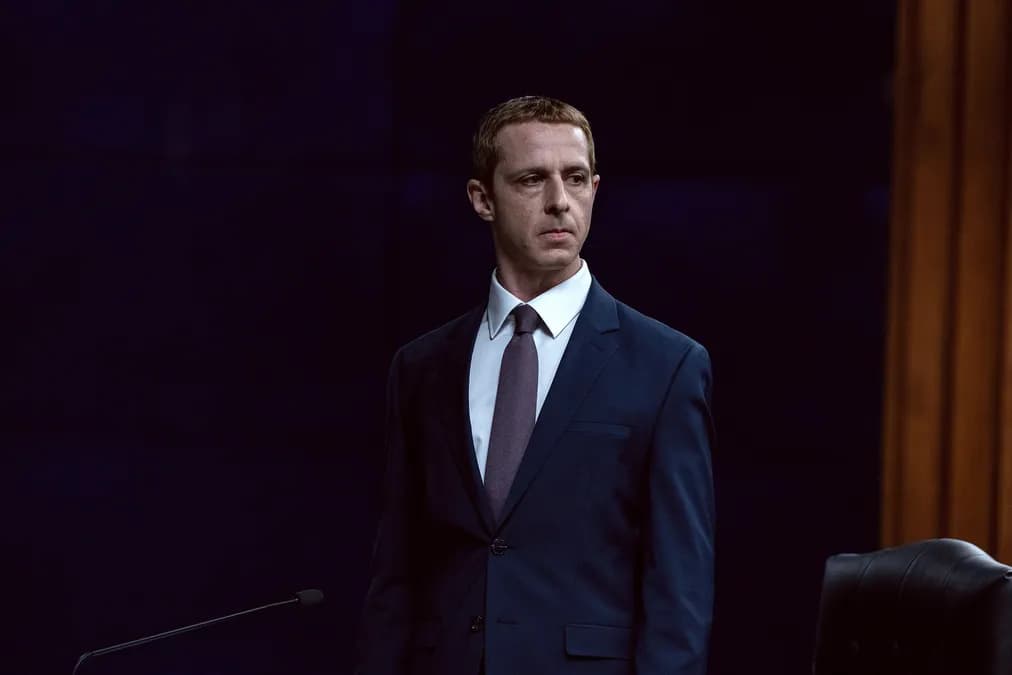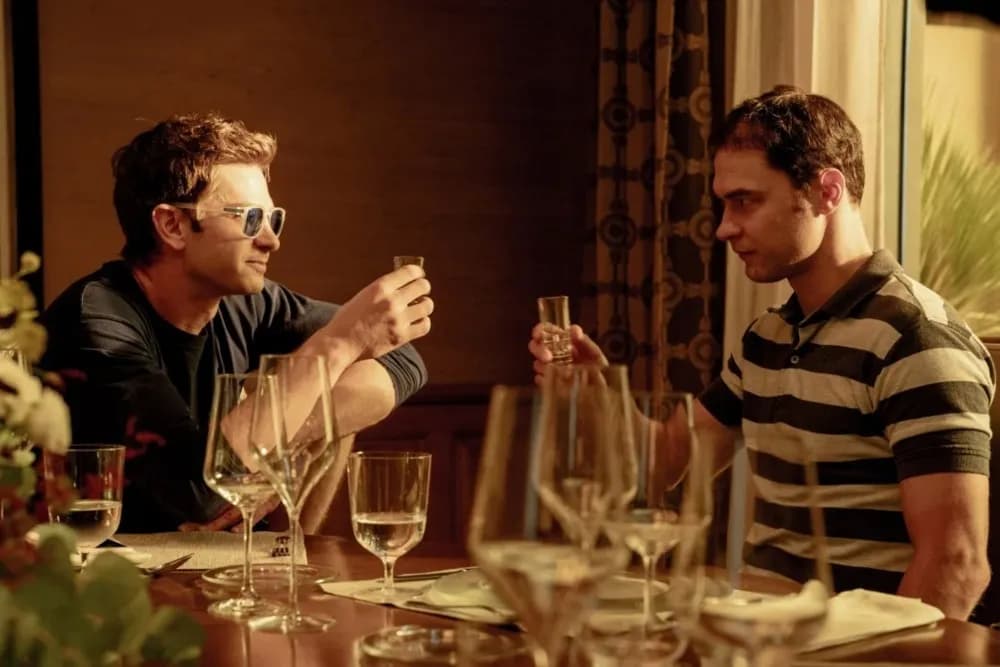
Sixteen years separate two defining performances in Andrew Garfield's career — and the distance between them may be exactly the argument Neon needs this awards season.
Neon's Bet: Why Andrew Garfield Is Running Supporting for Artificial
The decision to position Andrew Garfield as a supporting actor contender for Artificial is not a passive default. It is a deliberate campaign move, and in the competitive theater of Oscar positioning, few choices carry more strategic weight than the category question. Neon, the boutique distributor behind some of the decade's most aggressively campaigned films, has placed Garfield in supporting — not lead — for a role in which he plays a tech CEO forced out of his own company, only to negotiate his way back within five days.
The Andrew Garfield supporting actor bid makes a specific argument: that Artificial is an ensemble film with a broader sweep than any single performance, and that Garfield's role, however central, serves the story rather than dominates it. That framing matters enormously. Academy voters historically respond to actors who appear to serve their film rather than carry it. In a competitive lead field, supporting can be the smarter lane.
The Social Network Echo: Garfield's Sixteen-Year Arc

The biographical resonance here is hard to overstate. In 2010, Garfield played Eduardo Saverin — the Facebook co-founder squeezed out of the company he helped build — in David Fincher's The Social Network. He was campaigned in supporting. He earned Screen Actors Guild attention. He did not receive an Oscar nomination, a snub that became one of that season's defining controversies.
Read next 1963 : le tube yéyé qui a enflammé la France — reconnaîtrez-vous cette voix ?That was sixteen years ago. Now Garfield is back in a structurally parallel role: another man outmaneuvered inside a transformative tech company, except this time the character reclaims his seat within five days. The symmetry with the OpenAI leadership crisis — a real event burned into recent cultural memory — gives Artificial a documentary authority that The Social Network took years to acquire.
For Andrew Garfield as a supporting actor, the category carries specific historical resonance. The 2011 campaign was a near-miss that shaped how voters perceive him. A second run through the same door, in a role this thematically loaded, invites direct comparison — which is precisely the kind of narrative that awards analysts at Variety, The Hollywood Reporter, and Gold Derby have identified as editorial currency for boutique distributors. You do not need to manufacture a story when the story writes itself.
What the Supporting Slot Signals About Artificial's Oscar Strategy

Running Garfield in supporting rather than lead does something specific for Artificial as a title. It signals that the film has multiple performance pillars — that it is a film about a system, a company, an ideology, not merely a portrait. That framing helps in Best Picture campaigning, where voters tend to reward films that feel ensemble-driven over narrowly focused star vehicles.
The strategy also protects the film's positioning. A lead campaign would force Artificial to compete directly for oxygen in the most crowded category. The Andrew Garfield supporting actor push instead opens a second front — a place where he has historical name recognition and where the field is often more fluid, particularly in years without an obvious incumbent.
Boutique distributors like Neon have been among the most disciplined practitioners of category engineering over the past decade. A24's placement of Ke Huy Quan in supporting for Everything Everywhere All at Once — a role that could have been argued either way — funneled voter enthusiasm into a less contested lane and resulted in a win. Neon has internalized that lesson, learning to manage category expectations from the opening of a campaign rather than scrambling to correct course mid-season.
Reading the Supporting Actor Field: Where Garfield Fits
Andrew Garfield as a supporting actor contender carries specific strengths. He is critically respected, has a prior Academy Awards moment in his biography — even an unconsummated one — and is attached to a film that speaks directly to contemporary anxieties about technology and institutional power. The OpenAI allusion in Artificial gives voters a frame of reference that requires no explanation.
The supporting actor field in any given year tends to crystallize around three types of performances: the transformative (physical or behavioral reinvention), the scene-stealing (a smaller role commanding disproportionate attention), and the architecturally essential (a performance that makes the film's emotional argument possible without announcing itself). Garfield's CEO role in Artificial, mirroring the real-world drama it appears to reference, sits squarely in that third category.
That can be the hardest sell to voters. Neon will need to make the case on the screener and in trade coverage that the film simply would not function without this performance, even if the performance never grandstands. Garfield's sixteen-year journey from one tech founding myth to another is the shortcut — and a potent one.
What This Tells Us About the Broader Awards Race
Neon's positioning of Garfield in supporting is a signal that Artificial is being taken seriously as a full-spectrum contender, not a niche film with one strong performance but a title capable of mounting a multi-category campaign. That ambition reshapes how competitors should read this season.
For other distributors, the Garfield supporting gambit raises the cost of admission in that category. He arrives with a recognizable backstory, a high-profile project, and distributor resources committed to a sustained push. Films counting on a relatively uncluttered supporting field may need to reassess their own positioning.
For voters, Artificial now presents as a coherent package: a film about power, technology, and institutional betrayal with performances calibrated to maximize recognition across categories. That is what a disciplined October campaign looks like.
Neon's Track Record and the Risks of Category Strategy
Neon has built its awards reputation on precisely these calculated moves. The company distributes films that arrive with critical cachet and requires every category placement to work double duty — positioning the performance and the film simultaneously.
The risk in the Andrew Garfield supporting actor campaign is the same risk that attaches to any historical echo: it invites direct comparison to a campaign that failed. Voters remember the 2011 supporting race. They know Garfield was passed over. Whether that memory reads as injustice corrected or as an actor perpetually chasing a prize he cannot quite reach depends entirely on how the film lands with the membership.
If Artificial generates the cultural conversation its subject matter warrants, Garfield's sixteen-year arc becomes the most compelling personal narrative of the season. If the film underperforms, the comparison will feel like a diminishment rather than a redemption. That binary sits at the center of Neon's bet — and it is a bet worth watching closely as the race accelerates into winter.
Source: Variety