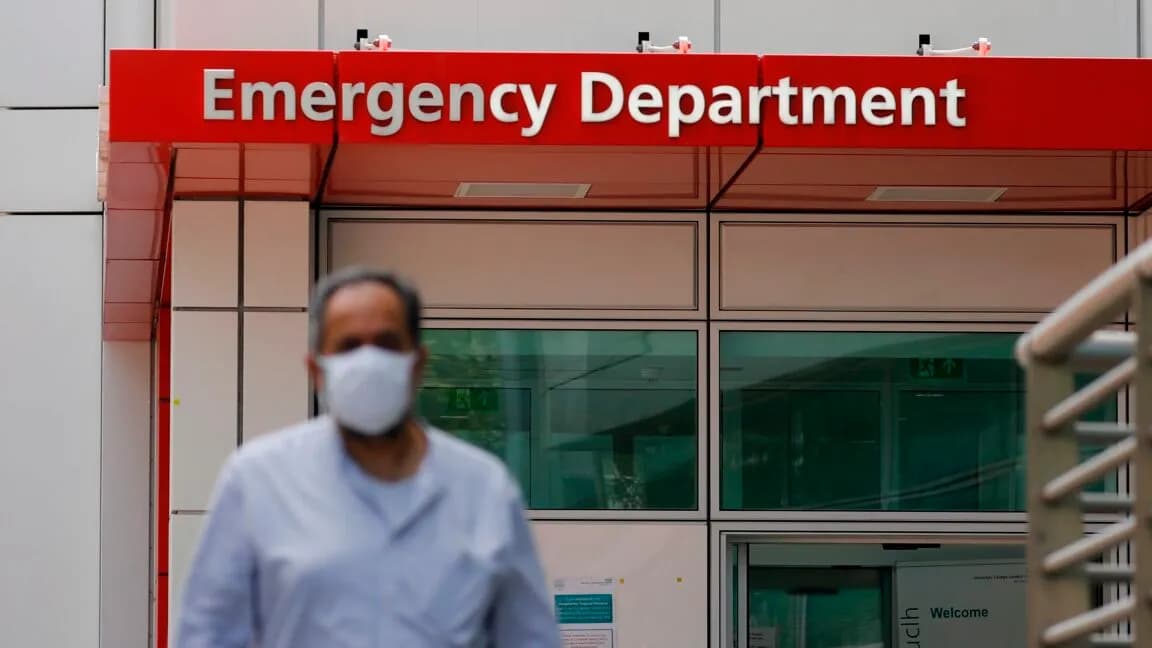
A simulated patient walked through the doors of a healthcare facility somewhere in New York, presenting with a fever and symptoms that could signal any number of dangerous, poorly understood infections. The staff's job was straightforward in theory: recognize the potential threat, apply appropriate protective measures, and isolate the patient before any pathogen could spread. In practice, four out of every ten facilities tested could not clear that bar. The results of this regional pandemic preparedness drill, published in the Morbidity and Mortality Weekly Report—the CDC's peer-reviewed surveillance journal and one of the most authoritative venues in public health—paint a troubling portrait of the local-level gaps that still exist years after COVID-19 demonstrated exactly how costly those gaps can be.
What the Patient-Zero Drill Tested—and What It Found
The exercise was designed around a scenario that public health officials consider one of the most dangerous moments in any potential outbreak: the arrival of patient zero. Health officials in New York organized a regional drill in which healthcare facilities were tested on their ability to identify and respond to a patient presenting with a mystery infection carrying pandemic-level potential. This is not an abstract scenario. It is the precise situation that plays out in the early hours and days of every major infectious disease event—before a pathogen has a name, before diagnostic tests exist, and before any treatment protocol has been established.
The findings were stark. Responses were slow. Use of personal protective equipment was inconsistent and frequently inappropriate for the circumstances. When the results were tallied, only 60 percent of participating facilities passed the fundamental requirements of the pandemic preparedness drill. That means 40 percent—a substantial minority—failed at the most basic level of outbreak detection and response.
The study was published in the Morbidity and Mortality Weekly Report, lending the findings the weight of CDC-affiliated scientific review. The MMWR has served as a primary channel for communicating actionable public health intelligence since 1952, and its publication of this drill assessment signals that these deficiencies are not local administrative concerns—they are national public health problems.
Where Healthcare Facilities Fell Short

The drill exposed failures along three interconnected axes: speed of identification, consistency of masking, and timeliness of isolation. Health officials summarized the core findings bluntly, writing that the drills "identified needs for health care workers and health care facility staff member training to achieve earlier identification, masking, and isolation of potentially infectious febrile patients."
Read next Laika's Wildwood: Stop-Motion Fantasy at TIFF 2026Slow recognition was a recurring failure mode. In a real outbreak, every additional minute a potentially infectious patient spends in an uncontrolled waiting area or examination room represents an opportunity for transmission. CDC infection-control guidelines call for rapid triage of febrile patients with respiratory symptoms—a standard rooted in the hard evidence gathered during SARS, MERS, and COVID-19. The drill revealed that many facilities have not fully operationalized those protocols.
PPE compliance was another critical weak point. Appropriate use of personal protective equipment is not merely a matter of having gloves and masks available. It requires staff to correctly assess transmission risk, select the right level of protection, and don that equipment before exposure—not after a concern has already been raised. Spotty PPE use in a controlled drill environment suggests the problem is not equipment supply but training and decision-making under uncertainty.
Isolation failures compounded both issues. Moving a potentially infectious patient away from others quickly—before full diagnostic clarity—requires staff to act on clinical suspicion rather than confirmed diagnosis. That threshold for action appears to be poorly calibrated at many facilities.
Why Early Detection Is the Linchpin of Outbreak Containment

The entire epidemiological logic of outbreak containment rests on what happens in the first hours of a pathogen's introduction to a healthcare setting. Hospitals and clinics are environments of concentrated vulnerability: patients with compromised immune systems, elderly individuals, and healthcare workers who interact with dozens of people daily. A single undetected case of a novel infectious agent in such a setting can seed a cluster that overwhelms contact-tracing capacity before public health officials even know what they are dealing with.
The officials' call for "earlier identification" reflects this reality precisely. Earlier identification means fewer secondary cases, smaller contact lists to trace, and more time for public health authorities to characterize the threat before it escapes the initial facility. Each of the three elements in the officials' recommended fix—identification, masking, and isolation—operates in sequence, and the failure of any one stage cascades into the others. A patient who is not identified quickly will not be masked promptly. A patient who is not masked promptly will not be isolated in time.
This is not speculative risk modeling. It is the documented pattern from every major outbreak of the past two decades. The Ebola importation events in the United States in 2014 revealed that even highly resourced hospitals could struggle with novel pathogen recognition and PPE protocols under real-world pressure.
COVID-19's Hard Lessons: Still Not Fully Applied
COVID-19 exposed the pandemic preparedness gaps embedded at every level of the public health infrastructure, from international surveillance systems to national stockpiles to local hospital capacity. The reasonable assumption after that experience was that healthcare facilities would emerge with substantially improved outbreak-response reflexes. The New York drill suggests that assumption was too optimistic.
The COVID-19 pandemic created enormous institutional stress and burned through hospital workforces at a rate that has left lasting staffing and training deficits. Many of the healthcare workers who gained hard-won experience managing patients with novel respiratory infections during 2020 and 2021 have since left the profession, retired, or moved to different roles. Their institutional knowledge did not necessarily transfer into updated protocols or structured training programs.
The result is a troubling possibility: that the one-time experiential learning gained from COVID-19 has already begun to erode, and that facilities are reverting toward the pre-pandemic complacency that made 2020 so catastrophic in the first place. A pandemic preparedness drill failing 40 percent of participants in the mid-2020s—after the largest global health crisis in a century—is not a reassuring data point.
What Health Officials Are Recommending to Fix These Gaps
The study's authors are direct about what needs to change. The core recommendation centers on targeted training for healthcare workers and facility staff, with three specific outcomes: earlier identification of potentially infectious patients presenting with fever, prompt masking of those patients, and rapid isolation before spread can occur.
Training interventions in infection control have a strong evidence base. When structured simulation exercises are conducted regularly—not as one-time events but as recurring components of staff development—compliance with isolation and PPE protocols improves measurably. The WHO and CDC have both published frameworks for healthcare-worker preparedness that emphasize simulation-based training, scenario exercises precisely like the one conducted in New York, and post-drill debriefs that translate findings into revised standard operating procedures.
The prescription here is not revolutionary. It is consistent, well-resourced repetition of the basics. Facilities that passed the drill likely did so not because they had better equipment or more qualified staff, but because they had more recently rehearsed the specific sequence of actions required. Drills work—but only when they are conducted regularly enough that the responses become automatic.
Broader Implications for National Pandemic Preparedness
A regional drill in New York is a data point. A 40 percent failure rate at that regional level, however, raises legitimate questions about what a national picture looks like. If the facilities tested represent anything close to a representative sample of healthcare settings across the country, the scale of the preparedness deficit is significant.
Pandemic threats do not announce themselves in advance. A novel pathogen with efficient human-to-human transmission could emerge through a healthcare facility in any city, in any region, on any given day. The period between first presentation and recognition is when containment is either possible or already lost. This pandemic preparedness drill made that gap measurable and visible.
The MMWR publication of these findings is itself a call to action. Public health officials are signaling, through one of the field's most respected scientific channels, that the infrastructure for detecting the next pandemic at its origin point is not ready. The fix is known. The training frameworks exist. What remains is the institutional will—and the funding—to apply them consistently enough that the next drill, whenever it comes, yields a passing grade across the board.
Related coverage
Source: Ars Technica - All content