Amazon's $1 Billion Community Fund: What AWS Is Promising
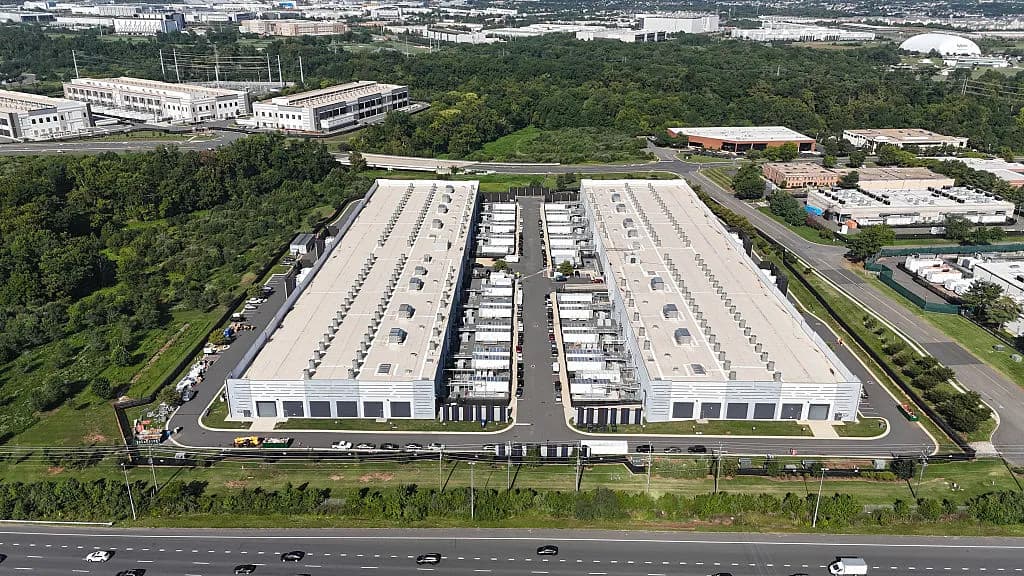
More than $1 billion. That is the figure Amazon pledged on Friday in what the company is framing as a goodwill investment in the communities surrounding its sprawling data center campuses. Over a five-year period, Amazon Web Services will channel these funds directly to neighboring communities, according to a press release from AWS CEO Matt Garman. The Amazon data center community fund, as the initiative is being positioned, grants local communities a meaningful degree of authority over how the money gets spent.
The categories on offer are broad: education, job training, energy affordability, water and energy conservation, and loosely defined "local priorities." That last category is notable. It signals Amazon's awareness that the concerns of a rural Virginia county may look nothing like those of a suburban Phoenix neighborhood, both of which now sit in the shadow of massive server complexes drawing extraordinary amounts of power and water. Beyond the financial commitment, Amazon also pledged that its data centers will not drive up electricity bills for existing ratepayers or deplete regional water supplies. The company framed these as structural commitments, not aspirational targets — a distinction that critics were quick to challenge.
The announcement arrived against a backdrop of intensifying pressure from local governments, environmental groups, and utility regulators who argue that the data center boom has outpaced any meaningful framework for community accountability.
Why Data Centers Are Facing Community Backlash

The modern hyperscale data center is, at its core, an enormous machine for consuming resources. A single large facility can draw hundreds of megawatts of electricity — enough to power tens of thousands of homes — while simultaneously requiring millions of gallons of water annually for cooling. When dozens of these facilities cluster in a single region, as they have across Northern Virginia, central Oregon, and parts of Arizona and Iowa, the cumulative strain on local infrastructure becomes difficult to ignore.
Read next Laika's Wildwood: Stop-Motion Fantasy at TIFF 2026Electricity rate pressure is among the most contentious flashpoints. Utility economists and state public utility commissions in several jurisdictions have grappled with a fundamental question: when a single industrial customer absorbs a disproportionate share of new grid capacity, who pays for the infrastructure buildout? In many traditional rate-setting frameworks, those costs are socialized across all ratepayers — meaning residential customers and small businesses can end up subsidizing the grid expansion that hyperscalers require. The tension this creates is structural, not incidental.
Water stress amplifies the conflict. The World Resources Institute's Aqueduct water risk atlas identifies significant portions of the American Southwest and Southeast as already facing high or extremely high baseline water stress. Many of these same areas have attracted heavy data center investment, precisely because cheap land and favorable tax incentives offset operational costs. When a data center draws from an already-strained aquifer or municipal system, the community concern is not hypothetical. It is a measurable reduction in a shared resource.
Municipal officials in several regions have pushed back publicly. Zoning boards, county commissioners, and state legislators have increasingly sought impact assessments, moratoriums, and revenue-sharing agreements before approving new facilities. The Amazon data center community fund, in this context, is partly a response to that regulatory friction.
Why Amazon's Plan Is Drawing More Criticism

The announcement generated skepticism almost immediately. Critics identified several structural problems that a philanthropic fund does not resolve.
First, the math. One billion dollars spread over five years, distributed across the many communities adjacent to Amazon's global data center footprint, represents a relatively modest per-community figure. When measured against the scale of infrastructure investment Amazon makes in a single year of expansion, the fund represents a small fraction of overall capital deployment. Environmental and community advocacy groups have noted that the ratio matters: a donation program calibrated to soften opposition is not the same as a systemic commitment to equitable cost-sharing.
Second, and more pointed, is the concern about who controls the framing. Amazon's pledge that data centers will not increase power bills rests on Amazon's own representations — not on binding utility commission agreements, independent actuarial modeling, or regulatory oversight with enforcement teeth. Energy economists have long argued that the true test of such commitments is whether they are embedded in rate cases and interconnection agreements that regulators can audit, not in corporate press releases that carry no legal obligation to ratepayers.
Third, the fund structure places Amazon in a position of influence over community spending priorities even while nominally deferring to local decision-making. The categories offered — education, job training, energy affordability — are not neutral. They implicitly define the acceptable scope of community concern, nudging local governments toward workforce and affordability programs rather than, say, legal challenges to zoning decisions or independent environmental audits.
That framing tension is not unique to Amazon. Research on corporate community investment programs across extractive and infrastructure industries consistently finds that community advisory boards with real authority produce more durable outcomes than discretionary philanthropic programs controlled by the donor entity.
Amazon's Water Positive Pledge and the 2030 Deadline
Amazon's water commitment carries a specific deadline: the company pledges to be "water positive" by 2030, meaning it will replenish more water to local watersheds than its operations consume. The company also disclosed that 75 percent of its projects have already met this threshold — a figure it presented as evidence of momentum.
The WRI Aqueduct framework, which maps water risk at the watershed level, provides useful context for evaluating such claims. A project that achieves water positivity in a low-stress watershed produces a different outcome than one operating in a region already classified as water-scarce. Replenishment credits earned in water-abundant areas do not directly benefit communities facing drought conditions in different regions. The geographic specificity of water stress means that aggregate percentages can obscure uneven distributions of impact and benefit.
The 2030 deadline also raises a question of sequencing. Data center construction is accelerating rapidly, meaning the gap between Amazon's current water footprint and its 2030 target may widen before it narrows. Environmental nonprofits tracking corporate water commitments have noted that 2030 pledges announced in 2026 must be evaluated against expansion trajectories, not current operational baselines.
None of this necessarily renders Amazon's commitment meaningless. Water positivity, pursued rigorously and verified independently, would represent a genuine contribution to watershed health. The question is whether Amazon's internal accounting will be subject to third-party verification at the watershed level — a standard the EPA and organizations like the Alliance for Water Stewardship have increasingly advocated for industrial water users.
What This Means for the Future of Big Tech Infrastructure
Amazon's announcement signals something worth taking seriously: the era of frictionless data center expansion is closing. The fact that AWS felt compelled to announce a billion-dollar community fund reflects a real shift in the political economy of infrastructure development. Municipalities are better organized. State legislators have grown more assertive. Utility regulators are asking harder questions.
Microsoft, Google, and Meta face structurally identical pressures. If Amazon's fund gains traction — even on its own terms — it creates a template that community groups in other jurisdictions will invoke when negotiating with competing hyperscalers. The fund may inadvertently raise the floor for what communities expect from tech companies seeking local approvals.
There is also a workforce dimension worth noting. The inclusion of job training as a fund category reflects the persistent disconnect between data center job creation and local labor absorption. A modern hyperscale facility employs relatively few people per megawatt of capacity, most requiring specialized skills not typically available in the rural or suburban communities where these campuses are built. Investments in technical training pipelines, if sustained, could eventually close that gap — though five years is a short window for workforce transformation at scale.
Key Takeaways: Is $1 Billion Enough?
The honest answer is that the question is not quite right. Whether $1 billion is "enough" depends entirely on what problem it is trying to solve.
If the goal is to reduce regulatory friction and improve Amazon's standing with local governments, the fund may well be cost-effective. Philanthropic programs that align with community priorities and deliver visible results can shift the political environment around data center approvals. On that narrow metric, the investment may generate returns.
If the goal is to make affected communities whole — to fully offset the electricity rate pressures, water stress, and land-use changes that hyperscale development brings — then $1 billion distributed over five years falls short of what independent analysis would require. The structural mechanisms that actually govern cost allocation — utility rate cases, state interconnection rules, water rights frameworks — remain outside the scope of any voluntary fund.
The Amazon data center community fund is best understood as a negotiating instrument in an ongoing political contest over who bears the costs of the AI infrastructure buildout. It is not a settlement. Communities and their representatives would be wise to treat it as an opening position.
Source: Ars Technica - All content