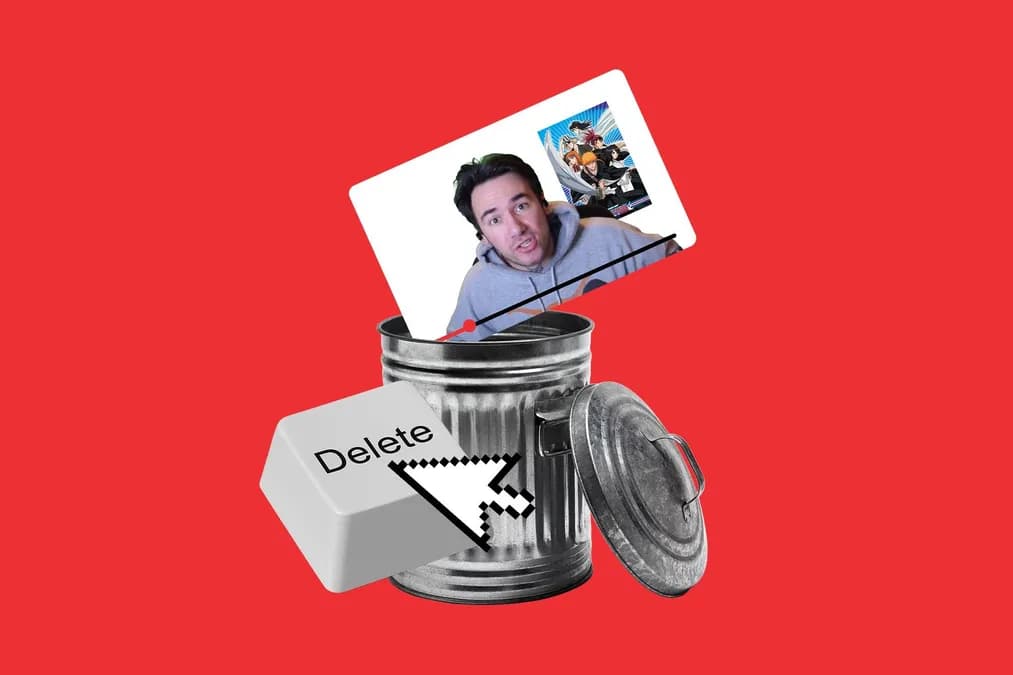
On September 6th, 2026, a YouTuber named Nicholas Light uploaded a video with a stark title: "My Channel will be Deleted Today." In it, he alleged that he was on the receiving end of an aggressive copyright enforcement campaign that threatened to wipe out his entire presence on the platform. The video spread quickly through anime fan communities, and for good reason — it crystallized a tension that has been building for years between creators who built audiences reacting to anime content and the rights holders determined to claw back control of their intellectual property.
This is not an isolated grievance. The conflict between anime reaction YouTubers copyright enforcement is accelerating, touching thousands of channels, reshaping how fans consume content, and forcing a reckoning with some of the murkiest legal territory in digital media law.
The Conflict Between Anime Reaction Creators and Copyright Holders
Reaction content is among YouTube's most-watched genres. Channels dedicated to watching and commenting on anime episodes — sometimes in real time, often frame by frame — have attracted millions of subscribers who treat them as a secondary experience layered on top of the original material. For many English-speaking fans discovering anime through these channels, reaction videos serve as both entertainment and gateway.
But the companies that own the underlying footage have grown less tolerant. Rights holders, armed with increasingly sophisticated enforcement tools, have begun targeting channels that display significant portions of copyrighted episodes, even when that footage is accompanied by commentary. The stakes are considerable on both sides: an established reaction channel with hundreds of thousands of subscribers represents real advertising revenue and cultural influence, while a single popular anime series can represent hundreds of millions of dollars in licensing fees, merchandise, and streaming subscriptions for its rights holders.
Nicholas Light's situation placed a human face on what is otherwise an abstract corporate dispute. His video, widely circulated across Reddit communities and anime fan Discord servers, alleged that copyright enforcement pressure had put everything he built at risk — not from a minor strike, but from what appeared to be a coordinated removal campaign.
Who Is Targeting Anime Reaction Channels
Two names dominate the conversation in anime reaction creator spaces: Crunchyroll and Viz Media.
Read next Laika's Wildwood: Stop-Motion Fantasy at TIFF 2026Crunchyroll, now owned by Sony's Funimation-merged streaming operation, holds exclusive streaming rights to a substantial share of currently airing anime titles. Its licensing model depends on subscribers paying monthly fees to watch content legally — a business that is directly undercut when reaction channels broadcast full or near-full episodes alongside their commentary. Crunchyroll has been aggressive in filing Content ID claims and issuing copyright strikes against channels it believes exceed the bounds of commentary.
Viz Media operates differently. As the North American publisher of major manga and anime titles including Naruto, Bleach, and One Piece, Viz holds distribution and licensing rights that predate the streaming era. The company has historically pursued infringement claims across multiple platforms, including YouTube, and is considered one of the more enforcement-minded players in the anime licensing space.
For reaction creators, the practical effect is the same regardless of which entity files the claim: their monetization disappears, their videos get blocked, and enough strikes can trigger channel termination.
Fair Use and the Legal Gray Zone of Reaction Content
Fair use — the legal doctrine that permits limited use of copyrighted material for purposes such as commentary, criticism, education, and parody — exists precisely for content like reaction videos. Under U.S. copyright law, courts weigh four factors: the purpose and character of the use, the nature of the copyrighted work, how much of the original was used, and the effect on the market for the original.
The Electronic Frontier Foundation and other digital rights organizations have long argued that YouTube's copyright enforcement mechanisms fail to adequately account for fair use before removing content. In practice, the "amount of the original used" factor is where most reaction creators run into trouble. A creator who plays an entire 23-minute episode while reacting to it every few minutes occupies very different legal territory than one who pauses on key scenes for analytical commentary.
Courts have provided some guidance. The 2015 Lenz v. Universal Music case — often called the "dancing baby" case — established that rights holders must consider fair use before filing takedown notices, not after. But that precedent applies to DMCA takedowns, not to YouTube's internal Content ID system, which operates outside the formal legal structure and lacks the same procedural protections.
The uncomfortable truth for reaction creators is that no bright-line rule protects them. Fair use is a defense, not a permission — it can only be evaluated fully by a court, a process that most small creators cannot afford to pursue.
How YouTube's Copyright System Works Against Small Creators
YouTube's Content ID system is built for scale. The platform hosts more than 800 hours of video uploaded every minute, according to the company's own published data, and it relies on an automated fingerprinting system to identify copyrighted material. Rights holders who qualify for Content ID — a status not available to all copyright owners — can instruct YouTube to automatically block, monetize, or track any video containing their registered content.
The asymmetry is sharp. A rights holder files a Content ID claim with a few clicks. A creator disputing that claim must file a counter-notification, wait through a multi-week review process, and risk the full weight of a formal copyright strike if the claimant disagrees with the dispute. Three copyright strikes within 90 days results in channel termination. For a creator whose livelihood depends on their channel, that threat alone is often enough to force compliance without any legal proceeding.
YouTube has acknowledged the pressure on creators. In 2019, the platform updated its dispute resolution process and introduced a "copyright match tool" for smaller creators. But critics, including creators' rights advocates, argue these changes didn't fundamentally rebalance a system that still favors large rights holders by design.
The Broader Impact on the Anime Fan Community
The enforcement wave affects more than individual creators. Anime reaction communities have functioned as a form of fan infrastructure — a place where viewers who grew up watching specific series encounter them fresh through the eyes of new fans, where international audiences bridge cultural gaps, and where enthusiasm for a show can translate into genuine awareness of titles that might otherwise remain niche.
When Nicholas Light's video circulated, the comment sections filled with fans expressing something beyond sympathy for one creator. There was a palpable concern that the space they had built around reaction content — the communities, the running jokes, the shared viewing rituals — was itself under threat. Several prominent reaction channels have already privatized older videos or shifted to commentary-only formats that minimize screen time of the original footage, a compromise that many viewers find significantly less engaging.
There is also an irony that rights holders may be underestimating. Multiple studies examining fandom behavior, including research from the Annenberg Innovation Lab, have found that fan engagement — including the kind driven by reaction content — correlates positively with purchasing behavior, including streaming subscriptions and merchandise sales. A fan who discovers Demon Slayer through a reaction video may become exactly the kind of subscriber Crunchyroll is trying to cultivate.
What Anime Reaction YouTubers Can Do Next
The path forward is narrow but not entirely closed.
The most durable protection remains reformatting content to genuinely emphasize commentary over footage. Creators who pause frequently, build arguments about themes and production choices, and use only the segments of footage necessary to make a specific point are in substantially stronger fair use territory than those who effectively simulcast episodes.
Building a presence on alternative platforms provides partial insurance against the YouTube-specific vulnerability. Platforms like Nebula, which operates on a subscription model with creator-friendly revenue sharing, and Patreon-backed long-form content have allowed some creators to maintain audiences independent of any single platform's enforcement policies.
Collective action has also shown some effectiveness. Creator coalitions, when organized, have historically drawn platform attention more reliably than individual disputes. The YouTube Creator Union and similar advocacy groups have lobbied for greater transparency in Content ID decision-making and faster dispute resolution timelines.
What reaction creators cannot do is assume the current enforcement climate will soften. Crunchyroll, Viz Media, and other rights holders have legal departments that treat unauthorized use of their content as a direct threat to licensing revenue — and as streaming competition intensifies, that calculation is likely to harden rather than relax.
Nicholas Light's video was a warning signal, not a one-off event. The war over anime reaction YouTubers copyright is intensifying, and the rules governing how it gets fought — YouTube's policies, the limits of fair use, the economics of anime licensing — are all in active dispute. Creators, fans, and rights holders alike are going to have to reckon with what this genre of content actually is, and what it's worth protecting.
Related coverage
Source: The Verge