Apple recently weighed eliminating roughly 5,000 support positions, a reduction that would have ranked among the largest single workforce cuts in the company's modern history. According to Bloomberg's Mark Gurman, the plan is now on hold indefinitely — and the reason says as much about the limits of generative AI in customer service as it does about Apple's internal caution.
Apple's Plan to Cut 5,000 AppleCare Jobs via AI
The proposal, as reported by Gurman, would have trimmed about 5,000 employees from Apple's support organization. The company's internal rationale was straightforward: AI-powered phone and web agents, Apple believed, could absorb a meaningful share of the troubleshooting, triage, and routine diagnostic work that human advisors currently perform.
Gurman's reporting carries particular weight in Apple coverage. Across more than a decade, his sourcing on unreleased products, organizational changes, and executive maneuvering has proven unusually accurate, making Bloomberg the de facto record of Apple's internal deliberations. When Gurman reports that a layoff plan existed and has since stalled, that sequencing — considered, then shelved — is itself the story.
The scale matters. Five thousand roles is not a rounding error inside a support division, and the number implies Apple had modeled AI deflection rates aggressive enough to justify removing a substantial fraction of its frontline workforce. That modeling apparently did not survive contact with the company's own risk assessment.
Why Apple Shelved the Layoff Plans
Apple is no longer "currently looking to take such a step," according to the report. That phrasing is deliberately provisional. It describes a pause, not a reversal — a distinction that will shape how AppleCare employees and recruiters read the company's hiring signals over the next several quarters.
Read next iPhone Duo's Hidden Fake Bezel Setting ExplainedSeveral forces plausibly converged to stop the plan.
First, reliability. AppleCare sits at the point where hardware, software, warranty policy, and customer emotion intersect. A bot can walk a user through a force-restart sequence. It struggles with the caller whose iPhone holds irreplaceable photos of a deceased parent, or the small-business owner whose device fleet failure is costing revenue by the hour. Escalation judgment is precisely where language models remain least predictable and where a wrong answer carries outsized cost.
Second, reputational exposure. Apple prices at a premium and justifies it partly through service. A viral clip of a frustrated customer trapped in an AI loop does more damage to that positioning than the salary savings from several hundred eliminated roles. For a brand whose marketing leans on human-centered design, visibly dehumanizing support is a strategic contradiction.
Third, legal and regulatory friction. Workforce reductions justified by automation invite scrutiny in multiple jurisdictions, and Apple operates under labor arrangements and consultation requirements in numerous markets. A 5,000-person cut attributed to AI would have been a conspicuous test case.
Finally, timing. Announcing mass AI-driven layoffs while simultaneously shipping AI features across its platforms would hand critics a ready-made narrative: Apple automates for customers' benefit and for its own headcount reduction in the same breath.
Apple's AI-Powered AppleCare Phone System Already Live
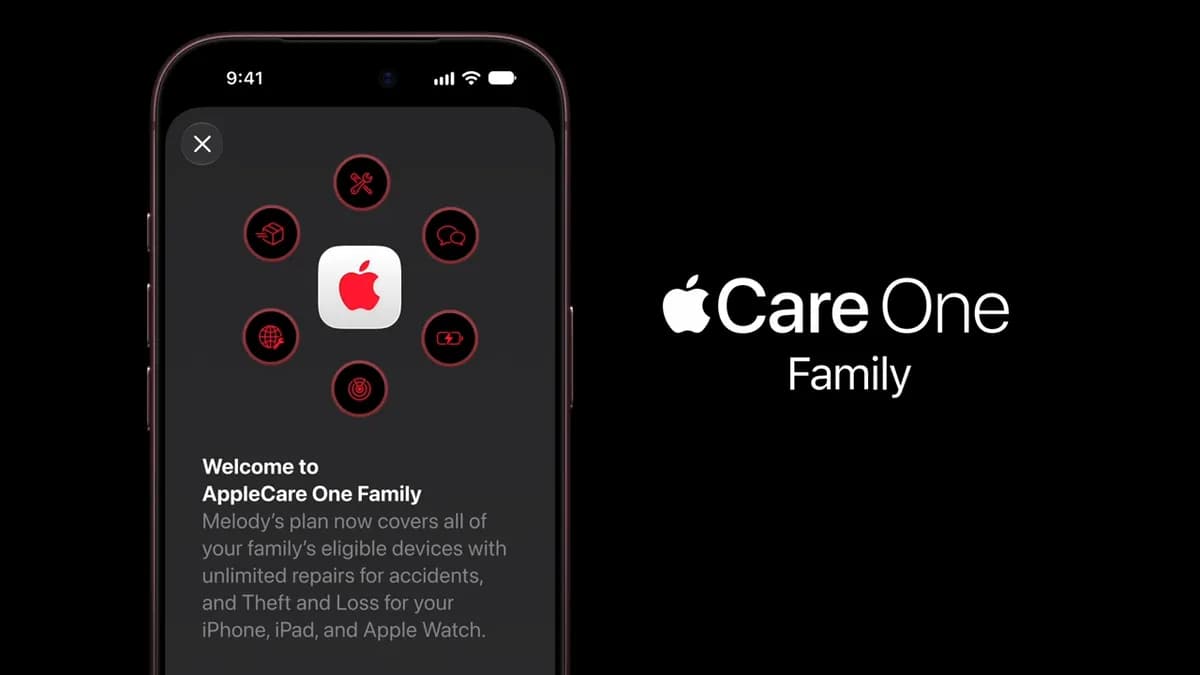
The automation is not hypothetical. As reported last month, customers calling 1-800-APL-CARE from the United States or Canada are now routed to an AI-powered support assistant.
The system is a clear step beyond the basic automated operators that long preceded it. Built on generative AI, the assistant answers questions and provides step-by-step troubleshooting instructions for Apple products. Crucially, it retains an escape hatch: callers can be transferred to a human advisor when the bot cannot resolve an issue, or simply when they ask for a person.
That transfer mechanism is the tell. Apple has deployed automation at the front door of support while preserving the human backstop — an architecture that captures efficiency on high-volume, low-complexity contacts without fully severing the human path. It is also, notably, the architecture that makes a 5,000-person reduction harder to justify cleanly. If humans remain essential for escalations, the labor savings scale with deflection rate, not with total call volume.
Apple has not disclosed deflection metrics, resolution rates, or customer satisfaction scores for the new assistant. Until it does — or until third-party testing produces them — claims about how much human work the system genuinely absorbs remain unverified.
Broader Apple Layoffs: Middle Management Cuts Continue
Support was not the only area under review. The same reporting indicates Apple has trimmed some employees in middle management roles in recent weeks.
That pattern aligns with a broader recalibration across large technology firms, where layers of management accumulated during years of aggressive headcount growth. Middle management cuts are typically quieter than frontline reductions: smaller numbers, less public-facing impact, and a rationale — organizational flattening — that draws less attention than replacing people with software.
The contrast is instructive. Apple appears willing to reduce management overhead now while deferring the far more visible question of whether AI can substitute for customer-facing labor. One cut is an efficiency exercise. The other is a statement about what Apple believes its customers will accept.
What This Means for the Future of AppleCare Staffing
The indefinite pause leaves AppleCare hiring in an ambiguous state. The report notes it remains to be seen whether Apple eventually revisits layoffs or reduces hiring for AppleCare roles.
A hiring freeze is the softer instrument, and the likelier near-term path. Attrition, combined with restrained backfilling, shrinks a workforce without triggering the announcement, severance costs, and press cycle of a formal reduction. If Apple's AI assistant improves on the metrics that matter — containment rate, first-contact resolution, satisfaction — headcount can drift downward quietly.
Analysts who track service operations consistently flag the same tension for premium brands. Cost per contact falls when automation handles volume, but the contacts that reach humans become harder, longer, and more emotionally loaded, raising cost per remaining interaction. The economics of partial automation are less favorable than headline deflection percentages suggest.
There is also the institutional knowledge problem. Experienced advisors surface product defects, identify emerging failure patterns, and feed signal back to engineering. A thinner support organization weakens that feedback loop — a second-order cost that never appears in a layoff model.
Industry Context: AI Replacing Support Workers Across Tech
Apple is not moving first here. It is moving carefully, and later than several peers.
Industry research has pointed toward a rapid shift in customer service for years. Gartner has projected that a substantial share of customer service interactions would be handled entirely by AI by the mid-2020s, with analysts at McKinsey estimating that generative AI could automate a significant portion of customer operations work — figures that have fueled aggressive automation targets across telecom, banking, e-commerce, and software.
Real-world results have been uneven. Telecommunications providers that deployed aggressive chatbot triage reported sharp rises in repeat contacts and escalations, with customers calling back multiple times to resolve a single issue. Airlines and retail banks have faced public backlash after automating tiers of support and degrading resolution times. Klarna, the payments firm, publicly touted an AI assistant handling the work of hundreds of agents — then later acknowledged the need to reintroduce human staff for quality reasons, a cautionary case study widely cited in service operations circles.
The pattern is consistent: automation performs well on structured, high-volume requests and poorly on ambiguous, high-stakes, or emotionally charged ones. Support organizations that cut too deep too fast tend to rehire, often at higher cost and with damaged morale.
Apple's decision to hold at the brink reflects that evidence. The company has deployed generative AI at the front line of AppleCare, kept human escalation intact, trimmed management ranks, and declined — for now — to convert automation into 5,000 pink slips. Whether that restraint reflects durable conviction or a deferred decision will become clear in Apple's hiring data over the coming year.