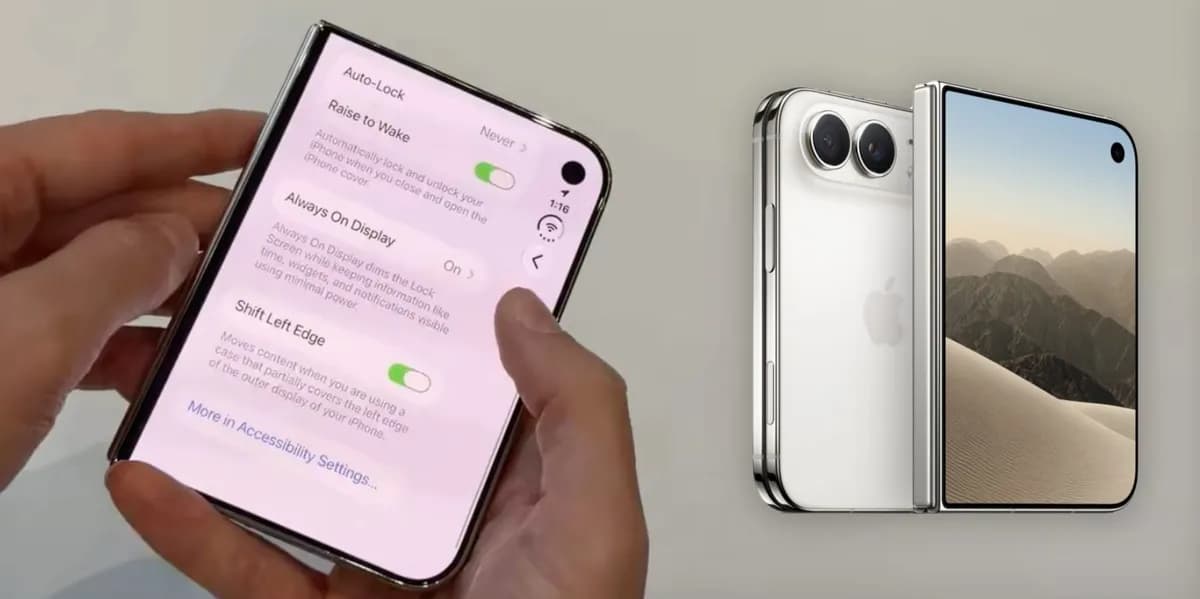
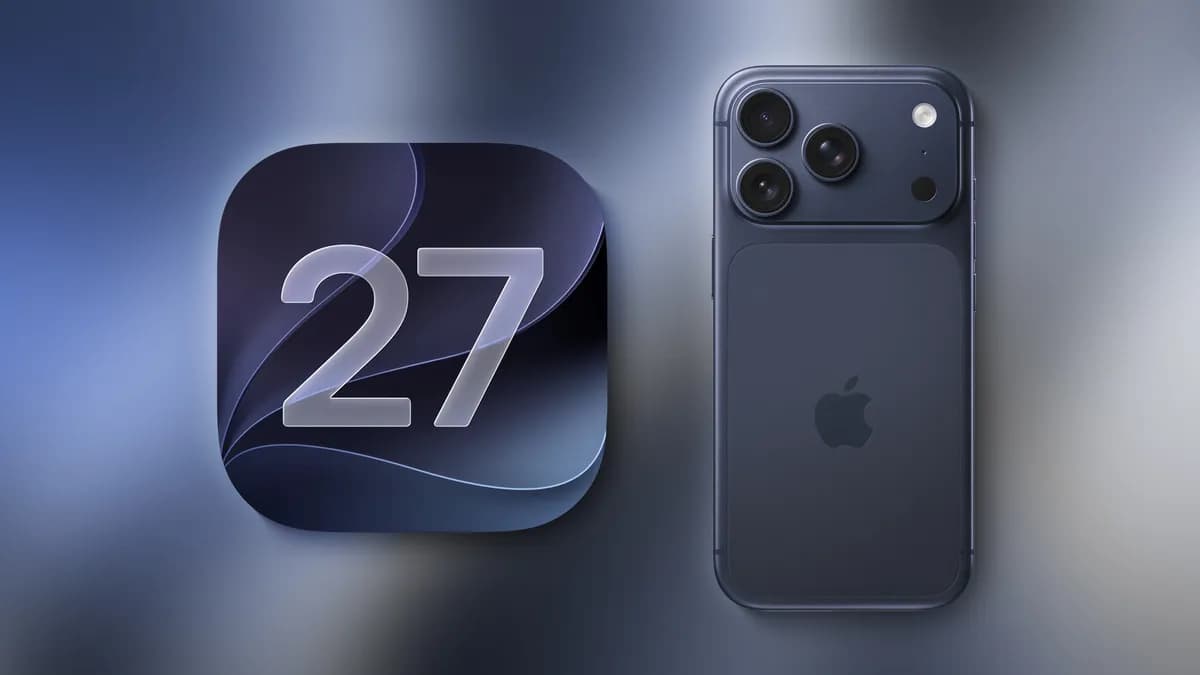
Apple dropped a version number on Monday and, in doing so, confirmed what the rumor community has suspected for weeks: the company's first foldable iPhone is real, it's called the iPhone Duo, and it's arriving in October.
When Apple published the first iOS 27 point release beta, developers and beta testers expected iOS 27.1. What they received instead was iOS 27.2. That single skipped number speaks louder than any press release.
Why Apple Jumped Straight to iOS 27.2 Beta
On September 16, Apple seeded the inaugural beta of iOS 27.2, bypassing iOS 27.1 entirely. The reasoning is straightforward once you understand how Apple manages software branches ahead of a major hardware launch. The company has already confirmed — at least implicitly through this numbering decision — that iOS 27.1 is reserved for the iPhone Duo's October debut.
Apple's strategy here is not new, but it is rarely this legible. By holding iOS 27.1 back entirely, Apple prevents developers and researchers from sifting through a public beta's code for strings, assets, or framework references that might reveal hardware specifications, display configurations, or hinge mechanics of an unannounced device. Releasing iOS 27.2 first creates a clean staging environment: developers get incremental improvements, the press gets features to write about, and the iPhone Duo's specific software stack stays locked behind closed doors.
This approach reflects a broader pattern in how Apple uses its software supply chain as a product secrecy mechanism. The company tightly controls what surfaces in public builds, and version branching is one of the cleanest tools available for that purpose. Developers analyzing the iOS 27.2 beta will find incremental refinements. They will not find the foldable's folding animations, multi-panel layout APIs, or display continuity logic — because none of that code is in this build.
What's New in the iOS 27.2 Beta

Despite being a deliberate distraction from the iPhone Duo, iOS 27.2 carries a meaningful feature set. The most significant addition is the redesigned Health app, which Apple first demonstrated publicly at its September iPhone event. Beyond Health, the beta introduces new language support for Siri's AI capabilities and a collection of smaller quality-of-life improvements.
Read next iPhone Duo's Hidden Fake Bezel Setting ExplainedThe Siri language expansion is notable given Apple's stated ambition to broaden its on-device AI to non-English markets. Adding language support in a point release rather than waiting for a major version signals that Apple is treating AI language availability as an ongoing rollout rather than a once-a-year event tied to major OS launches.
The beta also includes updates to Call Context features, building on Apple's existing intelligence tools for surfacing relevant information during and around phone calls. The specifics of this expansion were partially detailed in Apple's release notes accompanying the beta seed.
Health Age Feature: What It Measures and How It Works

The redesigned Health app is the headliner of iOS 27.2, and it represents the most significant structural overhaul the app has received since its introduction in iOS 8. Apple organized the new version around three primary tabs: Insights, Longevity, and Browse.
Insights functions as a dashboard for your most current health data. Open the tab and you see a prioritized view of vitals, sleep score, heart rate, and Activity Rings — the metrics most likely to be actionable right now. The design philosophy here mirrors what Apple has been moving toward for years: reducing the cognitive load of interpreting health data by surfacing what matters most at any given moment.
Longevity is the more ambitious tab. It presents health information across extended timeframes and introduces Health Age, a composite metric that translates your physiological data into an estimated biological age. The calculation draws on activity level, VO2 max, sleep duration, and additional inputs from connected devices and app-based assessments. A person who exercises consistently, sleeps well, and maintains high cardiovascular fitness could plausibly see a Health Age younger than their chronological age — and vice versa.
The mechanism Apple uses to gather this data is worth examining closely. Health Age relies on in-app assessments that use the iPhone's camera directly, without requiring any additional hardware. Through the camera, users can complete assessments measuring flexibility, strength, balance, and VO2 max. Apple has not published the full methodology behind these camera-based measurements, but the approach follows published research in remote photoplethysmography and computer vision-assisted fitness evaluation, areas that have matured considerably over the past five years.
One significant caveat: the revamped Health app and its Health Age feature are available exclusively in U.S. English at launch. International users and non-English speakers on U.S. devices will not have access to the new interface in this beta cycle. Apple's decision to gate the rollout geographically and linguistically is consistent with how it has handled previous health feature launches, including the initial rollout of irregular heart rhythm notifications and blood oxygen monitoring.
The Health app also carries a new icon, a subtle but visible signal that Apple considers this redesign a generational update rather than a minor refresh.
What to Expect When iPhone Duo Launches in October
The iPhone Duo — Apple's first foldable iPhone, expected to launch in October — will ship with iOS 27.1 as its base operating system. That version remains entirely unpublished in any beta channel, which means the software experience Apple intends for the device has not yet been scrutinized by external developers.
Based on what the broader industry knows about foldable form factors, iOS 27.1 will almost certainly include adaptive layout logic for the device's folding display, continuity behaviors for apps moving between the device's inner and outer screens, and hinge-aware multitasking modes. None of these have been confirmed by Apple. The absence of iOS 27.1 from the public beta track is precisely why.
When the iPhone Duo ships, it is expected to arrive with a software experience tailored specifically to its hardware — not a modified version of the standard iPhone interface, but a native foldable experience built from the ground up within iOS 27.1's codebase.
Apple's Version Numbering as a Secrecy Tool
Apple's history of using version branching to protect unreleased hardware code is well documented within the developer community, even if it rarely surfaces in mainstream coverage. The company has employed similar techniques ahead of Apple Watch launches, new iPad Pro generations with novel accessory support, and iPhone models with hardware features that required pre-staging software infrastructure before announcement.
The key principle is code isolation. By assigning unreleased hardware to a specific point version, Apple can manage what reaches public betas with surgical precision. The iOS 27.2 beta is a production-quality build designed for general iPhone users. iOS 27.1, by contrast, is being developed in parallel and will ship simultaneously with the iPhone Duo — at which point the version numbers will effectively merge back into a single public release track.
This version gap also serves a second purpose: it signals to the developer community that something is coming. Any experienced iOS developer who noticed the jump from 27.0 to 27.2 understood immediately what it meant. The gap is not a mistake. It is a deliberate message to people who know how to read it.
Key Takeaways for Apple Watchers
Three things worth tracking going forward. First, the absence of iOS 27.1 from any public beta channel is the strongest signal yet that the iPhone Duo's October launch is on schedule. If Apple missed the window, there would be less reason to hold the version back.
Second, the Health app redesign debuted in iOS 27.2 is a genuine addition to the platform's health capabilities. Health Age, camera-based fitness assessments, and the Longevity tab represent a meaningful expansion of what the iPhone can measure and communicate about your physical condition. The U.S. English-only restriction will frustrate international users, but Apple's pattern suggests broader language support follows within one to two subsequent point releases.
Third, and most broadly: Apple skipped iOS 27.1 in public because hiding hardware code inside a software build is harder than simply not releasing the build at all. For a company that has spent a decade building one of the most disciplined product secrecy operations in the technology industry, that discipline extends all the way down to version number sequencing. The foldable iPhone is coming. The software that ships with it is ready. And Apple will release iOS 27.1 exactly when it intends to — not a moment before.