Warren Buffett Steps Down as Berkshire Hathaway Chairman After 60 Years
On September 18, 2026, Berkshire Hathaway confirmed that Warren Buffett would relinquish his role as chairman of the board — a position he has held for roughly six decades. Howard Buffett, his son, will succeed him as chairman. Warren Buffett will not disappear from the company's governance structure entirely; he retains a seat on the board and assumes the title of chairman emeritus.
The transition marks the formal separation of the two roles Buffett long embodied simultaneously — chief executive officer, a post he stepped back from in 2021 when Greg Abel was named CEO-designate, and now chairman. With this move, the final symbolic and structural link between the Buffett era and the day-to-day stewardship of the conglomerate begins its formal unwinding.
Berkshire Hathaway ranks among the five largest companies in the United States by total assets and has periodically held the title of the most valuable publicly traded company by market capitalization in the country. Its Class A shares, which traded above $300,000 each as recently as early 2024, have long been one of the most expensive individual equity instruments in American markets. The scale of what Buffett built — and what his successors now inherit — is difficult to overstate.
Howard Buffett Takes the Chair: Who Is Berkshire's New Chairman?
Howard Buffett, 71, is a farmer, photographer, and philanthropist with a long-running commitment to food security initiatives. He served on Berkshire's board for decades and has been a public figure in his own right, largely independent of the financial world his father inhabited. His appointment as chairman is not a surprise to close observers of the company; Buffett himself signaled years ago that Howard would take on the non-executive chair role specifically to serve as a guardian of Berkshire's culture rather than as a strategic or operational leader.
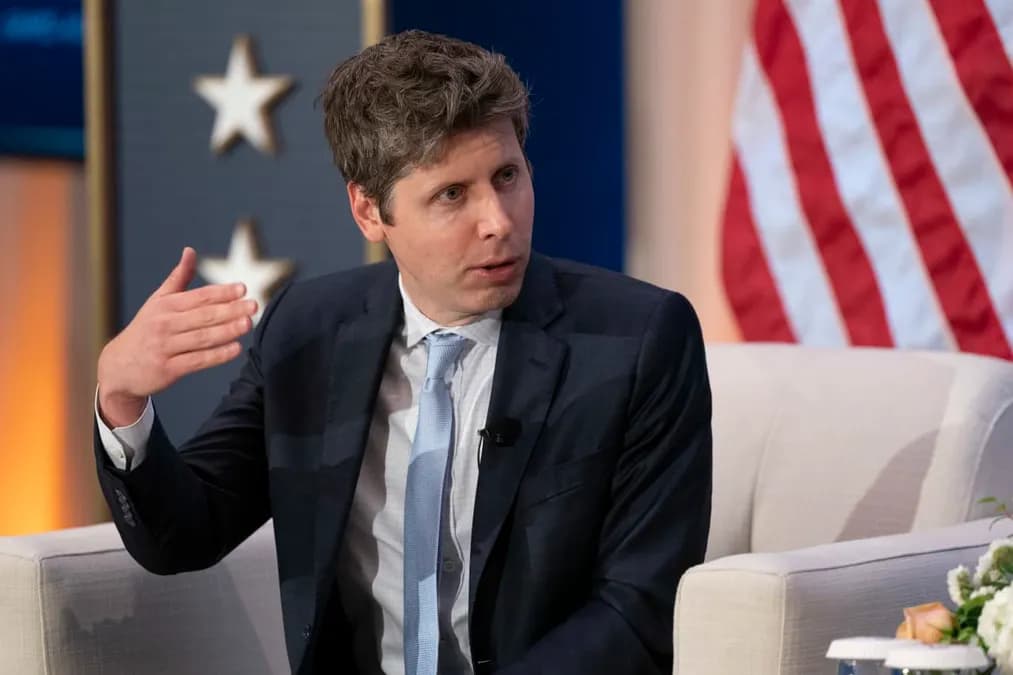
Read next Altman: OpenAI IPO 'Ill-Advised' in 2026 | AI ValuationsThat framing is central to understanding what the role is actually designed to do. Berkshire's governance model, in the post-Buffett configuration, places CEO Greg Abel in operational command. Howard Buffett's chairmanship is meant to provide board-level oversight and, perhaps more critically, continuity of the company's unusual corporate identity — one built on decentralized management, low bureaucracy, and long-term capital allocation principles.
This is a classic non-executive chairman structure, common among large British and European companies but less standard in American corporate governance, where combined chair-CEO roles remained the norm until institutional investor pressure began changing board compositions in the 2010s. The Council of Institutional Investors has for years advocated for independent board chairs as a check on executive power. Howard Buffett is not independent in the traditional sense — he is a family member of the company's controlling shareholder — but the structural separation from the CEO function is consistent with governance reform trends.
Six Decades of Warren Buffett's Stewardship: A Financial Legacy
Buffett assumed effective control of Berkshire Hathaway in the mid-1960s, when it was a struggling New England textile manufacturer. Over roughly 60 years, he transformed it into a diversified conglomerate whose wholly owned subsidiaries span insurance (GEICO, General Re), railroads (BNSF), energy (Berkshire Hathaway Energy), manufacturing, retail, and services. The company also maintains an equity portfolio that has included multi-decade holdings in American Express, Coca-Cola, and, more recently, Apple — a position that at its peak accounted for roughly 40 percent of Berkshire's public equity portfolio by value.
The compound annual growth in Berkshire's book value per share over the decades Buffett ran the company has far outpaced the S&P 500. While precise figures vary depending on the time horizon, Berkshire's long-term performance against the index has been a benchmark cited in virtually every serious treatment of active versus passive investing strategies.
The textile business Buffett originally acquired is long gone, unwound as uncompetitive decades ago. That decision — to acknowledge a failing legacy operation and reallocate capital rather than protect it — became emblematic of the managerial philosophy Buffett propagated through his annual shareholder letters, which themselves became required reading at business schools worldwide.
What Changes — and What Stays the Same — at Berkshire Hathaway
The operational structure of Berkshire Hathaway does not change with this announcement. Greg Abel, named vice chairman of non-insurance operations in 2018 and widely identified as Buffett's preferred successor in subsequent years, continues as CEO. Ajit Jain, vice chairman of insurance operations, retains his role overseeing the reinsurance and primary insurance businesses that generate much of Berkshire's float — the low-cost capital that funds its investment portfolio.
What shifts is symbolic authority and board-level dynamics. Warren Buffett's presence as chairman emeritus preserves a line of continuity without concentrating authority back in a single figure. It is a structure used by other institutions navigating founder transitions; JPMorgan Chase, for instance, has discussed CEO succession frameworks that separate the chair role, and several S&P 500 companies have installed emeritus structures to manage stakeholder expectations during transitions.
The deeper question is whether Berkshire's acquisition pipeline — historically driven by Buffett's personal relationships with business owners who preferred selling to Berkshire precisely because of its cultural promises — will function as effectively without him as the visible face of those guarantees. That is less a governance question than a franchise value question.
Investor Reaction and Market Implications of the Leadership Shift
Large-scale leadership transitions at conglomerates have historically produced mixed near-term market responses. When Jack Welch handed General Electric to Jeff Immelt in 2001, GE's stock held relatively stable in the immediate weeks, though the company's subsequent trajectory — including significant underperformance compared to the S&P 500 across the following decade — reflected strategic decisions made under new leadership rather than the transition itself. The lesson markets have generally internalized is that succession events are less predictive of short-term price movement than they are of longer-term strategic drift.
Berkshire's shareholder base is unusual. A large proportion of Class A shareholders are long-term holders who bought into the company as a vehicle for Buffett's capital allocation skill. Some of those shareholders may reassess the thesis over time as the post-Buffett era becomes concrete rather than hypothetical. Institutional holders — pension funds, endowments, index funds that hold Berkshire as part of broad market exposure — are less likely to react to governance changes that do not alter earnings expectations.
Analyst commentary following leadership transitions at companies of Berkshire's scale typically focuses on three variables: whether acquisition discipline is maintained, whether the investment portfolio is managed conservatively, and whether the insurance operations sustain their underwriting profitability. None of those factors are directly altered by a chair transition.
What Comes Next for Berkshire Hathaway as a Conglomerate
The structural question facing Berkshire over the next decade predates this announcement and is not resolved by it. The company has accumulated a cash position that, by late 2024, exceeded $300 billion — a sum reflecting Buffett's stated difficulty finding acquisitions at prices he considered attractive. Whether Greg Abel deploys that capital aggressively, continues to hold it, or returns more of it to shareholders via buybacks will define Berkshire's next chapter more concretely than any board reorganization.
The conglomerate model itself has faced persistent skepticism from activist investors and academic finance for decades. The prevailing critique holds that diversified conglomerates trade at a discount to the sum of their parts — the so-called conglomerate discount — and that shareholders would be better served by focused businesses. Berkshire has largely defied that argument empirically, but the defiance has been personal: rooted in Buffett's reputation, his relationships with subsidiary managers, and the willingness of those managers to operate with unusual autonomy under his watch.
Howard Buffett's chairmanship and Greg Abel's CEO tenure will be evaluated on whether those cultural attributes survive the founder's formal step back. Warren Buffett remains on the board and retains the chairman emeritus title. That continuity, however reduced in formal authority, is clearly intentional — a signal to subsidiaries, shareholders, and prospective sellers that the values underwriting Berkshire's 60-year record remain operative.
Whether markets ultimately accept that signal as equivalent to the original is a question this transition has opened, not answered.
Source: WSJ.com: Markets