Warren Buffett Steps Down as Berkshire Hathaway Chairman After 60 Years
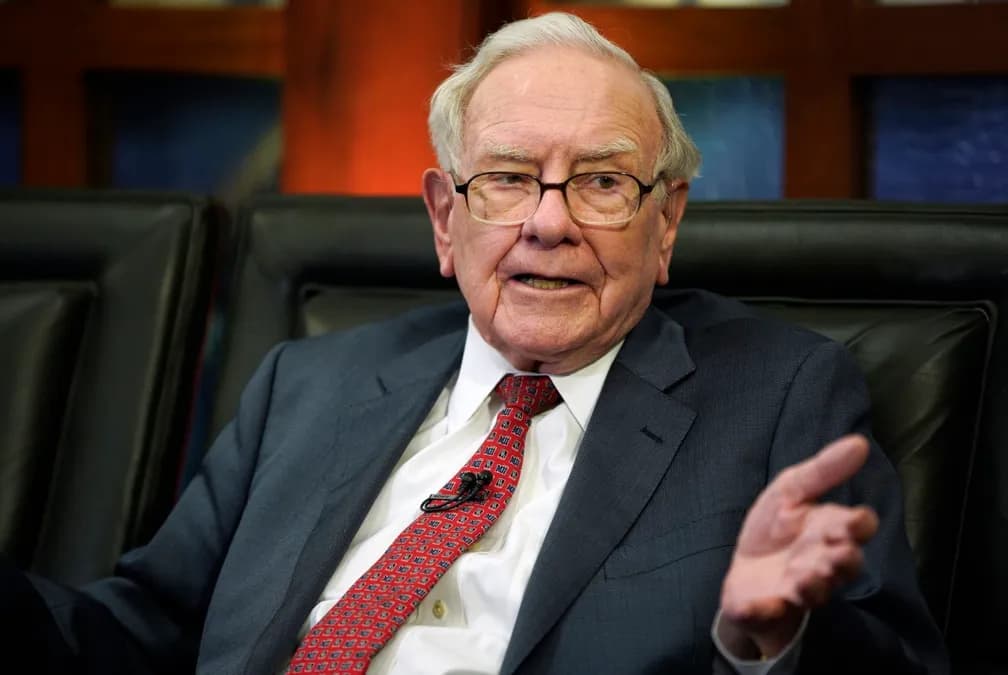
Warren Buffett steps down as Berkshire Hathaway chairman, ending a tenure of more than six decades in a transition that ranks among the most consequential leadership changes in American corporate history. His son Howard Buffett will assume the chairmanship, while the elder Buffett remains on the board and assumes the title of chairman emeritus.
The announcement, made public in September 2026, closes a chapter that began when Warren Buffett first acquired a controlling stake in Berkshire Hathaway in 1965. At that point, the company was a struggling New England textile manufacturer with dwindling competitive relevance. Over the following 61 years, Berkshire was transformed into one of the most diversified conglomerates on the planet, with a market capitalization that at various points exceeded $1 trillion — placing it among the five largest US companies by that measure. The compounding of value across those decades remains one of the most studied cases in modern finance.
This transition is deliberate and carefully staged. It is entirely consistent with how Buffett has handled virtually every major move at Berkshire: methodically, transparently, and with long-term institutional continuity as the primary objective.
Howard Buffett Takes the Chair: Who Is Berkshire's New Chairman?
Howard Buffett is not a Wall Street figure. A farmer, photographer, and humanitarian whose public profile has been shaped far more by agricultural development work in sub-Saharan Africa than by financial analysis, he has nonetheless served on Berkshire's board for decades. He is, explicitly, a non-executive chairman — a steward of oversight and governance, not an operator.
Read next Altman: OpenAI IPO 'Ill-Advised' in 2026 | AI ValuationsThat distinction matters considerably. The chairman's role at Berkshire, as currently constructed, does not involve directing capital allocation or managing subsidiaries. Those responsibilities fall to the chief executive. Howard's appointment signals continuity in governance culture, not an operational pivot. His father reportedly chose him in part because Howard would resist external pressure to alter the company's foundational character.
Howard Buffett's long board tenure means he understands the informal norms governing Berkshire as much as any written charter — the preference for decentralized management, the resistance to activist shareholders, the emphasis on long holding horizons and owner-operator incentive structures. Those values are unlikely to erode under his watch.
The Structure of Power at Berkshire After the Handover
Berkshire's governance after this transition rests on a clear three-part structure. Howard Buffett chairs the board. The chief executive manages operating businesses and capital allocation. Warren Buffett, as chairman emeritus and continuing board member, retains meaningful influence without holding formal executive authority.
Corporate governance researchers have written extensively about non-executive chairman arrangements in large conglomerates. At companies of Berkshire's scale, the role functions primarily as a check on management, a convener of the board, and an institutional stabilizer during periods of stress. When that chairman carries the Buffett name and spent three decades on the board before assuming the role, the reputational weight is substantial.
The chairman-emeritus designation is comparatively rare at companies of Berkshire's size and complexity. It typically preserves institutional memory, signals to shareholders that a founder's philosophy remains embedded in the governance framework, and avoids the ambiguity of unclear authority lines. At Berkshire — where so much of the brand equity is inseparable from Warren Buffett's judgment and reputation — the emeritus structure sends a clear message to the market: the underlying philosophy endures.
Institutional investors and governance analysts have observed that structured handovers of this kind, which separate the chairman and CEO roles while retaining a founder in an advisory capacity, tend to reduce short-term volatility around succession compared with abrupt or unplanned departures.
What This Means for Berkshire Hathaway Investors and the Conglomerate's Direction
Berkshire shareholders hold stakes in one of the most diversified enterprises in financial history. Insurance operations, railroad assets, energy utilities, manufacturing businesses, consumer brands, and a large public equities portfolio collectively form the enterprise. That diversification has always been central to the company's resilience across market cycles.
The primary implication of Warren Buffett stepping down as Berkshire Hathaway chairman is a question of identity more than of immediate operations. Capital allocation, acquisition criteria, subsidiary management — these functions continue under established leadership. What changes is the symbolic architecture of the company.
Markets have historically priced succession uncertainty into conglomerate valuations. Berkshire is no exception, but it benefits from roughly two decades of deliberate preparation. The company was intentionally structured to function without reliance on any single person's daily involvement. Operating subsidiaries are run by managers who have often been in place for a decade or more. There is no centralized committee requiring Buffett's sign-off on routine decisions.
For long-term shareholders, the sharper question is whether the capital allocation philosophy — the patience, discipline, preference for durable businesses with pricing power, and reluctance to overpay regardless of market enthusiasm — survives intact. Nothing in this transition announcement suggests a departure from that framework. The machinery is in place. The open question is whether it runs with the same calibration in the decades ahead.
Buffett's Enduring Influence: Board Seat and Emeritus Status
Staying on the board and holding the chairman-emeritus title, Warren Buffett does not simply recede. Board membership carries real governance weight: voting on major transactions, evaluating management, and weighing in on extraordinary corporate decisions. Emeritus status adds institutional standing without creating a competing power center that could muddy accountability.
This structure mirrors arrangements at other long-tenured, founder-led enterprises when the founder steps back but retains strong institutional credibility. When executed well, it provides a transition path that preserves institutional memory without preventing new leadership from exercising genuine authority. The acknowledged risk in governance literature is that a highly influential emeritus can inadvertently discourage the successor team from departing from prior strategy when conditions change.
Buffett's track record suggests awareness of that tension. His public communications have consistently stressed trusting capable managers, decentralizing authority, and avoiding the micromanagement that erodes accountability.
The Road Ahead: Can Berkshire Maintain Its Identity Without Buffett at the Helm?
No one can answer that with certainty. What is observable is the institutional architecture Buffett spent decades constructing.
The subsidiaries are largely autonomous, run by managers who operate under clear mandates with minimal interference. The investment portfolio reflects a coherent philosophy articulated across six decades of shareholder letters. The management bench was assembled with explicit succession planning in mind. The governance framework now separates the chairman and CEO roles in a manner consistent with established best practices for diversified conglomerates.
What Berkshire cannot replicate is Warren Buffett's personal reputation — the credibility that allowed him to close acquisitions on a handshake, attract exceptional operators without elaborate contracts, and hold steady through market crises when others capitulated. That is not transferable. It was built over 61 years and belongs to the individual.
Howard Buffett and the broader Berkshire leadership team inherit a formidable institution. Whether it can compound value at historical rates, attract the next generation of exceptional businesses, and sustain the trust of its shareholder base over the coming decades is the defining question. The transition announced in September 2026 sets the terms of that test. The verdict will take years to arrive.
Source: WSJ.com: Markets