Warren Buffett Steps Down as Berkshire Hathaway Chairman After 60 Years
Warren Buffett steps down as Berkshire Hathaway chairman after more than six decades guiding a conglomerate that transformed from a struggling New England textile company into one of the largest corporations on earth. The Wall Street Journal reported the transition on September 18, 2026: Howard Buffett, Warren's son, will assume the chairmanship, while the elder Buffett remains on the board with the title of chairman emeritus.
The scale of what is changing hands demands context. Berkshire Hathaway's Class A shares have traded above $600,000 in recent years, reflecting a market capitalization approaching $1 trillion. For a diversified holding company anchored in insurance float, railroads, energy infrastructure, and consumer brands rather than software or semiconductors, that valuation is remarkable. The transition now underway involves not just a board title but the stewardship of a deeply idiosyncratic institution.
Buffett's tenure as chairman spans roughly sixty years. Few executives in American business history have led a single institution for a comparable period. Separating the man from the enterprise is the central challenge of everything that follows.
Howard Buffett Takes the Chair: Who Is Berkshire's New Chairman?
Howard Buffett, 71, is a farmer, photographer, and humanitarian who has served on Berkshire's board for years. His career stands apart from Wall Street. He has no background in capital allocation, insurance underwriting, or merger negotiation.
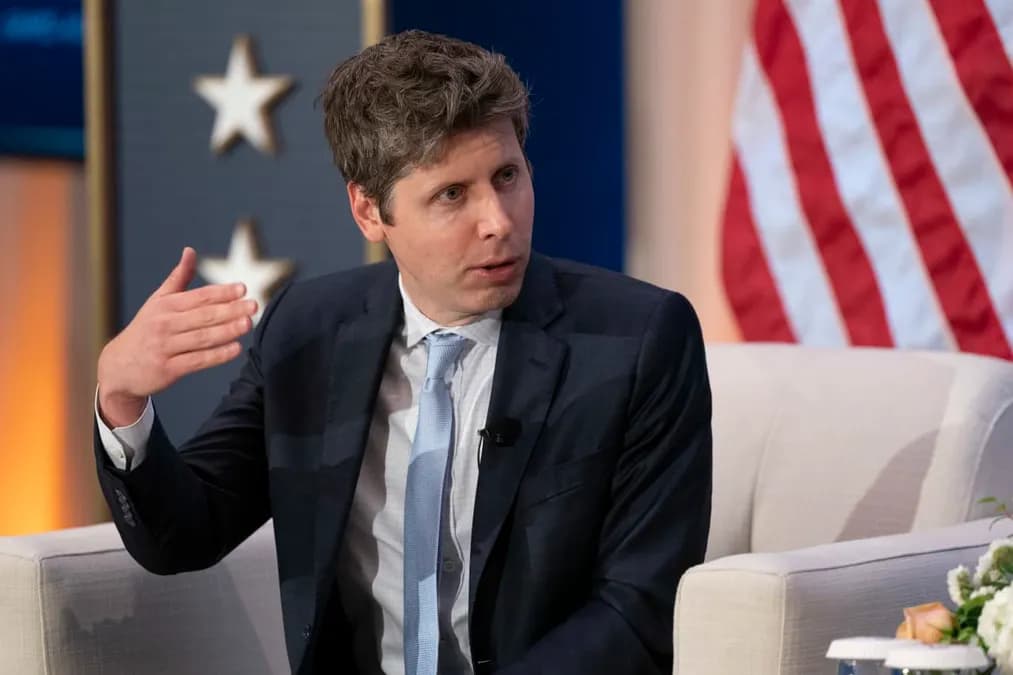
Read next Altman: OpenAI IPO 'Ill-Advised' in 2026 | AI ValuationsThat is by design. Warren Buffett has articulated publicly that Howard's role is cultural and protective rather than operational. The chairman in this model does not manage businesses, approve acquisitions, or set investment strategy. Operating authority rests with Greg Abel, named Berkshire's CEO-in-waiting in 2021. Howard's mandate is to preserve the company's values and independence — to be, in effect, a constitutional steward rather than an executive decision-maker.
This positions him firmly as a non-executive chairman. The distinction matters: a non-executive chairman provides board-level oversight without involvement in daily operations, whereas an executive chairman exercises real strategic authority alongside management. For six decades Berkshire combined both functions in a single person. The transition separates them for the first time.
Berkshire Hathaway's Governance Structure After the Handover

The post-transition structure is tripartite: Abel runs operations, Howard leads the board, and Warren remains present as emeritus. That arrangement aligns more closely with standard institutional governance preferences than Berkshire's previous combined model.
Proxy advisory firms including Institutional Shareholder Services have long recommended separating board and executive roles, citing accountability and risk management rationale. Large institutional shareholders — pension funds, endowments, sovereign wealth funds — have similarly pressed for independent chair structures at major public companies. For years Berkshire's combined model was treated as a tolerated exception, justified by Buffett's singular track record. That exception no longer applies.
Whether Howard's non-executive role introduces genuine independent oversight or remains largely ceremonial is a question institutional investors will parse carefully. The answer depends on board composition, culture, and willingness to challenge management — dimensions that rarely change quickly in founder-influenced companies.
Investor Reaction and Market Implications
Succession at founder-led institutions follows patterns worth studying. When Jack Welch retired as GE's chairman and CEO in 2001, his successor Jeff Immelt inherited a complex conglomerate that spent the following decade struggling under its own structural weight. The lesson is consistent: leadership transitions can expose organizational vulnerabilities that strong founders quietly absorb.
Apple's experience was different. When Steve Jobs resigned as CEO in 2011, Tim Cook — an operational executive with deep institutional knowledge — maintained Apple's growth trajectory through disciplined execution. Apple's market capitalization has grown substantially since that handoff, a data point frequently cited when analysts argue that founder dependency is often overstated.
Berkshire sits closer to GE's structural complexity. Hundreds of subsidiaries, massive insurance operations, and a significant publicly traded equity portfolio. Yet its decentralized design — subsidiaries run independently with minimal intervention from Omaha headquarters — reduces single-point-of-failure risk. GEICO does not need a chairman's guidance to underwrite policies. BNSF Railway does not require board approval to manage freight operations.
Near-term market reaction will likely reflect confidence in that structural durability. Longer-term scrutiny will focus on Abel's capital allocation decisions across a full market cycle.
The Berkshire Hathaway Empire: What the Next Chapter Could Look Like
The most consequential variable for Berkshire's future is not who chairs the board. It is whether the capital allocation philosophy that drove decades of compounding survives intact.
Greg Abel's background is in energy and infrastructure management. His record running Berkshire Hathaway Energy is strong. His record deploying capital at the scale Buffett operated — multibillion-dollar equity purchases, large acquisitions of private businesses — has not yet been tested publicly over a full market cycle.
The structural advantages that made Berkshire exceptional are largely institutional: insurance float that funds investments at low cost, a reputation that attracts motivated sellers, a decentralized culture that retains operating managers. Those advantages persist regardless of who holds the chairman title.
What does not automatically transfer is Buffett's informal authority. The call that gets returned immediately. The deal closed on a handshake. The seller who accepts a lower price for the certainty of Berkshire's permanent ownership model. That reputational gravity accumulated over sixty years. It does not transfer by board resolution.
Key Takeaways for Long-Term Berkshire Shareholders
Several practical considerations apply for investors holding Class A or Class B shares.
The governance transition is structurally complete. Abel holds operating authority. Howard takes the board chair. Warren remains connected as chairman emeritus. The case for continuity is credible and coherent.
The non-executive chairman model is consistent with institutional governance standards. Shareholders who previously flagged Berkshire's combined structure as a governance concern may view this change as a meaningful improvement.
Berkshire's decentralized operating model limits succession risk at the portfolio level. The subsidiaries function independently by design. Capital allocation at the holding company level is the variable that warrants sustained scrutiny in coming years.
The chairman transition does not resolve Berkshire's persistent conglomerate discount — the gap between its traded price and the sum of underlying assets. Structural questions about whether the holding company form remains optimal will intensify as the Buffett era gradually recedes.
Warren Buffett steps down as Berkshire Hathaway chairman with a record that defines what disciplined, long-horizon investing can produce across multiple decades and market cycles. The institution he leaves behind is formidable. Whether it sustains that standard across a leadership generation without his presence is the question investors and analysts will be answering for years to come.
Source: WSJ.com: Markets