Warren Buffett Steps Down as Berkshire Hathaway Chairman After 60 Years
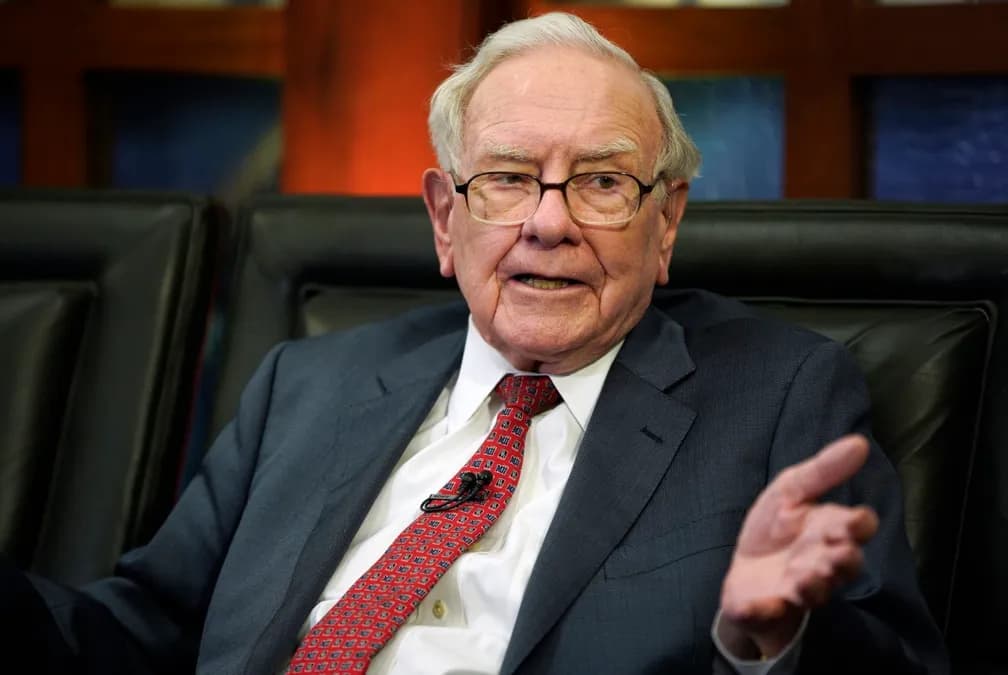
When Warren Buffett first assumed control of a struggling New England textile company called Berkshire Hathaway in 1965, shares traded for roughly $19 apiece. More than six decades later, a single Class A share commands a price north of $700,000, and the company's market capitalization has surpassed $1 trillion — a figure that encompasses everything from a major U.S. railroad to one of the country's largest insurance operations. That extraordinary arc makes the announcement that Warren Buffett Steps Down as Berkshire Hathaway chairman among the most consequential corporate governance stories of this generation.
Buffett, now 95 years old, will be succeeded in the chairman's role by his son Howard Buffett. The elder Buffett will not disappear from the institution he built. He will remain on the board and assume the title of chairman emeritus — a designation that keeps him formally connected to Berkshire's governance structure while formally transferring the board leadership responsibilities he has held for so long.
The transition closes a chapter that has no real parallel in modern American corporate history. No single individual has dominated a major public company's identity, culture, and capital allocation philosophy with the consistency or duration that Buffett has at Berkshire. Understanding what changes — and crucially, what does not — requires separating the symbolic from the structural.
Howard Buffett: The Man Taking the Chairman's Seat
Howard Buffett, 70, is not a stranger to Berkshire Hathaway's boardroom. He has served as a director of the company for decades, giving him institutional familiarity with the conglomerate's unusual governance philosophy — one that prizes decentralization, long-term thinking, and minimal bureaucratic friction. His professional background diverges sharply from his father's: Howard has spent much of his adult life focused on agriculture, humanitarian work, and philanthropy, running the Howard G. Buffett Foundation, which concentrates on global food security and conflict prevention.
Read next Altman: OpenAI IPO 'Ill-Advised' in 2026 | AI ValuationsThat background raises immediate questions from governance observers. The chairman's role at Berkshire carries board oversight responsibility — setting the agenda, presiding over board meetings, and serving as a check on executive management. It does not involve day-to-day operational decisions, which fall to the chief executive. Greg Abel, who was publicly designated as Warren Buffett's successor in the CEO role, retains operational leadership of the conglomerate's sprawling portfolio of businesses.
Howard Buffett's selection signals that Warren Buffett's intent is continuity of culture rather than a shift in strategic direction. By placing a family member in the chairman's seat, the elder Buffett is making a statement about values preservation — a priority he has articulated publicly for years when discussing succession.
Warren Buffett's Continuing Role as Chairman Emeritus
The chairman emeritus title is neither honorary nor inconsequential. It is, however, deliberately ambiguous. Companies deploy the designation in different ways: some emeritus chairs retain meaningful informal influence over board deliberations; others become ceremonial figures consulted occasionally on legacy matters.
Corporate governance researchers at institutions including the Harvard Law School Forum on Corporate Governance have noted that the practical authority of a chairman emeritus depends heavily on the individual's relationship with the sitting board and management, the company's ownership structure, and whether the individual controls a significant voting block. Berkshire Hathaway operates with a dual-class share structure, and Buffett's ownership stake has historically given him voting power that no title revision can fully remove.
This matters for institutional investors parsing what the transition actually means. The formal transfer of the chairman title to Howard Buffett does not automatically shift the center of gravity in Berkshire's boardroom. So long as Warren Buffett retains his shares and his seat, his views will carry weight — with or without the chairman designation.
What the change does accomplish is establishing the architecture for a post-Buffett Berkshire. By stepping down from the chair while remaining present, Buffett is threading a careful needle: signaling a genuine transition without creating the abrupt governance vacuum that markets often punish.
What This Transition Means for Berkshire Hathaway's Future
Berkshire Hathaway is structurally unlike most large conglomerates. Its operating model depends heavily on the capital allocation instincts at the top, its decentralized management philosophy, and the trust that subsidiary managers place in Omaha's headquarters to leave them alone. That trust has historically been inseparable from Warren Buffett's personal credibility.
Comparable family-driven governance transitions offer instructive — if imperfect — analogies. At Ford Motor Company, the Ford family has maintained board influence through a special class of shares for generations, allowing family members to occupy chairman roles while professional managers run operations. The Walton family at Walmart followed a similar pattern, with Rob Walton serving as board chairman for over two decades before passing the role to his son-in-law Greg Penner in 2015. In both cases, family oversight provided cultural continuity even as operational leadership professionalized.
Berkshire's situation differs in one critical respect: its subsidiaries operate with extraordinary independence, and its holding company structure does not require the kind of hands-on operational integration that Ford or Walmart's core businesses demand. The chairman's role at Berkshire is therefore primarily about tone, trust, and the board's relationship with a highly unusual CEO in Greg Abel — a professional manager inheriting a role defined by a singular personality.
What institutional investors will watch closely is capital allocation — specifically, whether Berkshire continues deploying cash at the disciplined pace Buffett established, and whether the tolerance for holding large cash reserves during periods of market uncertainty survives the transition. Those decisions are CEO-level calls, not chairman-level ones. But the board sets the culture that makes such patience possible.
The Broader Legacy: Six Decades of Buffett at the Helm
Sixty years of stewardship is, by any measure, an extraordinary span. The S&P 500 has returned approximately 10 percent annually over long historical periods. Berkshire Hathaway's per-share book value growth, tracked annually in Buffett's shareholder letters, has substantially outpaced that benchmark across most meaningful time horizons — a record that made those letters required reading not just for Berkshire shareholders but for anyone studying business and capital allocation.
The company that Buffett leaves as chairman spans industries that would have been unrecognizable to the textile workers who showed up for work in New Bedford in 1965. BNSF Railway is one of North America's largest freight networks. GEICO insures tens of millions of American drivers. Berkshire Hathaway Energy operates utilities serving customers across multiple states. The equity portfolio, managed through the insurance float Buffett identified as a structural advantage early in his tenure, has included historic positions in companies like Coca-Cola and American Express held for decades.
That portfolio was not assembled through financial engineering or acquisitions funded by debt. It was built by waiting — by deploying capital when others retreated and holding positions when others sold. That discipline is what the chairman emeritus will be asked, implicitly, to protect.
Key Takeaways for Investors Watching Berkshire Hathaway
The headline — Warren Buffett steps down as Berkshire Hathaway chairman — is accurate but requires careful interpretation before drawing investment conclusions.
The chairman role governs board oversight, not operations. Greg Abel runs the business. Howard Buffett's elevation to chairman represents a governance succession, not a strategic one. Warren Buffett's continued presence on the board and his substantial share ownership mean his voice remains in the room, even without the title.
Family-controlled governance transitions at major corporations do not, by themselves, signal deterioration. Ford, Walmart, and other long-lived family-influenced enterprises have demonstrated that professional management and family board oversight can coexist productively across multiple cycles.
The real test will unfold over years, not days. Berkshire's defining characteristic has always been patience — the willingness to act slowly, deliberately, and against the crowd. Whether that institutional temperament survives its architect's step back from the formal leadership role is the question no governance announcement can answer.
Investors would do well to watch what Berkshire does, not just what it says. In that respect, nothing has changed at all.
Source: WSJ.com: Markets