Warren Buffett Steps Down as Berkshire Hathaway Chairman After 60 Years
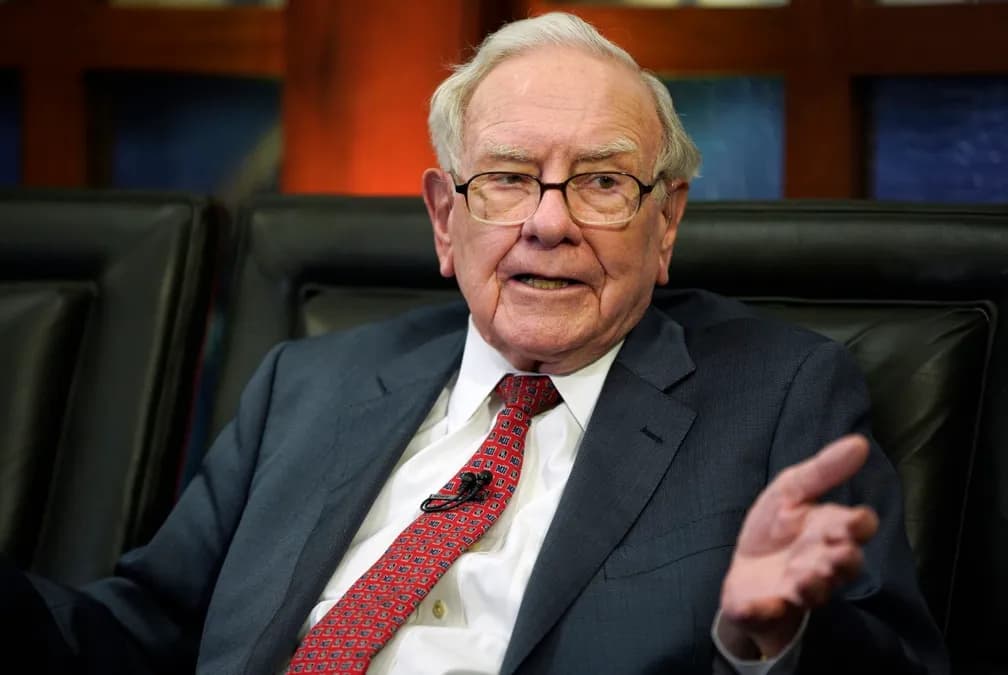
Warren Buffett Steps Down as Berkshire Hathaway chairman, ending a tenure stretching back more than six decades and closing one of the most consequential chapters in the history of American capitalism. His son, Howard Buffett, will succeed him in the role. The elder Buffett, now 96, will remain on the board and carry the title of chairman emeritus — present in name and counsel, but no longer holding the formal power of the chairmanship.
The announcement, reported by The Wall Street Journal in September 2026, lands at a moment when Berkshire Hathaway stands as one of the largest companies by market capitalization in the world. The change is not a sudden break. It is the final, formal step in a succession process that leadership has been engineering for years — deliberately, methodically, and in full public view. The markets and governance analysts knew this day was coming. The question now is what Berkshire looks like when the man who built it no longer sits at the head of the boardroom table.
Howard Buffett Takes the Chair: Who Is He and What Can Investors Expect?

Howard Buffett is not a Wall Street figure. Born in 1954, he is a farmer, a photographer, and the founder of the Howard G. Buffett Foundation, a philanthropic organization focused on global food security and conflict mitigation. He has served on Berkshire's board since 1993, giving him more than three decades of familiarity with the conglomerate's culture and governance machinery. He is not, by background or design, an operator of businesses.
Read next Altman: OpenAI IPO 'Ill-Advised' in 2026 | AI ValuationsThat distinction matters. The chairman's role at Berkshire has historically been fused with the role of chief investment officer and chief executive — all of it concentrated in Warren Buffett. Under the new structure, Howard assumes the chairmanship while Greg Abel, Berkshire's Vice Chairman for Non-Insurance Operations, continues as the designated CEO successor and the executive responsible for day-to-day management of the enterprise.
Investors should expect Howard Buffett to serve primarily as a cultural steward — someone whose job is to preserve the institutional values Warren Buffett built, not to direct acquisitions or allocate capital. His father has spoken for years about the importance of keeping Berkshire's decentralized management philosophy intact long after his departure. Howard, whose connection to Berkshire is familial and philosophical rather than financial, is positioned to hold that line. The capital decisions will fall elsewhere.
Six Decades of Buffett at the Helm: A Legacy in Numbers
Few stewardship records in corporate history can match what Warren Buffett compiled at Berkshire Hathaway. From 1965 through 2023, Berkshire's per-share market value compounded at approximately 19.8 percent annually, compared with roughly 10.2 percent for the S&P 500 including dividends over the same period — a gap that, through the power of compounding, translates into extraordinary wealth creation. A single dollar invested in Berkshire at its 1965 baseline would have grown to more than $40,000 by 2023; the same dollar in the S&P 500 would have grown to roughly $300. The math is staggering.
Those figures, drawn from Berkshire's own annual letters to shareholders — some of the most widely read financial documents in existence — are not the result of leverage, exotic derivatives, or concentrated short-term bets. They reflect a disciplined, long-horizon approach to buying quality businesses at sensible prices and holding them, often indefinitely. That philosophy is now baked into Berkshire's culture and, by extension, its structure.
Buffett transformed a failing textile manufacturer into a $900 billion-plus conglomerate encompassing insurance (GEICO, General Re), railroads (BNSF), energy (Berkshire Hathaway Energy), manufacturing, retail, and an enormous publicly traded equity portfolio. The insurance float — premiums collected before claims are paid — became his preferred engine for funding investments at near-zero cost. It was an architectural insight that competitors struggled to replicate.
Berkshire Hathaway's Governance Structure After the Handover
The separation of the chairman and chief executive roles at Berkshire is, from a corporate governance standpoint, a textbook reform — and one that proxy advisory firms and institutional governance advocates have long recommended for companies of this scale.
At firms where a single individual holds both titles, board independence is harder to sustain in practice even when it exists on paper. A non-executive chairman — particularly one without an operating role — provides a structural check on management that pure independence policies alone cannot guarantee. ISS (Institutional Shareholder Services) and Glass Lewis, the two dominant proxy advisory firms, routinely flag combined chair-CEO structures as a governance risk at large-cap companies, recommending separation as a best practice.
Berkshire's new arrangement — Howard Buffett as non-executive chairman, Greg Abel as CEO, Warren Buffett as chairman emeritus and board member — more closely resembles the governance architecture that institutional investors have demanded across the S&P 500. That alignment may reduce a risk premium that some governance-focused funds had historically attached to Berkshire's highly concentrated control structure.
Greg Abel's appointment as CEO-designate was confirmed publicly in 2021, following comments by the late Charlie Munger. Since then, Abel has been integrating himself more visibly into Berkshire's operations, building relationships with the managers of its roughly 60 subsidiaries and shaping capital allocation decisions alongside Buffett. The transition is not a handover to a stranger.
Market Reaction and Investor Sentiment Around the Leadership Change
Markets hate uncertainty, and Berkshire has spent the better part of five years systematically removing as much of it as possible from this transition. The structured, sequenced nature of the announcement — Abel named first, Howard confirmed as chair, Warren staying on the board — was designed to send exactly one message: continuity.
Sophisticated institutional investors who hold BRK.A and BRK.B will scrutinize the capital allocation record under Abel's leadership far more than they will dwell on the ceremonial change at the chairman level. Berkshire ended 2023 holding approximately $168 billion in cash and U.S. Treasury bills — an unprecedented war chest that signals either extreme caution about valuations or preparation for a significant deployment. That decision, and those that follow it, will define Abel's tenure.
Retail investors, who hold Berkshire shares partly as a proxy for Buffett's judgment, may feel a more visceral reaction. The "Buffett premium" — an intangible valuation uplift attached to the belief that one specific mind is allocating the capital — has been debated by analysts for decades. Whether it erodes gradually under new leadership is an empirical question, not a foregone conclusion.
What Comes Next: Challenges and Opportunities for the Conglomerate
Berkshire's most pressing challenge is also its greatest opportunity: deploying capital at scale without sacrificing the return standards Buffett established. At the firm's current size, a $5 billion acquisition barely moves the needle. The universe of transactions large enough to matter is narrow, and competition from private equity — with its structural tolerance for leverage and shorter holding horizons — has made that universe more expensive.
Greg Abel's background is in operations, not in the insurance-and-investment alchemy that made Berkshire what it is. He is a capable manager of complex businesses. Whether he can replicate Buffett's instinct for valuation, or whether he will delegate that function to Todd Combs and Ted Weschler — the investment managers Buffett brought in to eventually manage the equity portfolio — remains one of the more consequential open questions in institutional finance.
The conglomerate's decentralized model is both its greatest strength and its most fragile inheritance. Buffett's genius was in knowing when not to intervene. Maintaining that discipline across 60-plus subsidiaries, without the founder's authority to enforce it through sheer reputation, will require either iron governance or a culture so deeply internalized that it operates without enforcement. Howard Buffett's stewardship of that culture, while Abel runs the businesses, is the bet the board has made.
For investors, the message is measured: this is a deliberate handover, not a rupture. The structure is sound, the capital base is formidable, and the succession was planned. What Berkshire becomes over the next decade will depend on decisions not yet made — but it enters this next era in better institutional shape than most companies its size ever manage when a founder finally steps aside.
Source: WSJ.com: Markets