The End of an Era: Buffett Steps Down After 60 Years
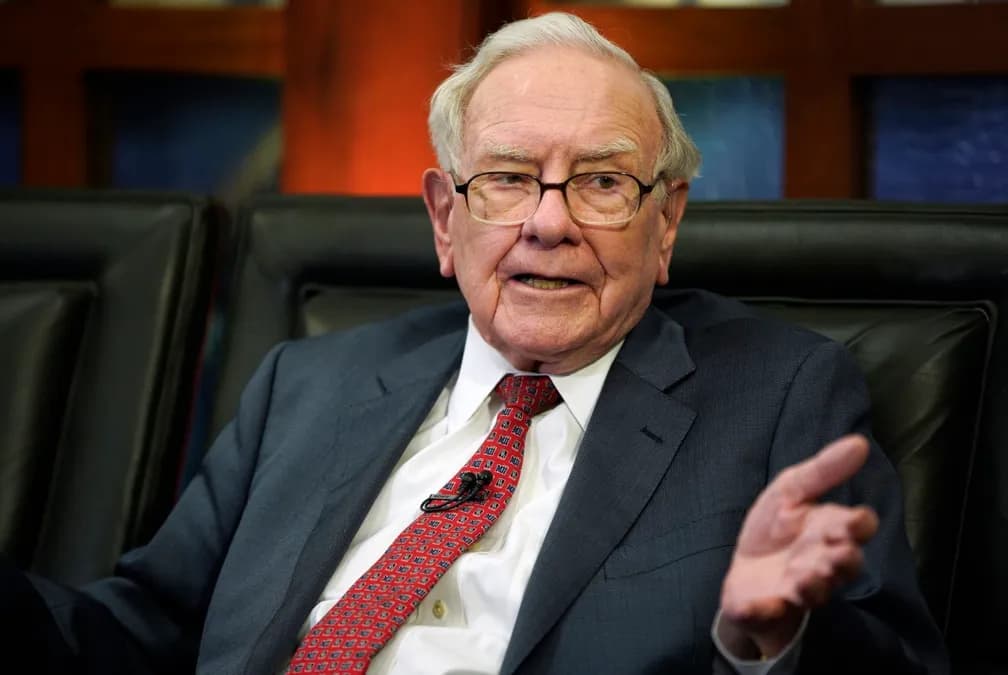
For roughly six decades, Warren Buffett's name and Berkshire Hathaway's boardroom have been synonymous. When Warren Buffett steps down as Berkshire Hathaway chairman — a transition formalized in September 2026 — it closes a governance chapter unlike anything in modern corporate history. His son Howard will assume the chairmanship, while the elder Buffett stays on the board under the designation of chairman emeritus, preserving a thread of continuity even as formal authority transfers.
Berkshire Hathaway ranks among the largest U.S. companies by market capitalization, a conglomerate whose sprawling holdings span insurance, railroads, energy, consumer goods, and a multi-hundred-billion-dollar public equity portfolio. Few corporate transitions anywhere in the world carry comparable weight with institutional investors, retail shareholders, and the wider market. The company's sheer scale means that even incremental governance changes attract scrutiny typically reserved for policy shifts at sovereign wealth funds or major central bank appointments.
The transition is not sudden. It is the final, deliberate step in a succession process Buffett has been signaling for years — unhurried, methodical, and consistent with the patient temperament that defined his tenure.
Who Is Howard Buffett and What Will He Do as Chairman
Howard Buffett is not a newcomer to Berkshire governance. Warren's eldest son has served on the company's board of directors for decades, giving him direct exposure to the firm's culture, its long-term capital allocation philosophy, and the low-intervention management style that defines Omaha's approach to running subsidiaries.
Read next Altman: OpenAI IPO 'Ill-Advised' in 2026 | AI ValuationsThe chairman role at Berkshire has always been structurally distinct from the operational CEO position. Under the post-transition structure, the chairman's primary responsibilities are board oversight, protecting shareholder interests, and ensuring that the culture Warren Buffett spent six decades building remains intact. Howard is not positioned as an operational executive directing day-to-day business; his mandate is custodial and fiduciary.
Corporate governance analysts have long emphasized the importance of formally separating the chairman and CEO roles at large, complex enterprises. When a single individual holds both titles — as Warren Buffett did for much of Berkshire's modern era — it concentrates influence in ways that can create blind spots on risk and limit independent board challenge. Howard's elevation formalizes that structural separation, a reform that institutional proxy advisory firms — including those that establish governance ratings for major index fund managers — have consistently advocated as a marker of board quality.
This is not merely symbolic. A chairman who is a Buffett carries both the surname's deep cultural authority and decades of board-level experience. That combination provides a degree of stabilizing continuity that a purely external chair appointment simply would not.
Warren Buffett's Role Going Forward as Chairman Emeritus

Chairman emeritus is a carefully calibrated designation. It preserves Buffett's presence on the board and keeps his counsel accessible to management and fellow directors, without placing him in the formal chain of governance authority. The title signals respect and institutional continuity; it does not carry voting power in the same executive capacity as an active chairman.
The arrangement echoes patterns seen at other founder-built institutions when legendary figures step back without disappearing entirely. For shareholders who prize Buffett's judgment on capital allocation and risk, the emeritus role offers concrete reassurance. His institutional knowledge — spanning commodity cycles, financial crises, technological disruptions, and regulatory overhauls across six decades — remains a board asset that money cannot simply replace.
What the emeritus designation accomplishes equally is clarity. Markets dislike ambiguity in succession. By defining Buffett's future role precisely, Berkshire removes the uncertainty that has plagued analogous transitions at other major conglomerates. The message to investors is structured and unambiguous: formal governance authority has transferred; cultural continuity is preserved.
What This Means for Berkshire Hathaway's Business and Investors
The businesses inside Berkshire do not change on the day a chairman steps down. GEICO still writes policies. BNSF still moves freight. The energy subsidiaries still operate regulated utilities. The equity portfolio continues to generate dividends and capital gains regardless of what name appears on the chairman line of the proxy statement.
For long-term investors, the chairman transition is less operationally significant than the earlier, already-announced CEO succession. When Berkshire confirmed that Greg Abel would assume operational leadership, that signal addressed the more fundamental question: who runs the machine? The chairmanship transfer announced in 2026 completes the formal governance architecture.
Comparative history provides useful perspective here. When Jack Welch passed the reins at General Electric to Jeff Immelt in 2001, the transition attracted intense scrutiny precisely because GE's culture was widely perceived as inseparable from Welch's personality. The subsequent decade revealed how much operational and financial risk was embedded in GE Capital — risk the board structure had not adequately surfaced during the prior era. Berkshire's situation differs in material ways: its subsidiaries operate with high autonomy, its balance sheet has historically maintained fortress-level liquidity, and its equity portfolio is transparent to shareholders in ways that GE's financial arm never was.
Corporate governance researchers who study multi-decade conglomerate transitions observe that the most successful handoffs combine unambiguous role definition with deliberate cultural preservation. Berkshire's structure — a family chairman providing custodial oversight, an operationally capable CEO managing businesses, and a board with directors experienced in patient capital allocation — maps closely onto that model.
The Broader Succession Picture: Leadership Continuity at Berkshire
The chairmanship transition does not occur in isolation. Berkshire's succession planning has unfolded across multiple years and multiple dimensions. Investment management responsibility, CEO succession, and now the board chairmanship have each been addressed in sequence, publicly and without apparent urgency or crisis.
What distinguishes Berkshire's approach from peer conglomerates is the deliberate, multi-year cadence. The National Association of Corporate Directors has documented repeatedly that too many large-cap boards treat CEO and chair succession as a crisis to be managed rather than an orderly process to be executed well in advance. Berkshire has done the opposite — staging each governance transfer systematically, with sufficient runway for markets and stakeholders to absorb each step.
Howard Buffett's chairmanship also carries an implicit signal about capital allocation philosophy. Berkshire under Warren Buffett has been defined above all by patience — by willingness to accumulate cash when valuations are stretched and to deploy capital aggressively when markets dislocate. Protecting that long-term orientation against short-horizon pressure will be among the board's most consequential responsibilities in the years ahead. A chairman with decades of cultural immersion in that philosophy is better positioned to defend it than an external appointment without the institutional history.
Key Takeaways for Long-Term Berkshire Shareholders
Several conclusions are worth holding onto with confidence.
The transition is structured, not reactive. Warren Buffett steps down as Berkshire Hathaway chairman on his own terms, completing a governance arc that attentive shareholders have been able to trace for years.
Howard Buffett's chairmanship is designed for cultural continuity, not operational control. His role is to ensure the board protects the principles that made Berkshire what it is — not to allocate capital directly or manage subsidiaries.
The chairman emeritus designation keeps Warren Buffett connected to the institution without creating governance ambiguity. His board presence as emeritus is an asset to directors navigating unfamiliar decisions, not a complication to be managed.
The operational business is unchanged. Berkshire's subsidiaries, equity holdings, and cash generation capacity are unaffected by a chairman transition. Investors focused on intrinsic value should evaluate earnings power and balance sheet strength — not board titles.
Comparative context matters most here. Founder-to-successor transitions at companies of Berkshire's scale and complexity are rare, and frequently mismanaged. Measured against the GE benchmark or against the stumbling handoffs at other storied conglomerates, this one appears unusually well-prepared. That preparation is itself a reflection of the institution Buffett spent six decades building — and the clearest signal that its core character is designed to outlast any single individual at the top.
Source: WSJ.com: Markets