Warren Buffett Steps Down as Berkshire Hathaway Chairman After Six Decades
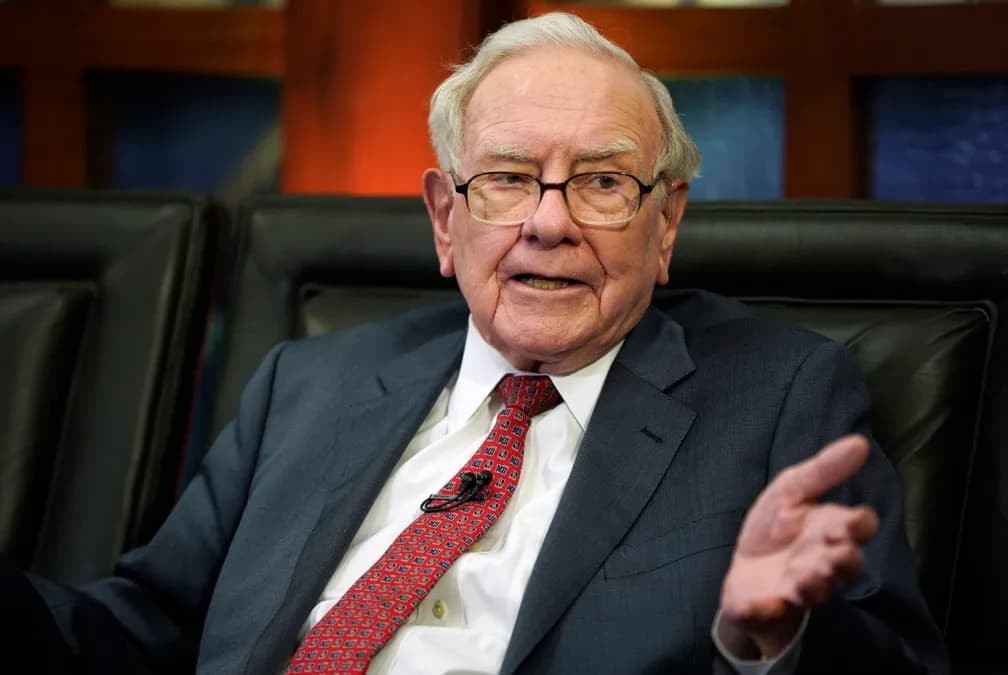
Berkshire Hathaway consistently ranks among the five largest publicly traded American companies by market capitalization — a position built almost entirely on the vision of one man over six decades. The announcement in September 2026 that Warren Buffett steps down as Berkshire Hathaway chairman after more than sixty years marks a corporate milestone with few modern parallels.
Buffett took control of what was then a struggling New England textile business in 1965. Over the intervening decades, he transformed it into a sprawling conglomerate whose holdings span insurance, railroads, energy utilities, consumer brands, and a multi-hundred-billion-dollar equity portfolio. According to Berkshire's annual shareholder letters — required reading on Wall Street — the company's compounded annual gain in per-share book value from 1965 onward has substantially outpaced the S&P 500 with dividends reinvested, by a margin that virtually no professional fund manager has matched over a comparable period.
The transition has been managed with characteristic deliberateness. Greg Abel, vice chairman for non-insurance operations, was publicly identified as CEO-designate in 2021. The chairman succession to Howard Buffett follows the same measured script — no surprise announcement, no crisis, no activist pressure. This is a transition years in the making.
Howard Buffett: The Man Succeeding His Father as Chairman
Howard Buffett is not a Wall Street figure. Best known for his work in agricultural development, food security, and global philanthropy — principally through the Howard G. Buffett Foundation — he has served on Berkshire's board for decades, giving him deep institutional familiarity with the company's culture, even if his public profile sits well outside the financial press.
Read next Altman: OpenAI IPO 'Ill-Advised' in 2026 | AI ValuationsThe choice reflects a governance philosophy Warren Buffett has articulated repeatedly in shareholder letters: the chairman's primary function at Berkshire is cultural guardianship, not operational management. The chairman's duty is to ensure that the CEO serves shareholders rather than personal interests — a structural check rather than a strategic role. Howard, by temperament and by design, fits that description.
Critics have raised questions about whether a non-executive chairman without deep capital-markets experience is the right steward for a company of Berkshire's complexity. Governance scholars who study family-influenced conglomerates have observed that such structures tend to outperform peers in the short term but face harder tests during genuine strategic inflection points. Berkshire's architecture — built around subsidiary autonomy and minimal interference from the center — is specifically designed to minimize those inflection points in the first place.
Buffett Remains: Chairman Emeritus and Board Member
The chairman emeritus title carries more weight than the designation implies. Buffett remains a sitting board member, which means he retains a formal voice in extraordinary decisions: major acquisitions, holding-company capital allocation, CEO performance review. His continued presence addresses the primary concern of long-term shareholders who have historically bought Berkshire partly as a proxy for his judgment.
For institutional investors managing large positions, the distinction matters. A clean departure would have created a vacuum. Instead, the structure creates continuity — Buffett's values and decision-making heuristics remain accessible to Abel and the board, even without the chairman's formal authority. It is a step to the side, not a full exit.
The chairman emeritus model is not unique to Berkshire. Several large financial institutions and family enterprises have used similar arrangements during founder transitions. Practical effectiveness depends almost entirely on how the successor chairman and CEO calibrate their relationship with the emeritus figure — whether the arrangement functions as a resource or gradually becomes a parallel governance layer.
What Comes Next for Berkshire Hathaway's Vast Conglomerate
Berkshire's challenge under the post-Buffett structure is less about any single decision and more about preserving a culture that was, in meaningful ways, inseparable from one personality. The company operates through radical decentralization — subsidiary managers run their businesses with minimal interference from Omaha, provided they generate cash and meet ethical standards. That model does not require Buffett's presence. It does require a board and CEO willing to resist the gravitational pull toward centralization that tends to accumulate inside large organizations over time.
Abel has signaled no appetite to dismantle what works. His background in energy and infrastructure, developed through Berkshire Hathaway Energy, reflects a capital-intensive mindset consistent with the company's historical preference for businesses with durable competitive advantages and predictable cash flows. The insurance float — Berkshire's structural edge, providing low-cost investable capital — remains intact regardless of who chairs the board.
The equity portfolio will be managed by the investment team Buffett assembled and cultivated over the past decade. Day-to-day portfolio decisions have increasingly been handled by that team rather than by Buffett personally, which means operational continuity in this area was quietly established well before the formal announcement.
Investor Reaction and Market Implications
Markets have had years to rehearse this transition. Since Abel was flagged as operational successor in 2021, institutional investors have had ample time to adjust their thesis on Berkshire. The company is no longer purely a Buffett vehicle — it is a mature, diversified conglomerate with embedded competitive advantages in insurance, energy, rail, and consumer brands that would persist under virtually any competent management team.
That said, Berkshire has historically traded at a modest premium to intrinsic value that some analysts attribute directly to the Buffett brand — a confidence premium that his capital allocation record and distinctive communication style command. Whether that premium compresses over time is a question that will play out over years, not trading sessions.
Institutional governance monitors tracking board composition changes at S&P 500 companies will note the Howard Buffett appointment carefully. For index-fund managers who hold Berkshire as a matter of market-cap weighting, little changes operationally. For value investors who specifically bought the Buffett premium, the calculus is more nuanced — though his continued board presence and the chairman emeritus designation provide a meaningful bridge across the transition.
The Buffett Era: A Legacy That Will Shape Berkshire for Decades
Since 1965, Berkshire has compounded shareholder wealth at a rate that, per the company's own annual reports, has roughly doubled the S&P 500's total return across the same horizon. That record is the foundation on which everything else rests — the reputation, the acquisition pipeline, the culture of trust that allows subsidiary managers unusual latitude.
What Buffett leaves behind is not merely a portfolio or a management team. It is a framework: patient capital, owner-operator culture, financial conservatism expressed through fortress balance sheets, and a principled contempt for the short-termism that dominates much of modern corporate finance. These principles are embedded in Berkshire's structure and shareholder communications in ways that survive any individual.
The transition is historic precisely because it was planned so carefully that it risks appearing unremarkable. That, ultimately, may be the most fitting thing about it — a conclusion managed so that it barely registers as an ending at all.
Source: WSJ.com: Markets