Warren Buffett Steps Down as Berkshire Hathaway Chairman After 60 Years
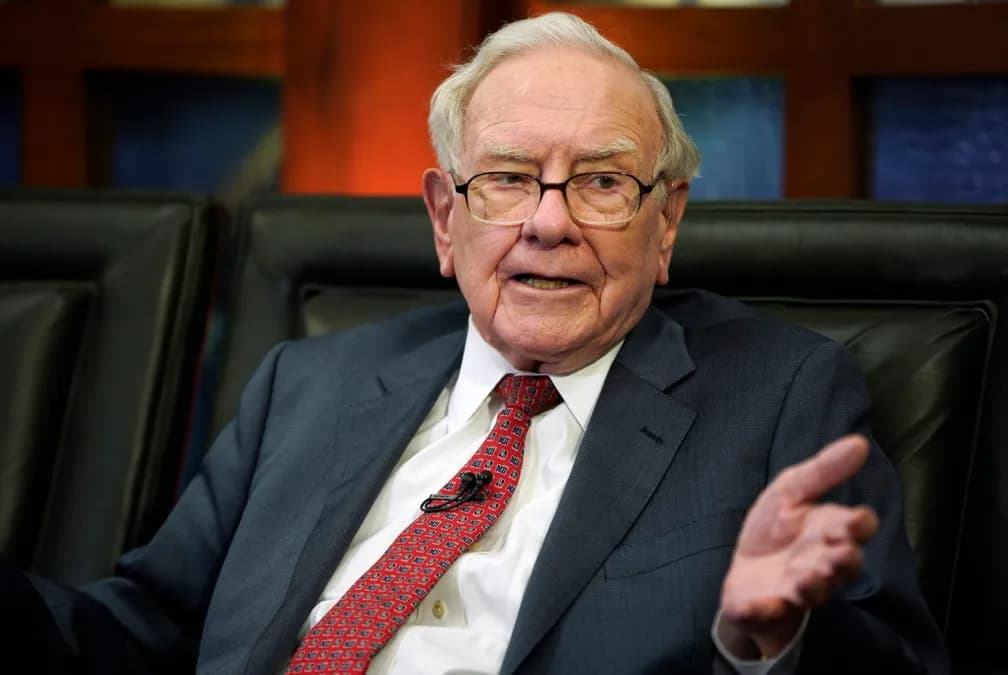
Warren Buffett steps down as Berkshire Hathaway chairman in a transition that marks the end of one of the most consequential leadership tenures in the history of American capitalism. His son Howard Buffett will assume the role of chairman, while Warren remains on the board of directors and takes on the title of chairman emeritus — a designation that keeps him formally connected to the institution he spent more than six decades building into a global conglomerate.
The announcement carries an unmistakable gravity. Buffett took operational control of Berkshire Hathaway in the mid-1960s, steering a struggling New England textile company toward a radically different destiny as a diversified holding enterprise. What followed was a compounding machine unlike anything the market had seen. By the mid-2020s, Berkshire's Class A shares — famously never split by Buffett, in part to discourage short-term speculation — traded north of $700,000 per share, and the company's total market capitalization crossed the $1 trillion threshold, placing it among the most valuable corporations in the world.
His departure from the chairmanship is not an abrupt exit. The succession here has been orchestrated with the measured deliberation Berkshire investors have come to associate with everything the company does. Still, transitions of this magnitude always carry uncertainty. The question is not whether the Berkshire model survives, but whether it evolves — and how fast.
Howard Buffett: The Man Taking the Chairman's Seat
Howard Buffett is not a Wall Street figure. The 70-year-old son of Warren Buffett has built a career centered on agriculture, conservation, and humanitarian work. He has served on Berkshire's board for decades, giving him institutional familiarity with the company's governance culture, but his background diverges sharply from the financial and operational world his father occupied.
Read next Altman: OpenAI IPO 'Ill-Advised' in 2026 | AI ValuationsThat distinction is, by most governance interpretations, entirely appropriate. The chairman's role at Berkshire has always been understood primarily as a stewardship function rather than an operational one. The business of allocating capital, evaluating acquisitions, and managing subsidiary relationships falls to the chief executive. With Greg Abel positioned as Buffett's successor on the operational side, Howard's chairmanship frames the board's oversight responsibilities rather than the company's investment strategy.
Howard has spoken publicly about his commitment to preserving the Berkshire culture — the decentralized management philosophy, the patient capital approach, the relatively lean corporate headquarters in Omaha. His elevation to the chair suggests the board intends continuity above reinvention. Whether that instinct matches what a $1 trillion enterprise needs in a rapidly shifting macroeconomic landscape remains an open question analysts will parse closely.
Six Decades of Warren Buffett's Leadership at Berkshire Hathaway
Few tenure records in corporate America compare. When Buffett assumed control of Berkshire in 1965, the S&P 500 was a fraction of its current level, inflation-adjusted household incomes were far lower, and the concept of a conglomerate holding company operated from the American heartland would have struck most of Wall Street as provincial. His track record over the subsequent decades turned those assumptions inside out.
Berkshire's compound annual gain in per-share book value from 1965 through the early 2020s has historically hovered around 20 percent — roughly double the S&P 500's returns over comparable periods, according to figures Buffett himself has published in the company's annual shareholder letters. That sustained outperformance across multiple market cycles, recessions, and geopolitical crises is the empirical foundation of his legendary status.
The conglomerate today encompasses insurance operations through GEICO and General Re, energy infrastructure via Berkshire Hathaway Energy, freight rail through BNSF, manufacturing businesses, retail operations, and a publicly traded equity portfolio that has historically included major stakes in companies such as Apple, Bank of America, and Coca-Cola. None of that assembly happened accidentally. Each acquisition reflected a consistent, articulable investment philosophy that Buffett communicated directly to shareholders year after year with unusual transparency.
His annual letters to shareholders became required reading not just for Berkshire investors but for business students, institutional portfolio managers, and anyone trying to understand how a disciplined capital allocator thinks. That body of written thought represents an intellectual legacy as durable as the balance sheet.
What the Leadership Shift Means for Berkshire's Future Strategy
Separating the chairmanship from the CEO role creates a formal governance structure that Berkshire has operated with informally for years, but the official division now becomes explicit. Greg Abel, who leads the company's non-insurance operations, brings operational credentials and a different kind of expertise than Buffett possessed — he is a builder of businesses and manager of people, not primarily a securities analyst. That distinction shapes how Berkshire's capital deployment may evolve.
Morningstar analysts covering Berkshire have previously noted that the company's sheer scale creates a structural challenge: the universe of acquisitions large enough to materially move Berkshire's needle has always been narrow, and the company's cash reserves have at times reached levels suggesting the company was content to wait for the right opportunity rather than deploy capital for its own sake. Whether Abel adopts the same patience or feels pressure to act more aggressively is a key variable. Large institutional shareholders often grow restless watching cash accumulate.
The conglomerate's insurance float — the pool of premiums held before claims are paid, which Berkshire has historically invested at extraordinary returns — remains a core competitive advantage that does not depend on Buffett's presence. Understanding that structural moat is essential for anyone evaluating Berkshire's long-term trajectory without him in the chair.
Berkshire Hathaway's Succession Planning: Lessons for Corporate Governance
Family-connected board transitions at large public corporations generate academic and practitioner debate. The instinct toward dynastic succession, even in a non-operational capacity, can strike governance purists as contrary to best practices emphasizing independence and meritocracy. The counter-argument at Berkshire is specific: Howard Buffett's role is explicitly a custodial one, not an operational intervention, and his decades of board service provide genuine institutional knowledge.
Research from governance scholars, including work published by institutions such as the Harvard Law School Forum on Corporate Governance and commentary from S&P Global's governance practice, suggests that chairman-emeritus arrangements at major conglomerates serve multiple functions simultaneously. They retain institutional memory during transitions that might otherwise create information vacuums at the board level. They preserve stakeholder confidence by signaling continuity without freezing strategy in place. They also, frankly, allow founders and long-tenured leaders a dignified path that does not require abrupt severance from entities they built.
The chairman emeritus title at comparable firms tends to carry advisory weight without formal voting authority on board resolutions. The precise contours of Buffett's ongoing engagement will matter. His continued presence on the board preserves his ability to weigh in on matters of significance, while the formal transition of the chair title sends a clear signal that governance authority has shifted.
What Comes Next: The Road Ahead for the Berkshire Conglomerate
Berkshire Hathaway enters this new chapter with strengths that few enterprises can claim. Its balance sheet remains among the strongest of any publicly traded company in the world. Its operating subsidiaries generate consistent cash flows across economic conditions. Its culture of managerial autonomy — the practice of acquiring businesses and then largely leaving competent managers to run them — has proven remarkably durable.
The test ahead is not whether Berkshire can maintain what it has built. The test is whether the next generation of leadership can adapt the model without abandoning its core logic. Markets are different. Private equity competition for acquisitions is more intense. Technology transformation is reordering the economics of industries Berkshire holds significant positions in — insurance pricing models, energy infrastructure, consumer retail.
Greg Abel and Howard Buffett now carry a shared obligation: to honor the institutional legacy they inherit while remaining honest about where that legacy must evolve. Warren Buffett as chairman emeritus will be watching — likely with characteristic patience and the same long-term lens he has applied to every decision for six decades. His formal authority has diminished. His influence has not.
The transition is historic, orderly, and unfinished. That is probably exactly how Buffett would have wanted it.
Source: WSJ.com: Markets