Warren Buffett Steps Down as Berkshire Hathaway Chairman After 60+ Years
Warren Buffett steps down as Berkshire Hathaway chairman — ending a tenure that transformed a failing New England textile mill into one of the most valuable companies on earth. The transition installs Buffett's son Howard as the new board chair while Warren retains a seat on the board and assumes the title of chairman emeritus.
The announcement marks the formal close of a governance era defined almost entirely by one person's judgment. For more than six decades, Buffett's grip on both capital allocation and board leadership was considered inseparable from Berkshire's identity. His step back from the chairmanship — distinct from the CEO succession already handed to Greg Abel — completes a leadership transition that shareholders and analysts had long anticipated but never fully mapped.
The timing reflects the deliberate, unhurried pace Berkshire favors. Buffett, now in his mid-nineties, is not disappearing from the institution he built. The emeritus designation keeps his name and implicit endorsement attached to major decisions. Still, formal authority over board governance now belongs to the next generation.
Howard Buffett Takes the Chair: Who Is He and What Will He Do?
Howard Buffett is not a Wall Street figure. He is a farmer, photographer, and philanthropist whose career has centered on food security and humanitarian work through the Howard G. Buffett Foundation. His arrival as Berkshire chair surprises some governance observers — not because of any deficiency, but because his background sits well outside the financial services mainstream.
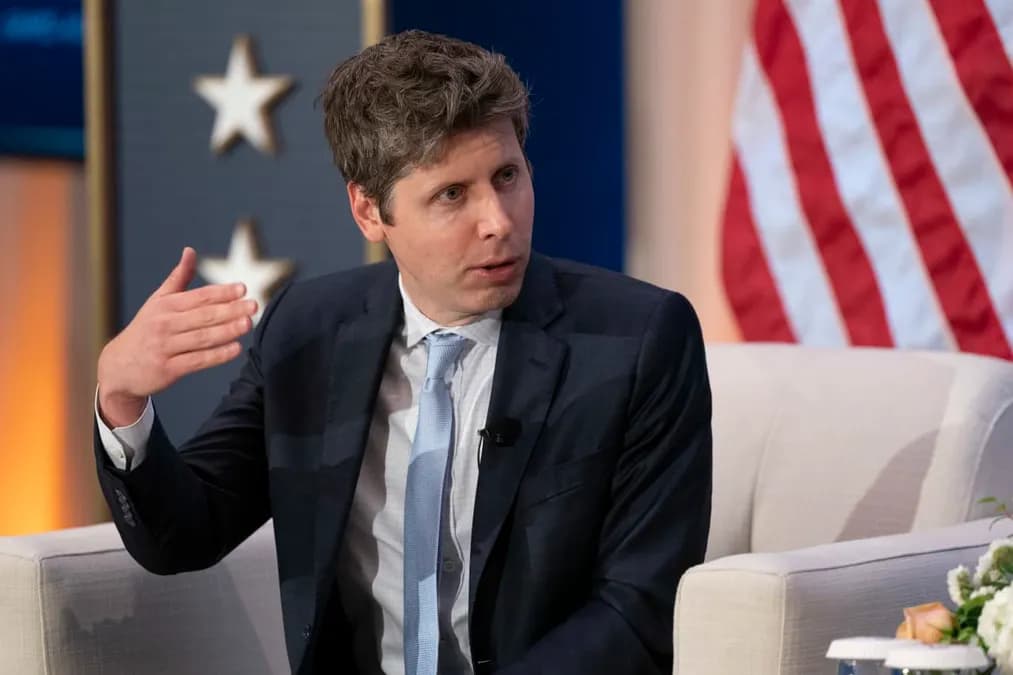
Read next Altman: OpenAI IPO 'Ill-Advised' in 2026 | AI ValuationsThe logic behind the selection is structural, not operational. Warren Buffett has long described the role of Berkshire's non-executive chair as a cultural guardian — someone who ensures management accountability and protects the decentralized operating philosophy that generated the conglomerate's long-run returns. Howard is not expected to run subsidiaries, pick stocks, or direct capital. His mandate is narrower and, by design, more passive.
Corporate governance research consistently shows that family-nominated non-executive chairs tend to function as continuity anchors rather than strategic directors. The Harvard Law School Forum on Corporate Governance has documented this pattern at family-influenced conglomerates from Fiat Chrysler to Walmart, where founding-family chairs prioritize cultural preservation over activist oversight. Howard's appointment fits that template precisely.
The question of board independence is unavoidable. Both Glass Lewis and Institutional Shareholder Services have issued guidance cautioning investors about non-independent chairs at large-cap companies. Whether either firm revises its Berkshire assessment when proxy materials are next filed will signal how institutional shareholder advisors interpret the succession's governance implications.
Six Decades of Warren Buffett's Stewardship at Berkshire Hathaway
The scale of what Buffett built resists any single metric, but market capitalization provides the clearest lens. When Buffett gained control of Berkshire Hathaway in 1965, it was a struggling textile manufacturer valued at roughly $18 million. By the mid-2020s, Berkshire's market capitalization had grown to approximately $900 billion, placing it consistently among the five largest publicly traded companies in the United States, according to data tracked by Bloomberg and Morningstar.
Compounded annual returns over that span exceeded 19 percent — roughly double the S&P 500's performance over the same period — a record documented in Berkshire's own annual letters and widely cited in academic finance literature on long-term value creation.
The model was unconventional by any era's standards. Berkshire operates as a decentralized holding company with wholly owned subsidiaries — BNSF Railway, GEICO, Berkshire Hathaway Energy — alongside a massive equity portfolio anchored by positions in Apple, Bank of America, and Coca-Cola. Management autonomy is near-absolute at the subsidiary level. Capital flows upward to Omaha, where it is redeployed based on Buffett's long-horizon criteria. No quarterly earnings targets or strategy consultants drove the process.
That philosophy is what Howard will be charged with protecting. Whether protecting culture through board governance is possible after the architect himself recedes is the open question.
What Comes Next for Berkshire Hathaway's Leadership and Strategy?
Greg Abel, who serves as Berkshire's chief executive, now carries full operational authority without the quiet gravitational pull of Buffett's chairmanship overhead. Abel's tenure was always going to be evaluated against an impossible benchmark. That evaluation intensifies now.
His most immediate challenge is not strategic reinvention but continuity management — sustaining subsidiary performance, deploying Berkshire's substantial cash reserves, and maintaining the trust of operators who were hired, in many cases, on a handshake and a letter from Buffett himself. Whether those managers transfer the same loyalty to an institutional CEO is a question markets have not fully priced.
Capital allocation presents the sharpest test. Berkshire entered 2026 holding a historically large cash and Treasury bill position. Deploying that capital — finding businesses or securities meeting Berkshire's return thresholds in an expensive market — is the assignment Abel inherited. He will do it without the seller confidence Buffett's personal reputation generated for decades. When a business owner sold to Berkshire, they were selling to Warren Buffett. That dynamic has changed permanently.
Acquisitions may become harder to source at historically favorable terms. The informal "Berkshire premium" — the non-financial value sellers placed on joining the company — was partly a function of Buffett's stature. Quantifying that premium's erosion is difficult. Acknowledging it is honest.
Investor Reaction and Market Implications of the Berkshire Succession
Markets have processed Berkshire's succession story in stages since Abel's CEO elevation. The chairmanship transition adds a new chapter but is unlikely to produce dramatic near-term price dislocations. Berkshire's Class A and Class B shares are held disproportionately by long-horizon institutional investors who understand the company's structure in detail.
Vanguard, BlackRock, and State Street — Berkshire's largest institutional holders by passive index exposure — do not trade on management changes. Active managers who hold Berkshire as a core position have, in most cases, already adjusted their analyses to reflect the post-Buffett operating reality. The chairmanship announcement confirms a known trajectory rather than introducing new information.
The subtler shareholder concern involves the annual meeting culture Buffett built in Omaha — a gathering for tens of thousands of investors that functions as part financial education, part brand loyalty event. Abel has participated in recent meetings, but whether the Omaha pilgrimage retains its singular character over the next decade is genuinely uncertain.
Key Takeaways: Berkshire Hathaway's Path Forward Without Buffett at the Helm
Berkshire Hathaway enters its next chapter as a fundamentally different institution — not broken, but transformed.
Warren Buffett as chairman emeritus retains symbolic authority but no formal governance power. Howard Buffett as chair holds board authority but not capital allocation judgment. Greg Abel as CEO holds operational power but works without a six-decade accumulated trust network. None of these individually constitutes a crisis. Together, they represent a distribution of responsibilities previously concentrated in one person whose combination of talent, patience, and longevity was genuinely rare.
For shareholders, the investment case for Berkshire rests on the same foundations it always has — a diversified, largely recession-resistant earnings base, a conservative balance sheet, and a capital allocation discipline embedded in institutional memory. The conglomerate will survive the transition. Whether it compounds at the same rate depends on execution and on Abel's capacity to resist short-term pressure that Buffett, operating with six decades of moral authority, never had to face.
Source: WSJ.com: Markets