Warren Buffett Steps Down as Berkshire Hathaway Chairman After 60 Years
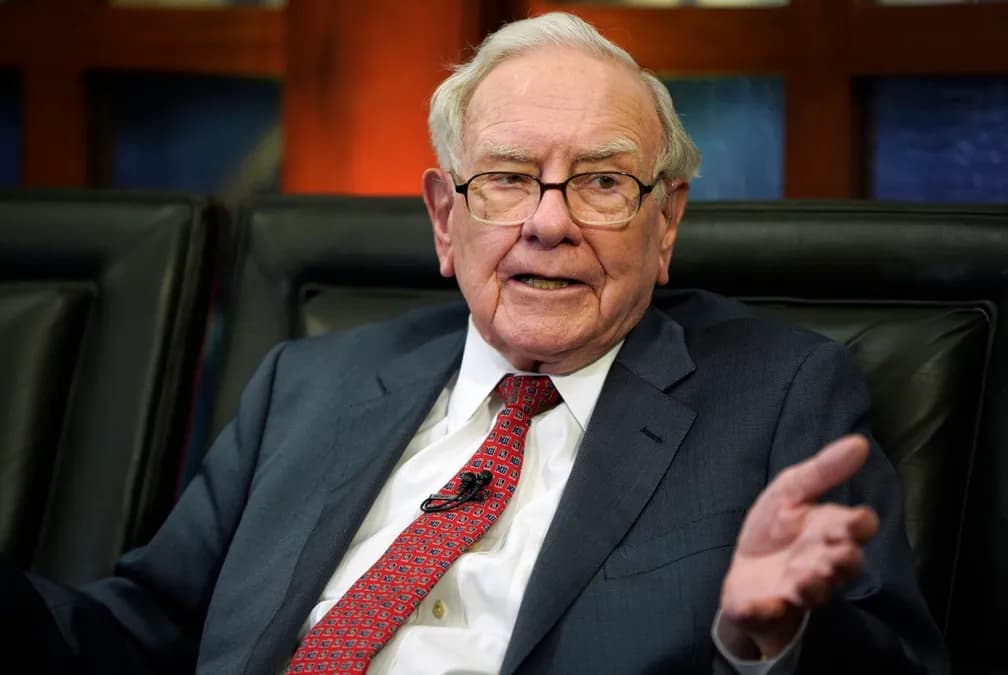
Warren Buffett steps down as Berkshire Hathaway chairman after more than six decades leading one of the most closely watched boards in corporate America — and he is not disappearing. The 95-year-old investor will remain on the board and carry the title of chairman emeritus, preserving his formal connection to the company he transformed from a struggling New England textile mill into a $900 billion conglomerate.
His son Howard Buffett will assume the chairmanship.
The distinction matters. Buffett staying on as chairman emeritus is not a ceremonial afterthought. It signals the board's intent to keep his institutional knowledge and moral authority accessible without requiring the formal governance burdens that accompany a chairmanship. For long-term shareholders accustomed to Buffett's singular presence, that continuity — however partial — provides a measure of reassurance that this is a managed transition, not a sudden rupture.
The news has been anticipated for years. What is new is the formal timeline and the confirmation that a non-executive Howard Buffett will hold the chair.
Who Is Howard Buffett? The New Chairman's Background and Philosophy

Howard Buffett is not a Wall Street figure. The 70-year-old spent decades as a farmer, photographer, and philanthropist, channeling much of his energy into agricultural development and food security work through the Howard G. Buffett Foundation. He has served on Berkshire's board for years, giving him direct exposure to the company's governance rhythms — but his profile differs sharply from the archetypal finance-world director.
Read next Altman: OpenAI IPO 'Ill-Advised' in 2026 | AI ValuationsThat divergence is, arguably, the point.
A non-executive chairman drawn from outside the investment management tradition can bring an independent perspective to the boardroom. Howard Buffett's role will be to chair the board, not to run the business. Greg Abel, who was formally designated CEO successor in 2021, holds the operational reins. The separation of those two functions — chair and CEO — is a meaningful structural signal.
Governance experts have long argued that combining the chairman and CEO roles in a single person concentrates power in ways that can undermine board independence. At Berkshire, Warren Buffett held both the CEO title for decades and the chairmanship throughout, a dual role that worked precisely because of his unique stature. The incoming structure corrects that concentration, placing oversight with Howard and execution with Abel.
Berkshire Hathaway's Leadership Structure After the Change
The post-transition structure has three anchors: Howard Buffett as non-executive chairman, Greg Abel as CEO, and Warren Buffett as chairman emeritus and board member.
Abel has been preparing for the top role for years. He oversees Berkshire's non-insurance operating businesses — an empire spanning utilities, railroads, manufacturing, retail, and services — and has earned a reputation for operational discipline. His elevation to CEO was not a surprise. What the current announcement clarifies is the governance layer above him.
Comparisons to other family-influenced conglomerates are instructive. When Sam Walton died in 1992, Walmart's board transitioned to a structure where family members held influential positions without day-to-day operational control, allowing professional managers to run the retail operation while the Walton family maintained significant governance influence and ownership. The arrangement proved durable. Walmart grew from roughly $55 billion in annual revenue at Walton's death to more than $600 billion today.
Koch Industries offers a different model. Charles Koch maintained both ownership and operational leadership for decades, avoiding the separation of roles that public-company governance norms typically demand. That model works for a private company; it is harder to sustain in a publicly traded entity where institutional shareholders expect board independence as a check on management.
Berkshire's new structure lands closer to the Walmart model — a family member in the chair, a professional manager running operations, and the founding patriarch providing continuity in an advisory capacity.
What Investors Should Watch: Risks and Opportunities Ahead
Three questions will dominate institutional analysis in the months ahead.
Capital allocation discipline. Berkshire accumulated a cash position exceeding $180 billion by early 2025, a figure that drew persistent shareholder questions about deployment strategy. Abel's capital allocation instincts are less tested than Buffett's across full market cycles. How he and the board navigate large acquisitions — or continued restraint — will be the first real test of the new structure.
Insurance operations. Berkshire's insurance subsidiaries, including GEICO and General Re, generate the float that funds the investment portfolio. GEICO in particular spent years losing ground to competitors before a significant restructuring effort. Investors will watch whether that turnaround holds under the new leadership configuration.
Market perception of the Buffett premium. Berkshire shares have historically carried what analysts describe as a "Buffett premium" — a valuation uplift tied to confidence in his judgment. That premium may compress modestly as the market recalibrates. Standard & Poor's and Moody's are likely monitoring the transition closely; any rating commentary will carry weight.
The opportunity, often underappreciated, is that Berkshire's decentralized operating model was built to function without Buffett's daily involvement. Most subsidiary managers run their businesses with substantial autonomy. The conglomerate was designed for this moment.
The Buffett Legacy: Six Decades That Shaped Modern Investing
The raw numbers anchor the legacy. From 1965 through 2023, Berkshire's per-share market value compounded at roughly 19.8% annually, against the S&P 500's 10.2% — a gap that, over nearly six decades, produced returns approximately 140 times greater than the index on a cumulative basis, according to figures Berkshire itself publishes in its annual reports.
That performance was built on a coherent philosophy: buy quality businesses at fair prices, hold them indefinitely, avoid leverage at the parent level, and trust competent managers. Buffett did not invent value investing — Benjamin Graham did — but he extended and popularized it in ways that reshaped how a generation of investors thinks about equity ownership.
His annual shareholder letters became required reading not just for stock pickers but for anyone trying to understand business quality, competitive moats, and management character. No other corporate document commands comparable voluntary readership.
The transition from operator to emeritus marks the end of Buffett's active governance role, not the erasure of that intellectual framework. Berkshire's culture — patient, frugal, decentralized — is embedded in the institution. Whether it survives generational change is the more interesting long-run question.
Key Takeaways for Long-Term Berkshire Shareholders
Buffett is not gone. Chairman emeritus and board member is a real role with real access. He can still speak, advise, and influence.
The structure is now more conventional. Separating the chair and CEO functions improves governance optics for institutional investors and brings Berkshire in line with practices that large asset managers typically prefer.
Greg Abel is the operating decision-maker. His capital allocation choices over the next two to three years will define investor confidence more than any governance headline.
Patience remains the thesis. Berkshire's business mix — insurance, energy, railroads, consumer brands — is not structurally impaired by this leadership change. The companies operate independently. The investment portfolio is managed by a team.
Watch the annual meeting. The Omaha gathering has long served as a real-time indicator of shareholder sentiment. Howard Buffett's first appearance in the chair will be closely read for tone, continuity, and the informal signals that Berkshire watchers have always parsed as carefully as the financials.
The handoff is deliberate, years in the making, and structured to minimize disruption. Shareholders who bought Berkshire as a long-term hold have no mechanical reason to reconsider that view — but the era defined by one person's judgment is, formally, over.
Source: WSJ.com: Markets