Warren Buffett Steps Down as Berkshire Hathaway Chairman After 60 Years
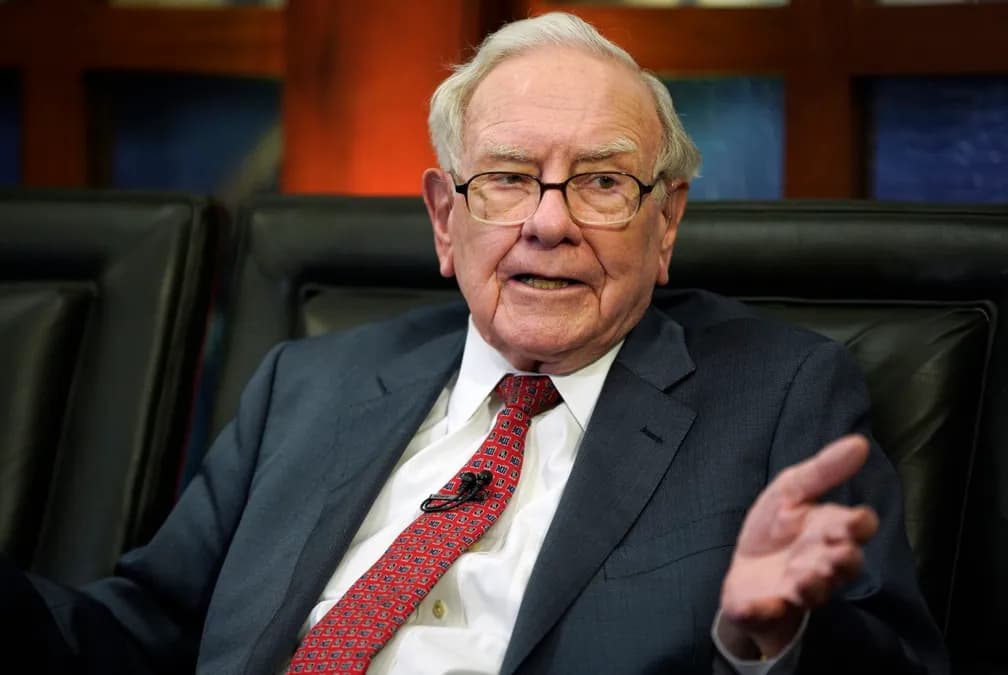
Over six decades, Berkshire Hathaway's Class A shares compounded at a rate that dwarfs virtually every major market index, turning a struggling New England textile mill into one of the most valuable companies on earth. The architect of that transformation, Warren Buffett, has now stepped down as Berkshire Hathaway chairman — a role he occupied since taking control of the company in 1965.
His son Howard Buffett will succeed him as chairman. Warren Buffett will remain on Berkshire's board of directors and carry the title of chairman emeritus, preserving his formal connection to the institution he built while passing governance authority to the next generation.
The transition closes a chapter of American corporate history with few parallels. No single investor has held the chair of a company this size for this long while simultaneously managing its capital allocation. The question for shareholders, analysts, and the broader market is straightforward: what does Berkshire look like when the person who defined it is no longer at the top of its governance structure?
Howard Buffett Takes the Chair: Who Is He and What Can Investors Expect?

Howard Buffett, 71, is no stranger to Berkshire's boardroom. He has served as a board member for years and has been identified publicly as the intended non-executive chair in Berkshire's succession planning. His background diverges sharply from his father's: he is a farmer, photographer, and philanthropist, best known for humanitarian work in food security and conflict zones through the Howard G. Buffett Foundation.
Read next Altman: OpenAI IPO 'Ill-Advised' in 2026 | AI ValuationsThat profile matters for investors to understand. Howard Buffett's role is explicitly a governance role, not an operational or capital-allocation one. He will not be making investment decisions or approving acquisitions. His function is to provide board oversight and continuity — precisely what a non-executive chair is designed to supply.
Warren Buffett has described this structure in past shareholder letters: the non-executive chair evaluates the CEO rather than running the business. That clarity of design should reassure investors who worry about succession misallocating capital.
Berkshire Hathaway's Leadership Structure After the Change
Berkshire's management structure now formally separates two roles fused in Buffett's person for generations. Greg Abel, named as Warren Buffett's CEO successor, holds operational and capital-allocation authority. Howard Buffett holds governance authority as board chair. Warren Buffett retains a seat on the board as chairman emeritus.
This three-layer structure — active CEO, non-executive chair, and founding chairman emeritus — mirrors the governance architecture that institutional advisers have long advocated. The separation of chair and CEO is considered a foundational best practice by organizations including the Council of Institutional Investors and proxy advisers such as Glass Lewis and Institutional Shareholder Services. Critics of combined chair-CEO roles argue the arrangement compromises the board's ability to provide independent oversight of management.
Berkshire's structure now removes that ambiguity entirely. The board has a chair whose sole accountability runs to shareholders, not operations. The CEO manages the business. The founder offers continuity and, where useful, counsel.
What This Means for Berkshire's Business and Investment Strategy
Berkshire's competitive position does not hinge on who chairs its board. The company's moat — insurance subsidiaries, diversified operating businesses, equity holdings — was built over decades and is not dismantled by a governance change. BNSF Railway, GEICO, Berkshire Hathaway Energy, and scores of wholly owned businesses will continue running under the same management teams that have operated them for years.
What does change is the symbolic weight of capital allocation decisions. Buffett's reputation carried an implicit endorsement that attracted deal flow, favorable acquisition pricing, and a reputational premium that is genuinely difficult to replicate. Abel is a capable executive — Buffett has said so publicly and repeatedly — but building that level of market trust takes time.
The substantial cash and Treasury bill position Berkshire had accumulated by mid-2025, exceeding $300 billion, gives Abel significant flexibility. He can be patient. He does not need to deploy capital under pressure. That financial strength is arguably the most durable asset the new leadership structure inherits.
Investment strategy is unlikely to pivot dramatically. Berkshire's decentralized model — buying and holding high-quality businesses, rarely selling, avoiding excessive debt — is embedded in the company's DNA. Abel has given no indication of strategic departure, and Berkshire's incentive structure, which rewards long-term thinking, discourages short-termism by design.
Investor Reaction and Market Implications
Leadership transitions at large conglomerates tend to trigger short-term volatility followed by stabilization once the new structure proves itself. General Electric's protracted succession struggles between 2001 and 2019 offer a cautionary contrast: multiple CEO changes, strategic pivots, and a bloated balance sheet eroded decades of shareholder value. JPMorgan Chase's more deliberate, transparent approach to succession planning has been cited by governance scholars as a constructive counterexample.
Berkshire's situation differs from both. The CEO transition was telegraphed years in advance. The capital base is pristine. The operating businesses are mature and cash-generative. The chair transition, while historic, follows naturally from succession groundwork that Buffett and the board laid methodically.
For institutional investors, the formal separation of chair and CEO roles may improve Berkshire's governance scores with proxy advisers and ESG-focused funds, some of which have historically flagged the combined structure as a risk factor. That scoring improvement could modestly broaden the shareholder base over time.
Retail investors who hold Berkshire for its long-term compounding track record have less reason for concern. The fundamentals that drove the stock's performance — disciplined capital allocation, strong free cash flow, minimal corporate overhead — remain structurally intact.
The End of an Era: Buffett's Six-Decade Legacy at Berkshire
Since taking control of Berkshire Hathaway in 1965, Warren Buffett presided over one of the most consequential wealth-creation stories in financial history. Berkshire's Class A shares appreciated at a compound annual rate that made long-term holders extraordinarily wealthy — a record no major index fund or actively managed fund has matched over the same horizon. An investor who placed $10,000 in Berkshire in 1965 and held would be sitting on a position worth many millions today.
What made Buffett's chairmanship distinctive was its inseparability from his role as capital allocator. Most chairs govern; Buffett governed, invested, and communicated — shaping not just Berkshire but the broader culture of long-term value investing. His annual letters to shareholders became required reading at business schools. His shareholder meetings in Omaha drew tens of thousands of attendees annually.
Stepping down from the chair while remaining on the board as chairman emeritus is, characteristically, a measured move. It preserves institutional continuity without creating a structural vacuum. It gives Howard Buffett formal authority to lead the board while keeping the founder engaged.
Long-term shareholders should watch three things: how Greg Abel allocates Berkshire's substantial cash reserves over the next 24 to 36 months; whether the company's acquisition appetite returns or remains conservative; and how the board under Howard Buffett handles compensation, governance disclosures, and any strategic pivots. Those signals will define the post-Buffett era more clearly than any title change.
Source: WSJ.com: Markets